


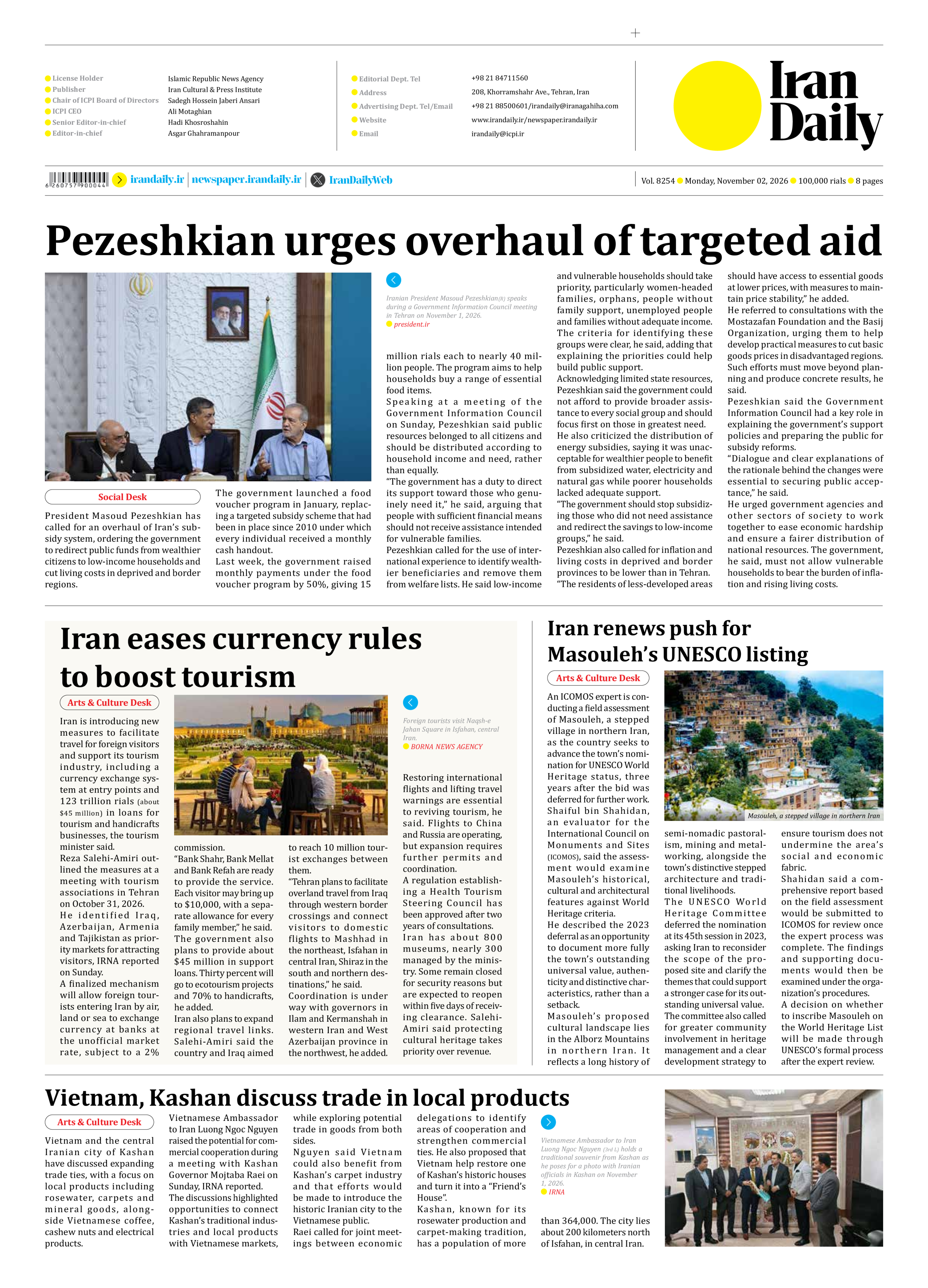


Iran eases currency rules to boost tourism
Iran is introducing new measures to facilitate travel for foreign visitors and support its tourism industry, including a currency exchange system at entry points and 123 trillion rials (about $45 million) in loans for tourism and handicrafts businesses, the tourism minister said.
Reza Salehi-Amiri outlined the measures at a meeting with tourism associations in Tehran on October 31, 2026.
He identified Iraq, Azerbaijan, Armenia and Tajikistan as priority markets for attracting visitors, IRNA reported on Sunday.
A finalized mechanism will allow foreign tourists entering Iran by air, land or sea to exchange currency at banks at the unofficial market rate, subject to a 2% commission.
“Bank Shahr, Bank Mellat and Bank Refah are ready to provide the service. Each visitor may bring up to $10,000, with a separate allowance for every family member,” he said.
The government also plans to provide about $45 million in support loans. Thirty percent will go to ecotourism projects and 70% to handicrafts, he added.
Iran also plans to expand regional travel links. Salehi-Amiri said the country and Iraq aimed to reach 10 million tourist exchanges between them.
“Tehran plans to facilitate overland travel from Iraq through western border crossings and connect visitors to domestic flights to Mashhad in the northeast, Isfahan in central Iran, Shiraz in the south and northern destinations,” he said.
Coordination is under way with governors in Ilam and Kermanshah in western Iran and West Azerbaijan province in the northwest, he added.
Restoring international flights and lifting travel warnings are essential to reviving tourism, he said. Flights to China and Russia are operating, but expansion requires further permits and coordination.
A regulation establishing a Health Tourism Steering Council has been approved after two years of consultations.
Iran has about 800 museums, nearly 300 managed by the ministry. Some remain closed for security reasons but are expected to reopen within five days of receiving clearance. Salehi-Amiri said protecting cultural heritage takes priority over revenue.