




Pezeshkian calls for advanced technology, fuel-efficient engines in Iran’s auto industry
Iranian President Masoud Pezeshkian has called for the use of modern technology and the development of advanced, fuel-efficient engines in the country’s automotive industry, saying sustained efforts were needed to improve vehicle quality and reduce fuel consumption.
“Transforming the automotive industry cannot be achieved in the short term; what matters is that the country continues moving toward producing fuel-efficient vehicles and improving product quality,” Pezeshkian said.
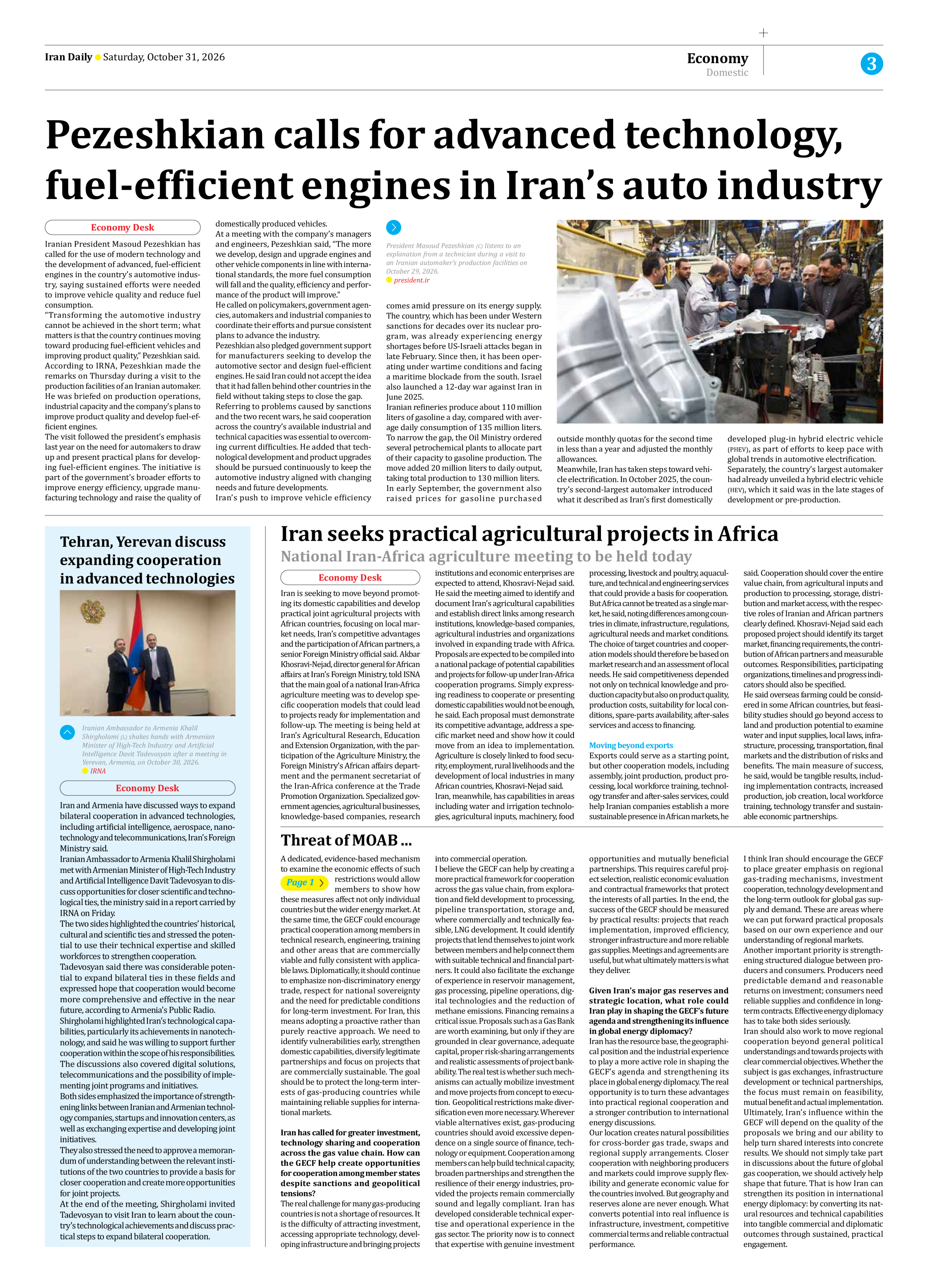
According to IRNA, Pezeshkian made the remarks on Thursday during a visit to the production facilities of an Iranian automaker. He was briefed on production operations, industrial capacity and the company’s plans to improve product quality and develop fuel-efficient engines.
The visit followed the president’s emphasis last year on the need for automakers to draw up and present practical plans for developing fuel-efficient engines. The initiative is part of the government’s broader efforts to improve energy efficiency, upgrade manufacturing technology and raise the quality of domestically produced vehicles.
At a meeting with the company’s managers and engineers, Pezeshkian said, “The more we develop, design and upgrade engines and other vehicle components in line with international standards, the more fuel consumption will fall and the quality, efficiency and performance of the product will improve.”
He called on policymakers, government agencies, automakers and industrial companies to coordinate their efforts and pursue consistent plans to advance the industry.
Pezeshkian also pledged government support for manufacturers seeking to develop the automotive sector and design fuel-efficient engines. He said Iran could not accept the idea that it had fallen behind other countries in the field without taking steps to close the gap.
Referring to problems caused by sanctions and the two recent wars, he said cooperation across the country’s available industrial and technical capacities was essential to overcoming current difficulties. He added that technological development and product upgrades should be pursued continuously to keep the automotive industry aligned with changing needs and future developments.
Iran’s push to improve vehicle efficiency comes amid pressure on its energy supply. The country, which has been under Western sanctions for decades over its nuclear program, was already experiencing energy shortages before US-Israeli attacks began in late February. Since then, it has been operating under wartime conditions and facing a maritime blockade from the south. Israel also launched a 12-day war against Iran in June 2025.
Iranian refineries produce about 110 million liters of gasoline a day, compared with average daily consumption of 135 million liters. To narrow the gap, the Oil Ministry ordered several petrochemical plants to allocate part of their capacity to gasoline production. The move added 20 million liters to daily output, taking total production to 130 million liters.
In early September, the government also raised prices for gasoline purchased outside monthly quotas for the second time in less than a year and adjusted the monthly allowances.
Meanwhile, Iran has taken steps toward vehicle electrification. In October 2025, the country’s second-largest automaker introduced what it described as Iran’s first domestically developed plug-in hybrid electric vehicle (PHEV), as part of efforts to keep pace with global trends in automotive electrification.
Separately, the country’s largest automaker had already unveiled a hybrid electric vehicle (HEV), which it said was in the late stages of development or pre-production.