




Iran seeks to expand electricity links with regional nations
Iran is seeking to expand electricity connections with neighboring countries and establish new links, including with Russia, as it continues to develop its power generation capacity, Energy Minister Abbas Aliabadi said on Tuesday.
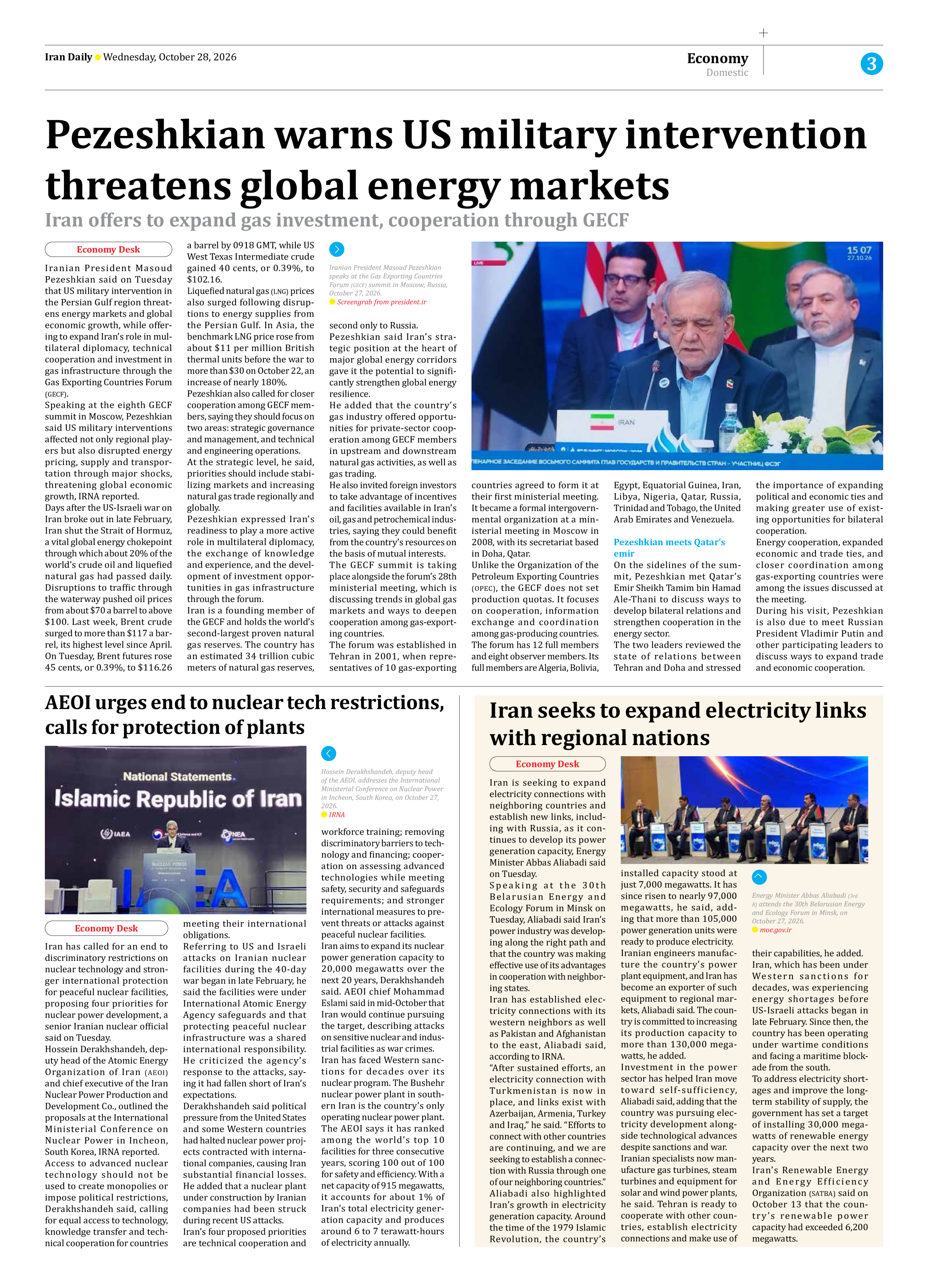
Speaking at the 30th Belarusian Energy and Ecology Forum in Minsk on Tuesday, Aliabadi said Iran’s power industry was developing along the right path and that the country was making effective use of its advantages in cooperation with neighboring states.
Iran has established electricity connections with its western neighbors as well as Pakistan and Afghanistan to the east, Aliabadi said, according to IRNA.
“After sustained efforts, an electricity connection with Turkmenistan is now in place, and links exist with Azerbaijan, Armenia, Turkey and Iraq,” he said. “Efforts to connect with other countries are continuing, and we are seeking to establish a connection with Russia through one of our neighboring countries.”
Aliabadi also highlighted Iran’s growth in electricity generation capacity. Around the time of the 1979 Islamic Revolution, the country’s installed capacity stood at just 7,000 megawatts. It has since risen to nearly 97,000 megawatts, he said, adding that more than 105,000 power generation units were ready to produce electricity.
Iranian engineers manufacture the country’s power plant equipment, and Iran has become an exporter of such equipment to regional markets, Aliabadi said. The country is committed to increasing its production capacity to more than 130,000 megawatts, he added.
Investment in the power sector has helped Iran move toward self-sufficiency, Aliabadi said, adding that the country was pursuing electricity development alongside technological advances despite sanctions and war.
Iranian specialists now manufacture gas turbines, steam turbines and equipment for solar and wind power plants, he said. Tehran is ready to cooperate with other countries, establish electricity connections and make use of their capabilities, he added.
Iran, which has been under Western sanctions for decades, was experiencing energy shortages before US-Israeli attacks began in late February. Since then, the country has been operating under wartime conditions and facing a maritime blockade from the south.
To address electricity shortages and improve the long-term stability of supply, the government has set a target of installing 30,000 megawatts of renewable energy capacity over the next two years.
Iran’s Renewable Energy and Energy Efficiency Organization (SATBA) said on October 13 that the country’s renewable power capacity had exceeded 6,200 megawatts.