




Archaeological dig in Sanandaj sheds new light on ancient settlement
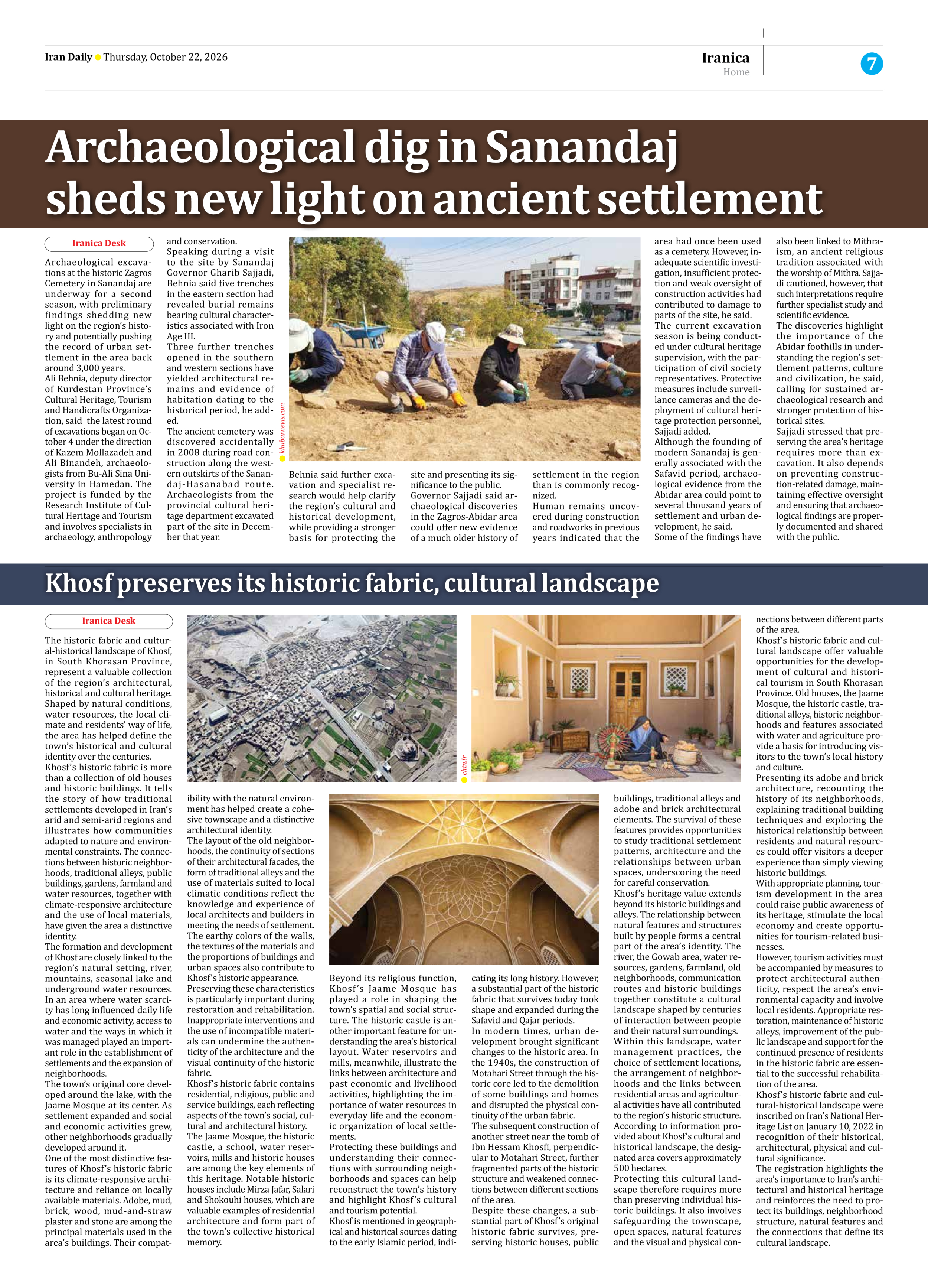
Archaeological excavations at the historic Zagros Cemetery in Sanandaj are underway for a second season, with preliminary findings shedding new light on the region’s history and potentially pushing the record of urban settlement in the area back around 3,000 years.
Ali Behnia, deputy director of Kurdestan Province’s Cultural Heritage, Tourism and Handicrafts Organization, said the latest round of excavations began on October 4 under the direction of Kazem Mollazadeh and Ali Binandeh, archaeologists from Bu-Ali Sina University in Hamedan. The project is funded by the Research Institute of Cultural Heritage and Tourism and involves specialists in archaeology, anthropology and conservation.
Speaking during a visit to the site by Sanandaj Governor Gharib Sajjadi, Behnia said five trenches in the eastern section had revealed burial remains bearing cultural characteristics associated with Iron Age III.
Three further trenches opened in the southern and western sections have yielded architectural remains and evidence of habitation dating to the historical period, he added.
The ancient cemetery was discovered accidentally in 2008 during road construction along the western outskirts of the Sanandaj-Hasanabad route. Archaeologists from the provincial cultural heritage department excavated part of the site in December that year.
Behnia said further excavation and specialist research would help clarify the region’s cultural and historical development, while providing a stronger basis for protecting the site and presenting its significance to the public.
Governor Sajjadi said archaeological discoveries in the Zagros-Abidar area could offer new evidence of a much older history of settlement in the region than is commonly recognized.
Human remains uncovered during construction and roadworks in previous years indicated that the area had once been used as a cemetery. However, inadequate scientific investigation, insufficient protection and weak oversight of construction activities had contributed to damage to parts of the site, he said.
The current excavation season is being conducted under cultural heritage supervision, with the participation of civil society representatives. Protective measures include surveillance cameras and the deployment of cultural heritage protection personnel, Sajjadi added.
Although the founding of modern Sanandaj is generally associated with the Safavid period, archaeological evidence from the Abidar area could point to several thousand years of settlement and urban development, he said.
Some of the findings have also been linked to Mithraism, an ancient religious tradition associated with the worship of Mithra. Sajjadi cautioned, however, that such interpretations require further specialist study and scientific evidence.
The discoveries highlight the importance of the Abidar foothills in understanding the region’s settlement patterns, culture and civilization, he said, calling for sustained archaeological research and stronger protection of historical sites.
Sajjadi stressed that preserving the area’s heritage requires more than excavation. It also depends on preventing construction-related damage, maintaining effective oversight and ensuring that archaeological findings are properly documented and shared with the public.