




Pezeshkian: Tehran seeks stronger trade ties through BRICS, SCO and Eurasian bloc
Iranian President Masoud Pezeshkian said on Wednesday that Tehran would seek to strengthen economic ties through regional and international organizations to facilitate trade and exports, while maintaining foreign trade through alternative routes despite wartime restrictions on maritime transport.
Speaking at the 30th National Export Day ceremony in Tehran, attended by the ministers of industry and foreign affairs and leading producers, traders and exporters, Pezeshkian identified expanding bilateral and multilateral economic relations and making greater use of frameworks such as BRICS, the Shanghai Cooperation Organization and the Eurasian Economic Union as strategic government priorities, president.ir reported.
“Representatives and members of these countries and organizations are under pressure from the United States, and standing up to US bullying is not that simple. The enemies want to close the routes, but despite these restrictions, they cooperate with us within established frameworks,” he said.
Since late February, when a US-Israeli coalition launched a 40-day war, Iran has been operating under wartime conditions and facing a maritime blockade from the south. The blockade aims to reduce Iranian oil exports to zero and deplete government revenues. Iran has also been subject to decades of Western sanctions over its nuclear activities. Israel also launched a 12-day war against Iran in June 2024.
Pezeshkian said the efforts of the country’s economic sector under difficult conditions, amid pressure, sanctions and restrictions imposed by Iran’s adversaries, had played an important role in helping the country withstand the challenges.
Thanking economic operators, particularly exporters, Pezeshkian said Iran’s resistance had changed how neighboring countries and others viewed the country’s capabilities.
Turning to export performance during the war, Pezeshkian said about 75% of the country’s exports had previously been shipped by sea. Despite restrictions and the closure of maritime routes, Iran had managed to maintain most of its foreign trade by activating alternative routes and using available capacities, with exports declining by only about 25% compared with prewar levels.
He added that the government planned to reduce transportation costs on alternative routes compared with maritime shipping and remove obstacles to trade, including through changes to laws and regulations where necessary.
Although Pezeshkian did not specify the reporting period or provide supporting data for the 25% decline in exports, official figures offer some context. On August 18, the head of Iran’s Customs Administration said non-oil exports had reached $15 billion since the start of the Iranian year on March 21, down from the same period a year earlier.
Export atlas unveiled
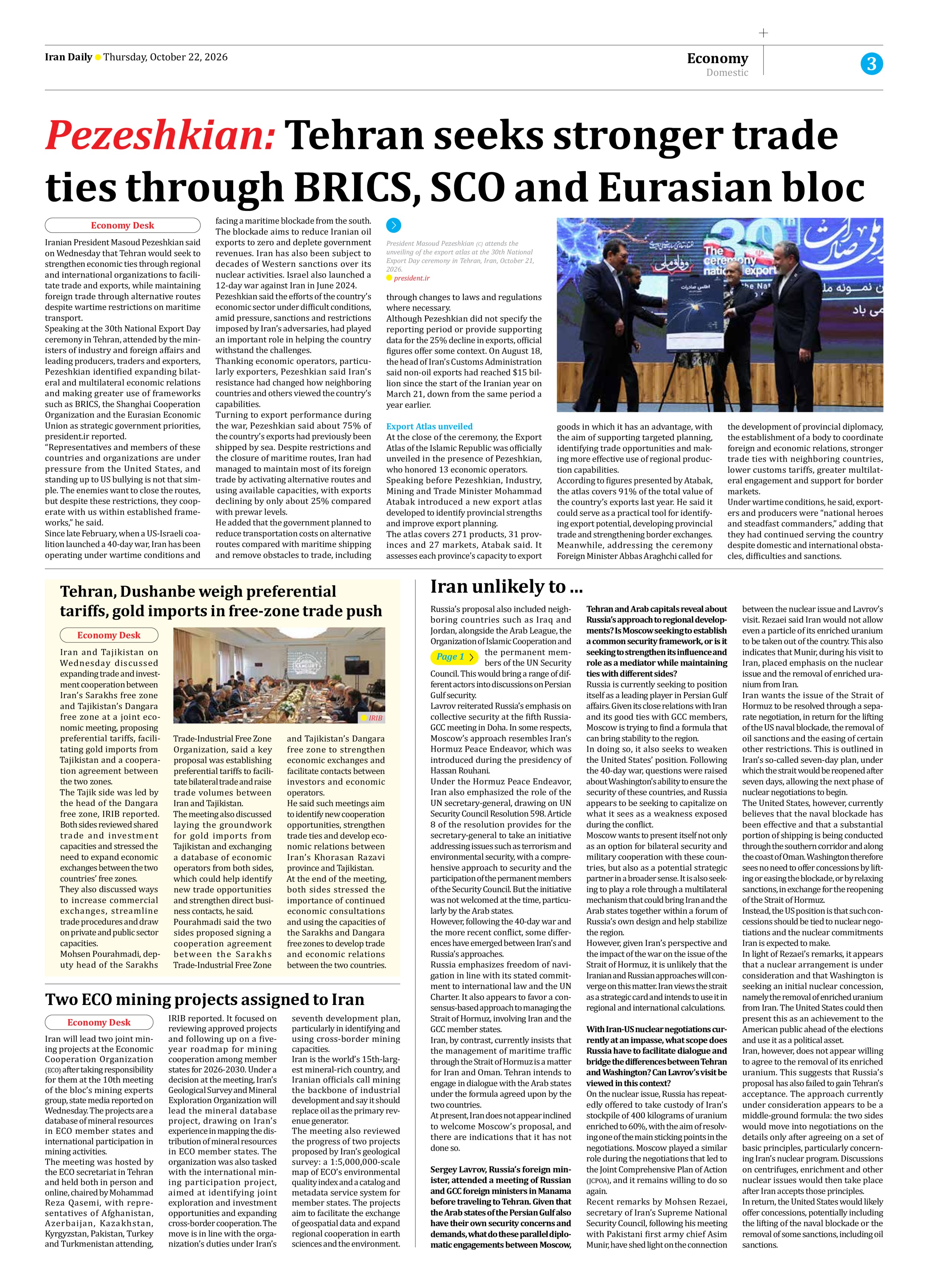
At the close of the ceremony, the Export Atlas of the Islamic Republic was officially unveiled in the presence of Pezeshkian, who honored 13 economic operators.
Speaking before Pezeshkian, Industry, Mining and Trade Minister Mohammad Atabak introduced a new export atlas developed to identify provincial strengths and improve export planning.
The atlas covers 271 products, 31 provinces and 27 markets, Atabak said. It assesses each province’s capacity to export goods in which it has an advantage, with the aim of supporting targeted planning, identifying trade opportunities and making more effective use of regional production capabilities.
According to figures presented by Atabak, the atlas covers 91% of the total value of the country’s exports last year. He said it could serve as a practical tool for identifying export potential, developing provincial trade and strengthening border exchanges.
Meanwhile, addressing the ceremony Foreign Minister Abbas Araghchi called for the development of provincial diplomacy, the establishment of a body to coordinate foreign and economic relations, stronger trade ties with neighboring countries, lower customs tariffs, greater multilateral engagement and support for border markets.
Under wartime conditions, he said, exporters and producers were “national heroes and steadfast commanders,” adding that they had continued serving the country despite domestic and international obstacles, difficulties and sanctions.