


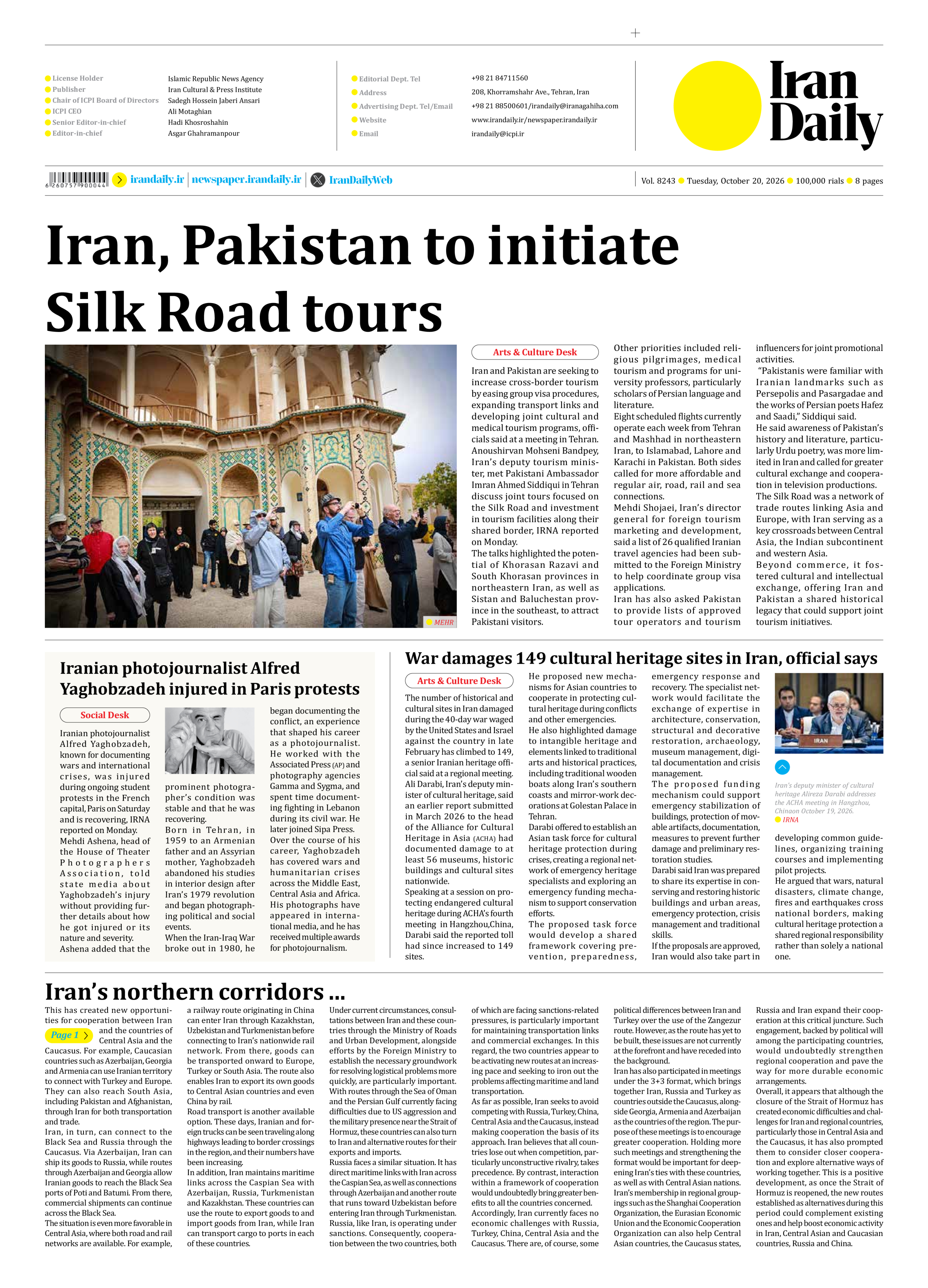


War damages 149 cultural heritage sites in Iran, official says
The number of historical and cultural sites in Iran damaged during the 40-day war waged by the United States and Israel against the country in late February has climbed to 149, a senior Iranian heritage official said at a regional meeting.
Ali Darabi, Iran’s deputy minister of cultural heritage, said an earlier report submitted in March 2026 to the head of the Alliance for Cultural Heritage in Asia (ACHA) had documented damage to at least 56 museums, historic buildings and cultural sites nationwide.
Speaking at a session on protecting endangered cultural heritage during ACHA’s fourth meeting in Hangzhou,China, Darabi said the reported toll had since increased to 149 sites.
He proposed new mechanisms for Asian countries to cooperate in protecting cultural heritage during conflicts and other emergencies.
He also highlighted damage to intangible heritage and elements linked to traditional arts and historical practices, including traditional wooden boats along Iran’s southern coasts and mirror-work decorations at Golestan Palace in Tehran.
Darabi offered to establish an Asian task force for cultural heritage protection during crises, creating a regional network of emergency heritage specialists and exploring an emergency funding mechanism to support conservation efforts.
The proposed task force would develop a shared framework covering prevention, preparedness, emergency response and recovery. The specialist network would facilitate the exchange of expertise in architecture, conservation, structural and decorative restoration, archaeology, museum management, digital documentation and crisis management.
The proposed funding mechanism could support emergency stabilization of buildings, protection of movable artifacts, documentation, measures to prevent further damage and preliminary restoration studies.
Darabi said Iran was prepared to share its expertise in conserving and restoring historic buildings and urban areas, emergency protection, crisis management and traditional skills.
If the proposals are approved, Iran would also take part in developing common guidelines, organizing training courses and implementing pilot projects.
He argued that wars, natural disasters, climate change, fires and earthquakes cross national borders, making cultural heritage protection a shared regional responsibility rather than solely a national one.