




Izeh advances efforts to protect historic sites
Izeh, a treasure trove of the ancient civilizations of the central Zagros, has made fresh progress over the past year in archaeological research, the protection of historic sites and the documentation of heritage assets.
These efforts, alongside the preparation of more than eight dossiers and the development of management plans for historic sites, are opening up new prospects for safeguarding the region’s rich cultural heritage.
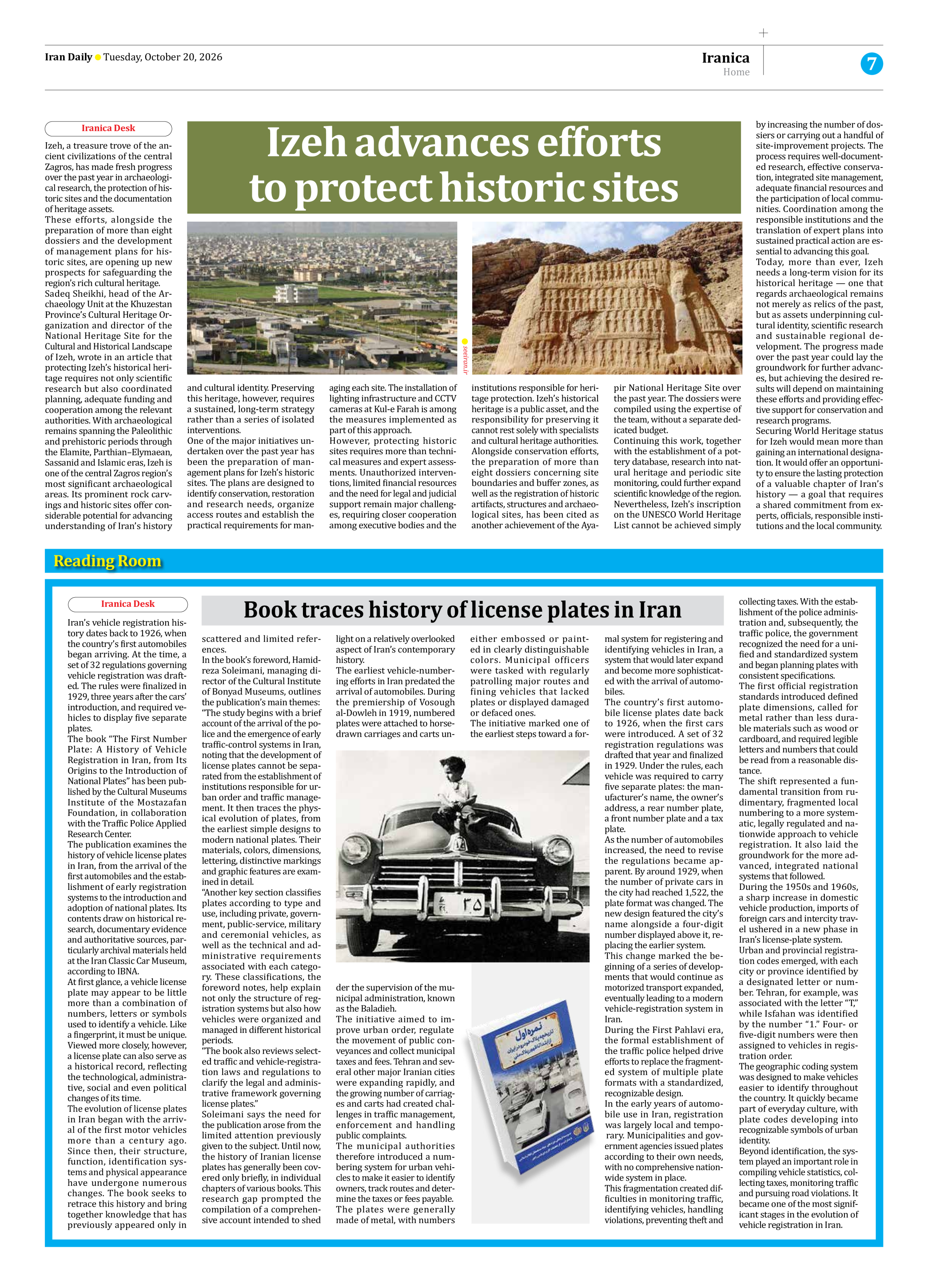
Sadeq Sheikhi, head of the Archaeology Unit at the Khuzestan Province’s Cultural Heritage Organization and director of the National Heritage Site for the Cultural and Historical Landscape of Izeh, wrote in an article that protecting Izeh’s historical heritage requires not only scientific research but also coordinated planning, adequate funding and cooperation among the relevant authorities. With archaeological remains spanning the Paleolithic and prehistoric periods through the Elamite, Parthian–Elymaean, Sassanid and Islamic eras, Izeh is one of the central Zagros region’s most significant archaeological areas. Its prominent rock carvings and historic sites offer considerable potential for advancing understanding of Iran’s history and cultural identity. Preserving this heritage, however, requires a sustained, long-term strategy rather than a series of isolated interventions.
One of the major initiatives undertaken over the past year has been the preparation of management plans for Izeh’s historic sites. The plans are designed to identify conservation, restoration and research needs, organize access routes and establish the practical requirements for managing each site. The installation of lighting infrastructure and CCTV cameras at Kul-e Farah is among the measures implemented as part of this approach.
However, protecting historic sites requires more than technical measures and expert assessments. Unauthorized interventions, limited financial resources and the need for legal and judicial support remain major challenges, requiring closer cooperation among executive bodies and the institutions responsible for heritage protection. Izeh’s historical heritage is a public asset, and the responsibility for preserving it cannot rest solely with specialists and cultural heritage authorities.
Alongside conservation efforts, the preparation of more than eight dossiers concerning site boundaries and buffer zones, as well as the registration of historic artifacts, structures and archaeological sites, has been cited as another achievement of the Ayapir National Heritage Site over the past year. The dossiers were compiled using the expertise of the team, without a separate dedicated budget.
Continuing this work, together with the establishment of a pottery database, research into natural heritage and periodic site monitoring, could further expand scientific knowledge of the region.
Nevertheless, Izeh’s inscription on the UNESCO World Heritage List cannot be achieved simply by increasing the number of dossiers or carrying out a handful of site-improvement projects. The process requires well-documented research, effective conservation, integrated site management, adequate financial resources and the participation of local communities. Coordination among the responsible institutions and the translation of expert plans into sustained practical action are essential to advancing this goal.
Today, more than ever, Izeh needs a long-term vision for its historical heritage — one that regards archaeological remains not merely as relics of the past, but as assets underpinning cultural identity, scientific research and sustainable regional development. The progress made over the past year could lay the groundwork for further advances, but achieving the desired results will depend on maintaining these efforts and providing effective support for conservation and research programs.
Securing World Heritage status for Izeh would mean more than gaining an international designation. It would offer an opportunity to ensure the lasting protection of a valuable chapter of Iran’s history — a goal that requires a shared commitment from experts, officials, responsible institutions and the local community.