







Iran calls for removal of transport barriers at ECO meeting
Iran’s transport minister Farzaneh Sadeq called for removing border barriers, expanding rail and road links, protecting civilian infrastructure and setting clear timelines for implementing transport agreements among member states of the Economic Cooperation Organization (ECO).
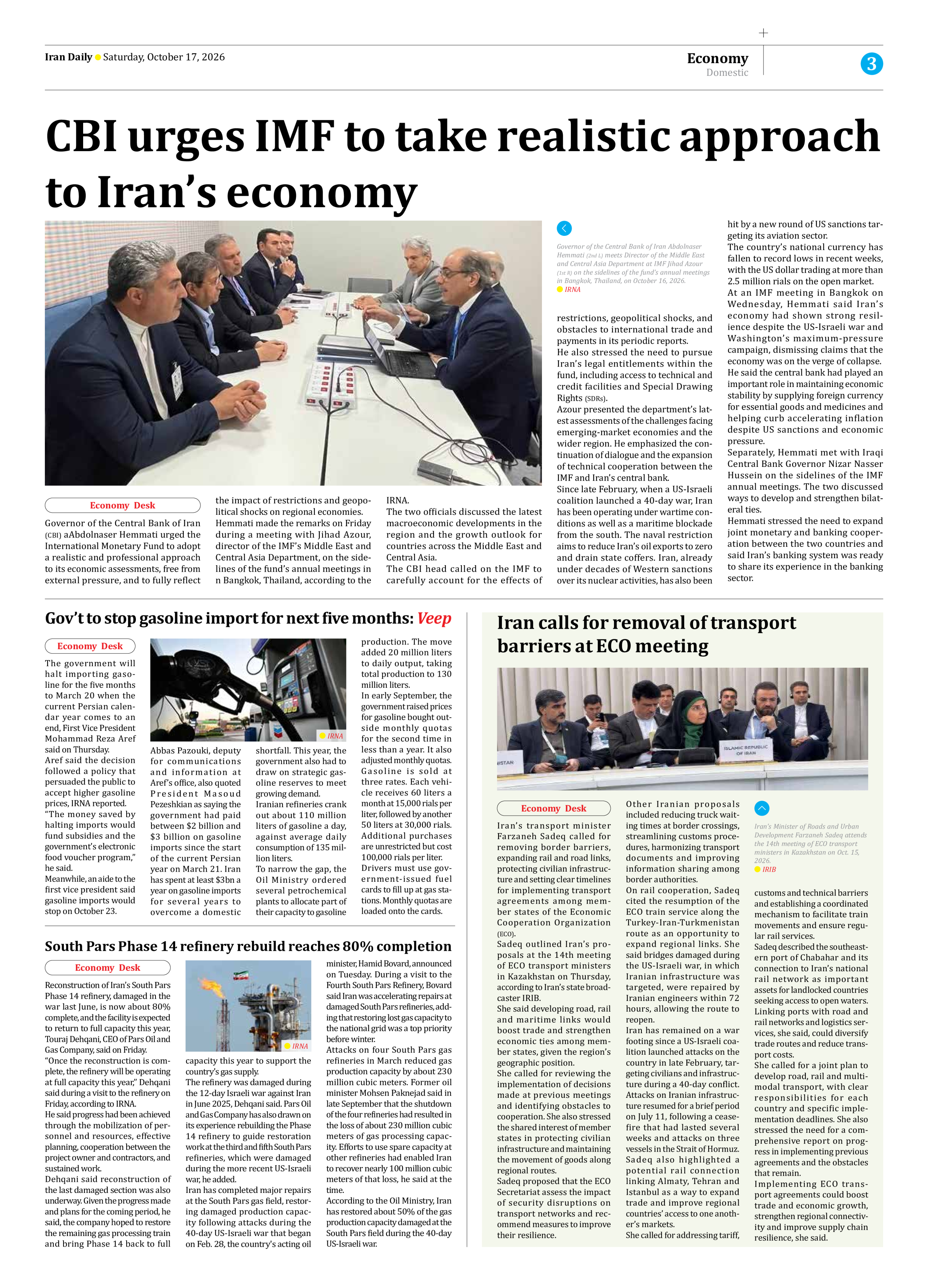
Sadeq outlined Iran’s proposals at the 14th meeting of ECO transport ministers in Kazakhstan on Thursday, according to Iran’s state broadcaster IRIB.
She said developing road, rail and maritime links would boost trade and strengthen economic ties among member states, given the region’s geographic position.
She called for reviewing the implementation of decisions made at previous meetings and identifying obstacles to cooperation. She also stressed the shared interest of member states in protecting civilian infrastructure and maintaining the movement of goods along regional routes.
Sadeq proposed that the ECO Secretariat assess the impact of security disruptions on transport networks and recommend measures to improve their resilience.
Other Iranian proposals included reducing truck waiting times at border crossings, streamlining customs procedures, harmonizing transport documents and improving information sharing among border authorities.
On rail cooperation, Sadeq cited the resumption of the ECO train service along the Turkey-Iran-Turkmenistan route as an opportunity to expand regional links. She said bridges damaged during the US-Israeli war, in which Iranian infrastructure was targeted, were repaired by Iranian engineers within 72 hours, allowing the route to reopen.
Iran has remained on a war footing since a US-Israeli coalition launched attacks on the country in late February, targeting civilians and infrastructure during a 40-day conflict. Attacks on Iranian infrastructure resumed for a brief period on July 11, following a ceasefire that had lasted several weeks and attacks on three vessels in the Strait of Hormuz.
Sadeq also highlighted a potential rail connection linking Almaty, Tehran and Istanbul as a way to expand trade and improve regional countries’ access to one another’s markets.
She called for addressing tariff, customs and technical barriers and establishing a coordinated mechanism to facilitate train movements and ensure regular rail services.
Sadeq described the southeastern port of Chabahar and its connection to Iran’s national rail network as important assets for landlocked countries seeking access to open waters. Linking ports with road and rail networks and logistics services, she said, could diversify trade routes and reduce transport costs.
She called for a joint plan to develop road, rail and multimodal transport, with clear responsibilities for each country and specific implementation deadlines. She also stressed the need for a comprehensive report on progress in implementing previous agreements and the obstacles that remain.
Implementing ECO transport agreements could boost trade and economic growth, strengthen regional connectivity and improve supply chain resilience, she said.