







CBI urges IMF to take realistic approach to Iran’s economy
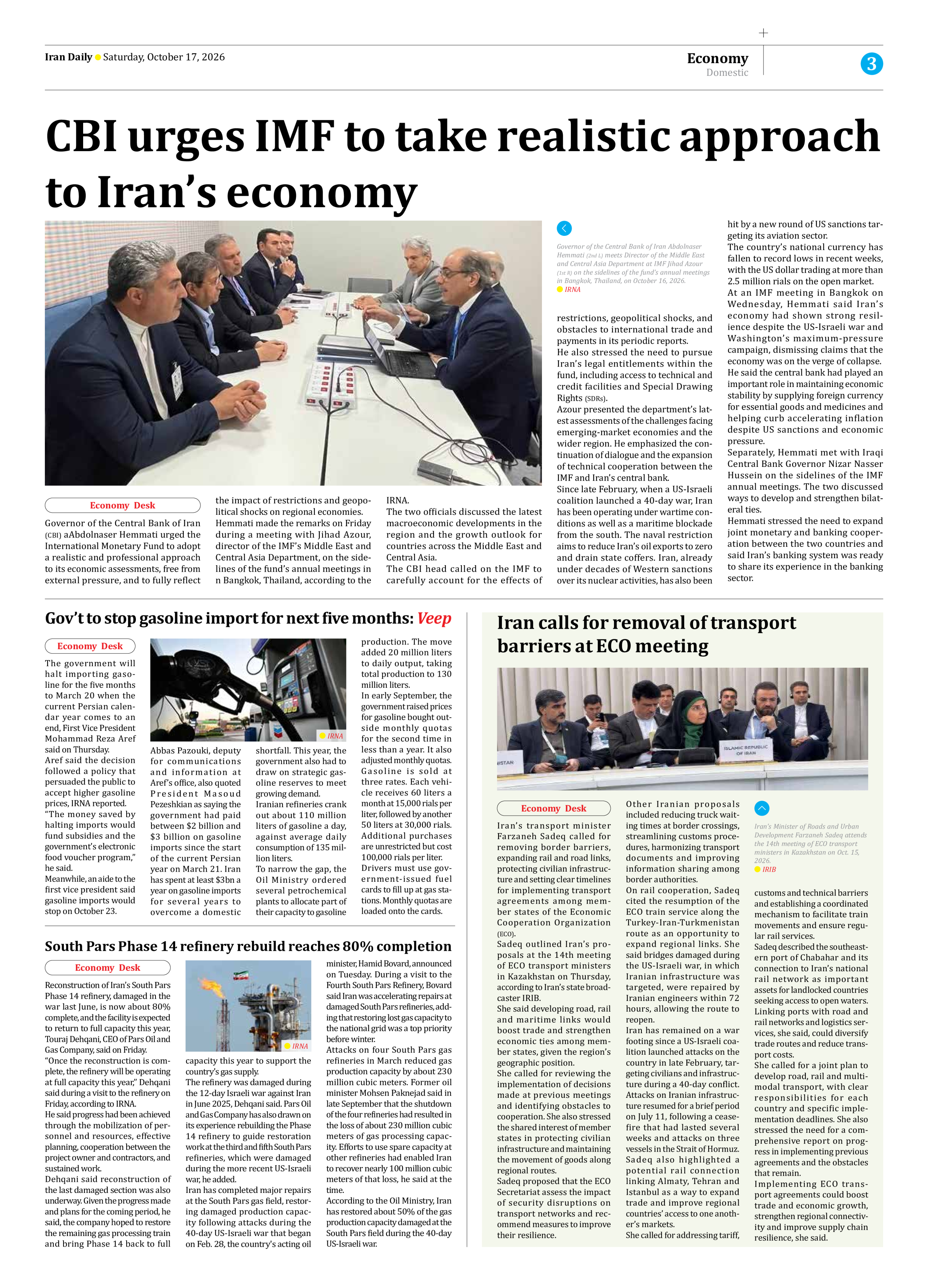
Governor of the Central Bank of Iran (CBI) aAbdolnaser Hemmati urged the International Monetary Fund to adopt a realistic and professional approach to its economic assessments, free from external pressure, and to fully reflect the impact of restrictions and geopolitical shocks on regional economies.
Hemmati made the remarks on Friday during a meeting with Jihad Azour, director of the IMF’s Middle East and Central Asia Department, on the sidelines of the fund’s annual meetings in n Bangkok, Thailand, according to the IRNA.
The two officials discussed the latest macroeconomic developments in the region and the growth outlook for countries across the Middle East and Central Asia.
The CBI head called on the IMF to carefully account for the effects of restrictions, geopolitical shocks, and obstacles to international trade and payments in its periodic reports.
He also stressed the need to pursue Iran’s legal entitlements within the fund, including access to technical and credit facilities and Special Drawing Rights (SDRs).
Azour presented the department’s latest assessments of the challenges facing emerging-market economies and the wider region. He emphasized the continuation of dialogue and the expansion of technical cooperation between the IMF and Iran’s central bank.
Since late February, when a US-Israeli coalition launched a 40-day war, Iran has been operating under wartime conditions as well as a maritime blockade from the south. The naval restriction aims to reduce Iran’s oil exports to zero and drain state coffers. Iran, already under decades of Western sanctions over its nuclear activities, has also been hit by a new round of US sanctions targeting its aviation sector.
The country’s national currency has fallen to record lows in recent weeks, with the US dollar trading at more than 2.5 million rials on the open market.
At an IMF meeting in Bangkok on Wednesday, Hemmati said Iran’s economy had shown strong resilience despite the US-Israeli war and Washington’s maximum-pressure campaign, dismissing claims that the economy was on the verge of collapse.
He said the central bank had played an important role in maintaining economic stability by supplying foreign currency for essential goods and medicines and helping curb accelerating inflation despite US sanctions and economic pressure.
Separately, Hemmati met with Iraqi Central Bank Governor Nizar Nasser Hussein on the sidelines of the IMF annual meetings. The two discussed ways to develop and strengthen bilateral ties.
Hemmati stressed the need to expand joint monetary and banking cooperation between the two countries and said Iran’s banking system was ready to share its experience in the banking sector.