





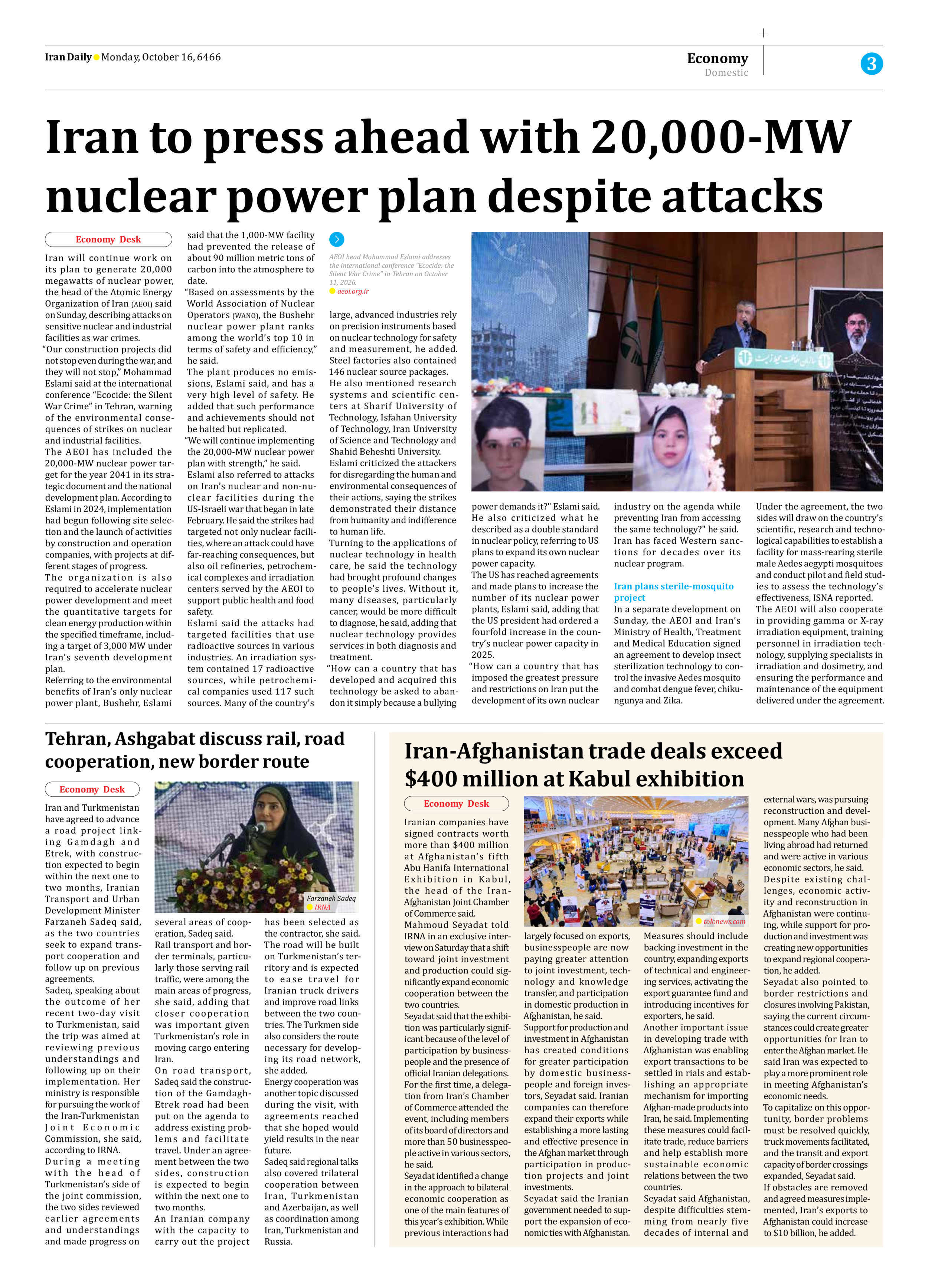


Iran-Afghanistan trade deals exceed $400 million at Kabul exhibition
Iranian companies have signed contracts worth more than $400 million at Afghanistan’s fifth Abu Hanifa International Exhibition in Kabul, the head of the Iran-Afghanistan Joint Chamber of Commerce said.
Mahmoud Seyadat told IRNA in an exclusive interview on Saturday that a shift toward joint investment and production could significantly expand economic cooperation between the two countries.
Seyadat said that the exhibition was particularly significant because of the level of participation by businesspeople and the presence of official Iranian delegations.
For the first time, a delegation from Iran’s Chamber of Commerce attended the event, including members of its board of directors and more than 50 businesspeople active in various sectors, he said.
Seyadat identified a change in the approach to bilateral economic cooperation as one of the main features of this year’s exhibition. While previous interactions had largely focused on exports, businesspeople are now paying greater attention to joint investment, technology and knowledge transfer, and participation in domestic production in Afghanistan, he said.
Support for production and investment in Afghanistan has created conditions for greater participation by domestic businesspeople and foreign investors, Seyadat said. Iranian companies can therefore expand their exports while establishing a more lasting and effective presence in the Afghan market through participation in production projects and joint investments.
Seyadat said the Iranian government needed to support the expansion of economic ties with Afghanistan. Measures should include backing investment in the country, expanding exports of technical and engineering services, activating the export guarantee fund and introducing incentives for exporters, he said.
Another important issue in developing trade with Afghanistan was enabling export transactions to be settled in rials and establishing an appropriate mechanism for importing Afghan-made products into Iran, he said. Implementing these measures could facilitate trade, reduce barriers and help establish more sustainable economic relations between the two countries.
Seyadat said Afghanistan, despite difficulties stemming from nearly five decades of internal and external wars, was pursuing reconstruction and development. Many Afghan businesspeople who had been living abroad had returned and were active in various economic sectors, he said.
Despite existing challenges, economic activity and reconstruction in Afghanistan were continuing, while support for production and investment was creating new opportunities to expand regional cooperation, he added.
Seyadat also pointed to border restrictions and closures involving Pakistan, saying the current circumstances could create greater opportunities for Iran to enter the Afghan market. He said Iran was expected to play a more prominent role in meeting Afghanistan’s economic needs.
To capitalize on this opportunity, border problems must be resolved quickly, truck movements facilitated, and the transit and export capacity of border crossings expanded, Seyadat said.
If obstacles are removed and agreed measures implemented, Iran’s exports to Afghanistan could increase to $10 billion, he added.