





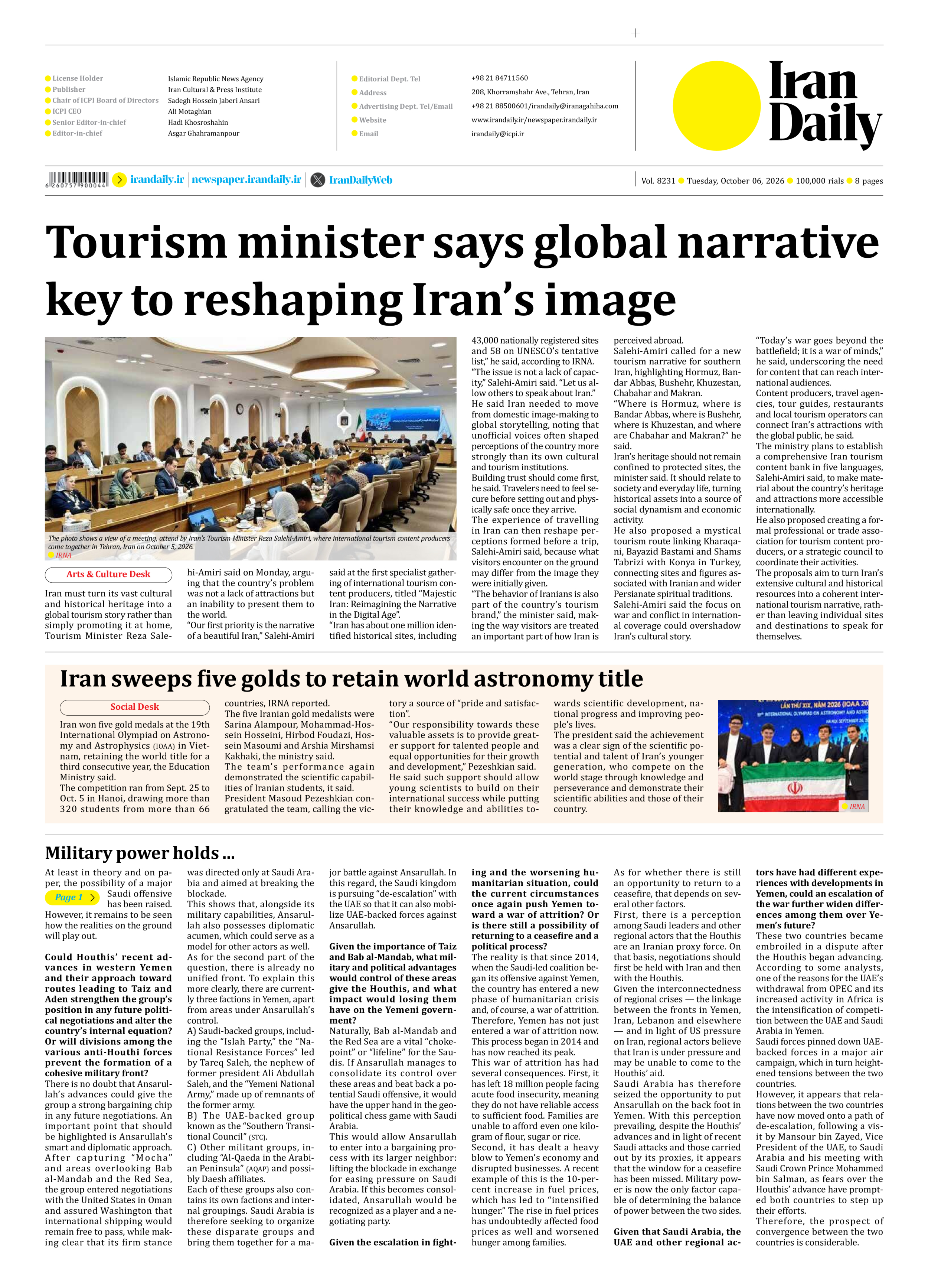


Tourism minister says global narrative key to reshaping Iran’s image
Iran must turn its vast cultural and historical heritage into a global tourism story rather than simply promoting it at home, Tourism Minister Reza Salehi-Amiri said on Monday, arguing that the country’s problem was not a lack of attractions but an inability to present them to the world.
“Our first priority is the narrative of a beautiful Iran,” Salehi-Amiri said at the first specialist gathering of international tourism content producers, titled “Majestic Iran: Reimagining the Narrative in the Digital Age”.
“Iran has about one million identified historical sites, including 43,000 nationally registered sites and 58 on UNESCO’s tentative list,” he said, according to IRNA.
“The issue is not a lack of capacity,” Salehi-Amiri said. “Let us allow others to speak about Iran.”
He said Iran needed to move from domestic image-making to global storytelling, noting that unofficial voices often shaped perceptions of the country more strongly than its own cultural and tourism institutions.
Building trust should come first, he said. Travelers need to feel secure before setting out and physically safe once they arrive.
The experience of travelling in Iran can then reshape perceptions formed before a trip, Salehi-Amiri said, because what visitors encounter on the ground may differ from the image they were initially given.
“The behavior of Iranians is also part of the country’s tourism brand,” the minister said, making the way visitors are treated an important part of how Iran is perceived abroad.
Salehi-Amiri called for a new tourism narrative for southern Iran, highlighting Hormuz, Bandar Abbas, Bushehr, Khuzestan, Chabahar and Makran.
“Where is Hormuz, where is Bandar Abbas, where is Bushehr, where is Khuzestan, and where are Chabahar and Makran?” he said.
Iran’s heritage should not remain confined to protected sites, the minister said. It should relate to society and everyday life, turning historical assets into a source of social dynamism and economic activity.
He also proposed a mystical tourism route linking Kharaqani, Bayazid Bastami and Shams Tabrizi with Konya in Turkey, connecting sites and figures associated with Iranian and wider Persianate spiritual traditions.
Salehi-Amiri said the focus on war and conflict in international coverage could overshadow Iran’s cultural story.
“Today’s war goes beyond the battlefield; it is a war of minds,” he said, underscoring the need for content that can reach international audiences.
Content producers, travel agencies, tour guides, restaurants and local tourism operators can connect Iran’s attractions with the global public, he said.
The ministry plans to establish a comprehensive Iran tourism content bank in five languages, Salehi-Amiri said, to make material about the country’s heritage and attractions more accessible internationally.
He also proposed creating a formal professional or trade association for tourism content producers, or a strategic council to coordinate their activities.
The proposals aim to turn Iran’s extensive cultural and historical resources into a coherent international tourism narrative, rather than leaving individual sites and destinations to speak for themselves.