







Pezeshkian calls for practical measures, national unity to improve livelihoods, economy
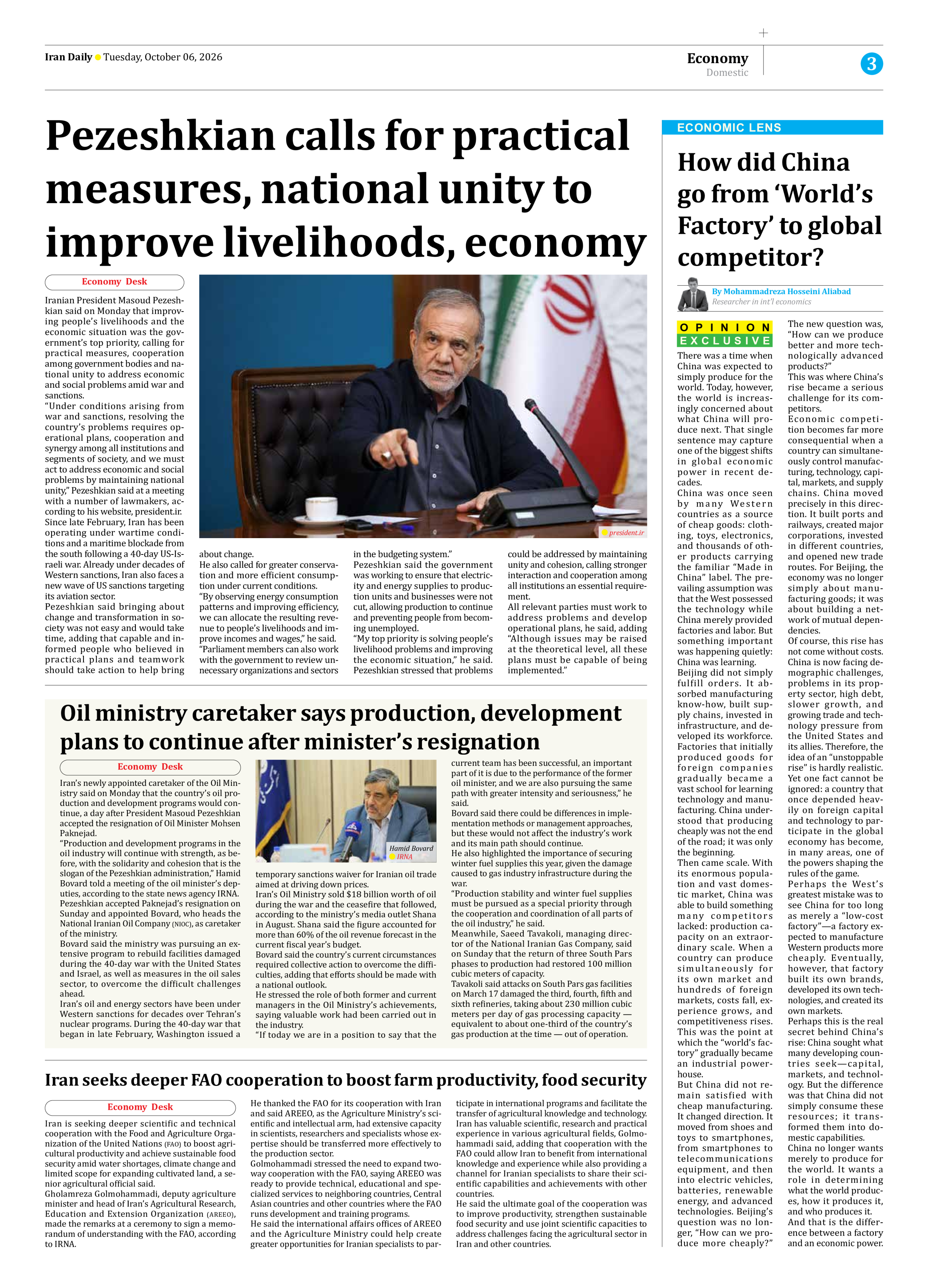
Iranian President Masoud Pezeshkian said on Monday that improving people’s livelihoods and the economic situation was the government’s top priority, calling for practical measures, cooperation among government bodies and national unity to address economic and social problems amid war and sanctions.
“Under conditions arising from war and sanctions, resolving the country’s problems requires operational plans, cooperation and synergy among all institutions and segments of society, and we must act to address economic and social problems by maintaining national unity,” Pezeshkian said at a meeting with a number of lawmakers, according to his website, president.ir.
Since late February, Iran has been operating under wartime conditions and a maritime blockade from the south following a 40-day US-Israeli war. Already under decades of Western sanctions, Iran also faces a new wave of US sanctions targeting its aviation sector.
Pezeshkian said bringing about change and transformation in society was not easy and would take time, adding that capable and informed people who believed in practical plans and teamwork should take action to help bring about change.
He also called for greater conservation and more efficient consumption under current conditions.
“By observing energy consumption patterns and improving efficiency, we can allocate the resulting revenue to people’s livelihoods and improve incomes and wages,” he said.
“Parliament members can also work with the government to review unnecessary organizations and sectors in the budgeting system.”
Pezeshkian said the government was working to ensure that electricity and energy supplies to production units and businesses were not cut, allowing production to continue and preventing people from becoming unemployed.
“My top priority is solving people’s livelihood problems and improving the economic situation,” he said. Pezeshkian stressed that problems could be addressed by maintaining unity and cohesion, calling stronger interaction and cooperation among all institutions an essential requirement.
All relevant parties must work to address problems and develop operational plans, he said, adding “Although issues may be raised at the theoretical level, all these plans must be capable of being implemented.”