







Enemy’s economic war goals failed: President
Iranian President Masoud Pezeshkian said that Iran has not allowed the objectives of the United States and Israel in their economic war to be realized.
The president made the remarks on his social media account, attributing the success of the country’s resilience to God’s grace, the people’s support and the “measures of our colleagues in the government”.
“The government has adopted a new arrangement to manage the special conditions,” said Pezeshkian, adding that the enemy’s plan in recent months has been to cut the country’s vital arteries with the aim of pressuring the noble Iranian people.
Cabinet adopts new economic posture
To further strengthen the management of Iran’s special circumstances, the administration has adopted a new economic posture with plans focusing on foreign exchange market developments, budget resources and expenditures, and essential goods supplies.
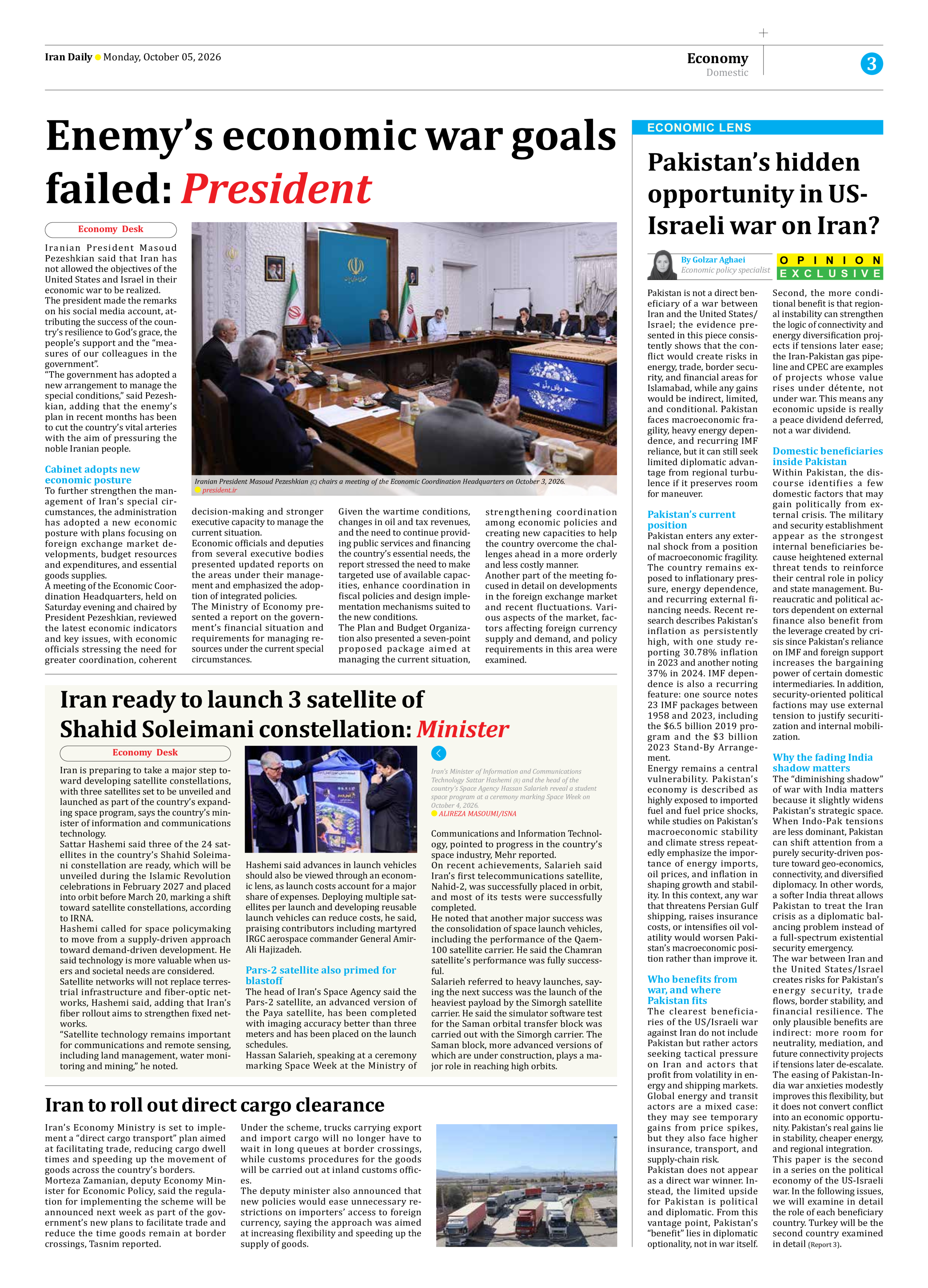
A meeting of the Economic Coordination Headquarters, held on Saturday evening and chaired by President Pezeshkian, reviewed the latest economic indicators and key issues, with economic officials stressing the need for greater coordination, coherent decision-making and stronger executive capacity to manage the current situation.
Economic officials and deputies from several executive bodies presented updated reports on the areas under their management and emphasized the adoption of integrated policies.
The Ministry of Economy presented a report on the government’s financial situation and requirements for managing resources under the current special circumstances.
Given the wartime conditions, changes in oil and tax revenues, and the need to continue providing public services and financing the country’s essential needs, the report stressed the need to make targeted use of available capacities, enhance coordination in fiscal policies and design implementation mechanisms suited to the new conditions.
The Plan and Budget Organization also presented a seven-point proposed package aimed at managing the current situation, strengthening coordination among economic policies and creating new capacities to help the country overcome the challenges ahead in a more orderly and less costly manner.
Another part of the meeting focused in detail on developments in the foreign exchange market and recent fluctuations. Various aspects of the market, factors affecting foreign currency supply and demand, and policy requirements in this area were examined.