







Copy in clipboard...
Bijar’s heritage, handicrafts seen as key tourism assets
Speaking to ISNA following a one-day visit to Bijar, Hosseini stressed the importance of strengthening cooperation among local communities, artists and officials to further develop the city’s cultural heritage and tourism potential.
“Cooperation between the people, particularly artists, and officials needs to be strengthened,” Hosseini said, adding that greater public participation could create new opportunities in the fields of art, history and cultural heritage.
Hosseini said Bijar’s approximately 600 historic sites and 60 traditional bathhouses reflect the area’s long history and rich cultural heritage.
He also emphasized the importance of introducing younger generations to Iran’s historical heritage. Educational programs, regular conferences and media initiatives, he said, should be expanded to raise public awareness of the country’s cultural and historical resources.
According to Hosseini, broadcasters, news agencies, artists, journalists and cultural organizations can play a greater role in introducing the heritage of Bijar and other historic areas of Iran to the public.
Hosseini identified the city’s limited recognition as a tourism destination as one of its key challenges.
He said developing Bijar as a tourism destination could create new opportunities for local economic development, given its historical, cultural and artistic resources.
Hosseini also called on residents of Bijar and Kurdistan Province to invest in tourism-related businesses, including traditional accommodation and hotels. He said the necessary incentives and support could be provided to expand accommodation infrastructure and encourage visitors to stay longer in the city.
The historic bazaar of Bijar was also highlighted as one of the city’s important cultural assets.
Hosseini described the bazaar as a historically significant structure that has survived despite damage inflicted on the city over the course of its history, including during Russian attacks on Bijar.
He said one of the objectives of his visit was to examine plans for rehabilitating the historic bazaar. According to Hosseini, efforts will be made in cooperation with the governor, provincial cultural heritage officials and other authorities to address existing problems and restore the remaining sections of the bazaar, particularly its covered areas.
He expressed hope that continued cooperation among local authorities and communities would lead to further progress in the development and rehabilitation of Bijar’s historic and tourism assets during future visits.
Hosseini also outlined measures being considered to support local handicraft producers and artists.
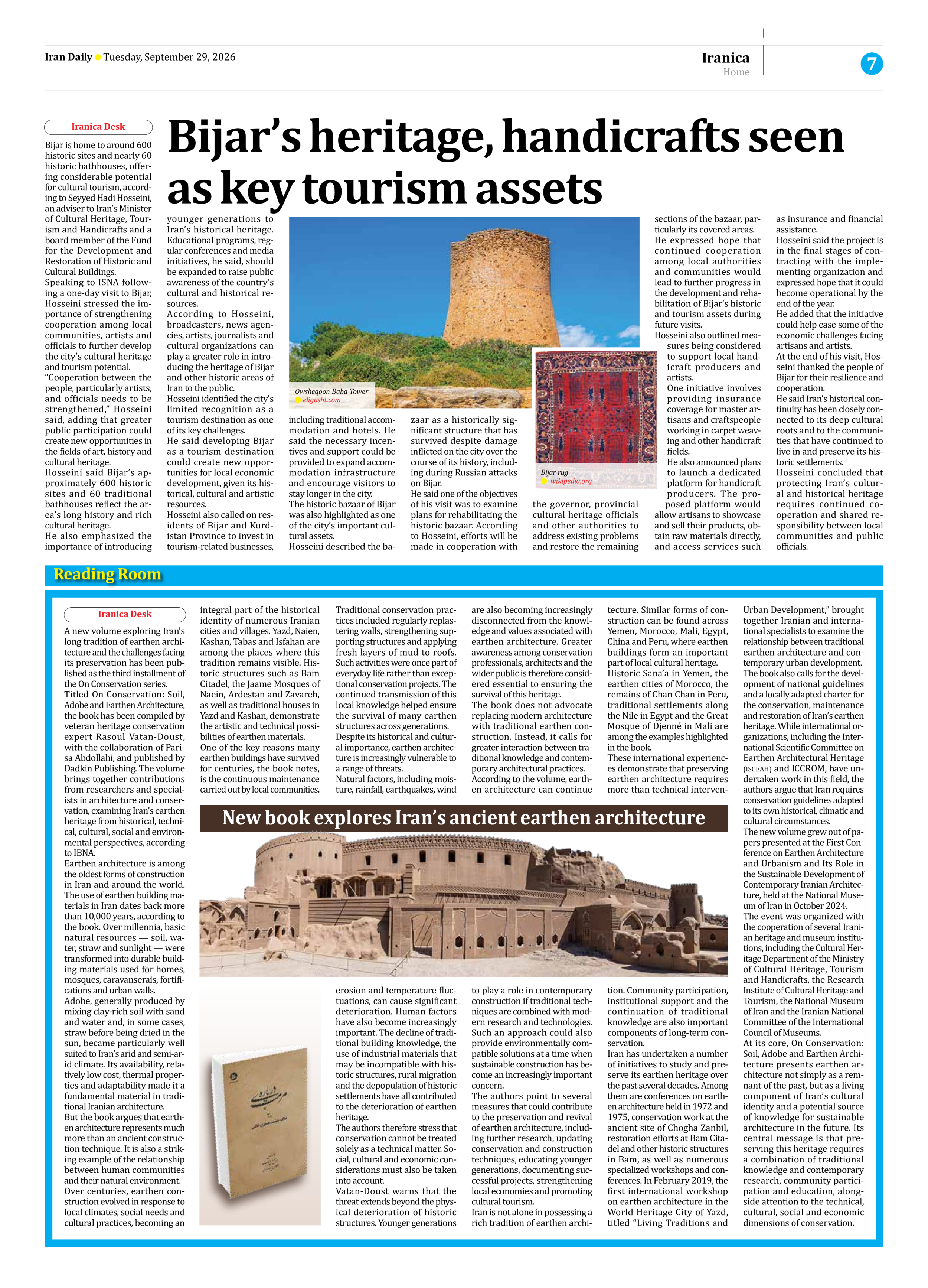
One initiative involves providing insurance coverage for master artisans and craftspeople working in carpet weaving and other handicraft fields.
He also announced plans to launch a dedicated platform for handicraft producers. The proposed platform would allow artisans to showcase and sell their products, obtain raw materials directly, and access services such as insurance and financial assistance.
Hosseini said the project is in the final stages of contracting with the implementing organization and expressed hope that it could become operational by the end of the year.
He added that the initiative could help ease some of the economic challenges facing artisans and artists.
At the end of his visit, Hosseini thanked the people of Bijar for their resilience and cooperation.
He said Iran’s historical continuity has been closely connected to its deep cultural roots and to the communities that have continued to live in and preserve its historic settlements.
Hosseini concluded that protecting Iran’s cultural and historical heritage requires continued cooperation and shared responsibility between local communities and public officials.