







NIPC restores 60% of war-damaged petrochemical capacity
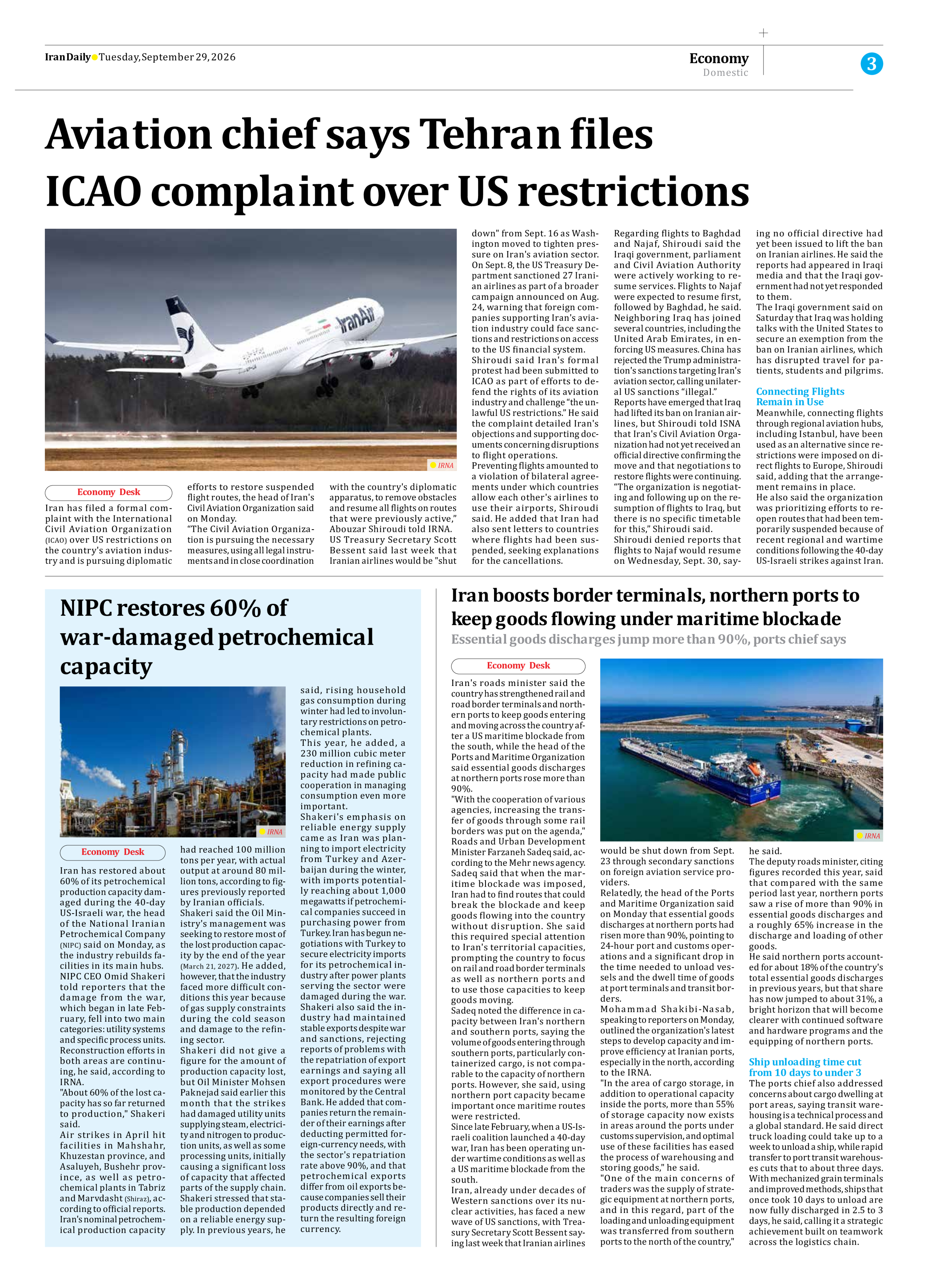
Iran has restored about 60% of its petrochemical production capacity damaged during the 40-day US-Israeli war, the head of the National Iranian Petrochemical Company (NIPC) said on Monday, as the industry rebuilds facilities in its main hubs.
NIPC CEO Omid Shakeri told reporters that the damage from the war, which began in late February, fell into two main categories: utility systems and specific process units. Reconstruction efforts in both areas are continuing, he said, according to IRNA.
"About 60% of the lost capacity has so far returned to production," Shakeri said.
Air strikes in April hit facilities in Mahshahr, Khuzestan province, and Asaluyeh, Bushehr province, as well as petrochemical plants in Tabriz and Marvdasht (Shiraz), according to official reports.
Iran's nominal petrochemical production capacity had reached 100 million tons per year, with actual output at around 80 million tons, according to figures previously reported by Iranian officials.
Shakeri said the Oil Ministry's management was seeking to restore most of the lost production capacity by the end of the year (March 21, 2027). He added, however, that the industry faced more difficult conditions this year because of gas supply constraints during the cold season and damage to the refining sector.
Shakeri did not give a figure for the amount of production capacity lost, but Oil Minister Mohsen Paknejad said earlier this month that the strikes had damaged utility units supplying steam, electricity and nitrogen to production units, as well as some processing units, initially causing a significant loss of capacity that affected parts of the supply chain.
Shakeri stressed that stable production depended on a reliable energy supply. In previous years, he said, rising household gas consumption during winter had led to involuntary restrictions on petrochemical plants.
This year, he added, a 230 million cubic meter reduction in refining capacity had made public cooperation in managing consumption even more important.
Shakeri's emphasis on reliable energy supply came as Iran was planning to import electricity from Turkey and Azerbaijan during the winter, with imports potentially reaching about 1,000 megawatts if petrochemical companies succeed in purchasing power from Turkey. Iran has begun negotiations with Turkey to secure electricity imports for its petrochemical industry after power plants serving the sector were damaged during the war.
Shakeri also said the industry had maintained stable exports despite war and sanctions, rejecting reports of problems with the repatriation of export earnings and saying all export procedures were monitored by the Central Bank. He added that companies return the remainder of their earnings after deducting permitted foreign-currency needs, with the sector's repatriation rate above 90%, and that petrochemical exports differ from oil exports because companies sell their products directly and return the resulting foreign currency.