







Bushehr keeps its cultural traditions alive
Cultural heritage is not confined to historic monuments, architectural sites, archaeological remains and ancient artifacts. An important part of a society’s cultural identity lies in its intangible heritage — traditions, knowledge and practices passed down from one generation to the next.
Bushehr, a region with a rich historical background and a deeply rooted maritime culture, is home to a valuable treasury of such heritage. Preserving this legacy is not solely the responsibility of a particular institution or cultural organization; rather, it is a shared responsibility involving local communities, families, artists, researchers and cultural authorities.
Local customs and traditions, traditional music and folk songs, culinary practices, indigenous dialects and vocabulary, oral histories and storytelling, traditional games, knowledge related to the sea and fishing, and indigenous skills are among the elements of Bushehr’s intangible heritage. Each represents a chapter of the province’s history and the everyday lives of its people.
Throughout history, Bushehr’s culture has maintained a close relationship with the sea. The sea has been more than a source of livelihood; it has been an integral part of the people’s identity, beliefs, music, oral literature and way of life. Many local customs, traditions, words and expressions reflect this longstanding relationship with the sea and coastal living.
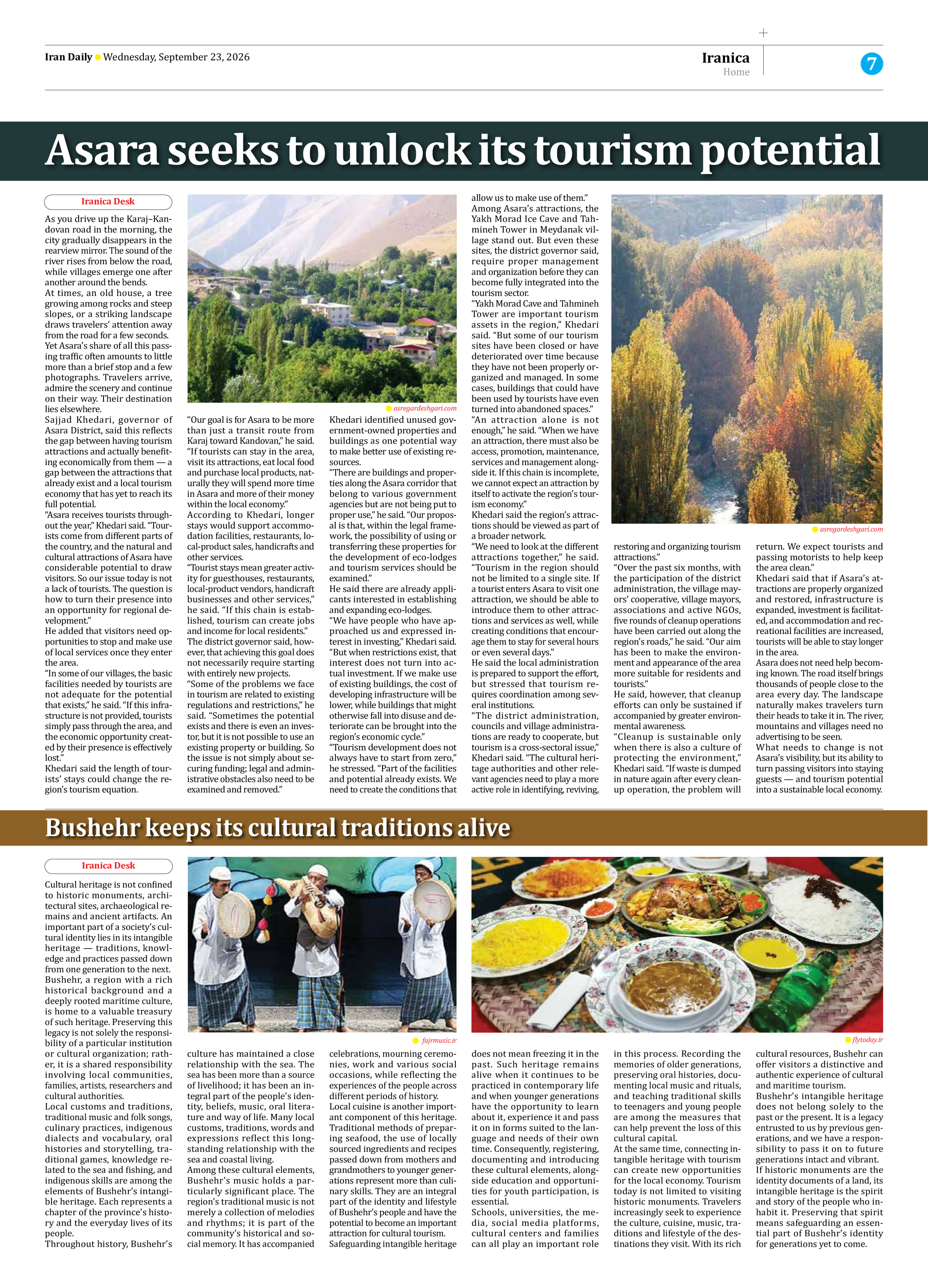
Among these cultural elements, Bushehr’s music holds a particularly significant place. The region’s traditional music is not merely a collection of melodies and rhythms; it is part of the community’s historical and social memory. It has accompanied celebrations, mourning ceremonies, work and various social occasions, while reflecting the experiences of the people across different periods of history.
Local cuisine is another important component of this heritage. Traditional methods of preparing seafood, the use of locally sourced ingredients and recipes passed down from mothers and grandmothers to younger generations represent more than culinary skills. They are an integral part of the identity and lifestyle of Bushehr’s people and have the potential to become an important attraction for cultural tourism.
Safeguarding intangible heritage does not mean freezing it in the past. Such heritage remains alive when it continues to be practiced in contemporary life and when younger generations have the opportunity to learn about it, experience it and pass it on in forms suited to the language and needs of their own time. Consequently, registering, documenting and introducing these cultural elements, alongside education and opportunities for youth participation, is essential.
Schools, universities, the media, social media platforms, cultural centers and families can all play an important role in this process. Recording the memories of older generations, preserving oral histories, documenting local music and rituals, and teaching traditional skills to teenagers and young people are among the measures that can help prevent the loss of this cultural capital.
At the same time, connecting intangible heritage with tourism can create new opportunities for the local economy. Tourism today is not limited to visiting historic monuments. Travelers increasingly seek to experience the culture, cuisine, music, traditions and lifestyle of the destinations they visit. With its rich cultural resources, Bushehr can offer visitors a distinctive and authentic experience of cultural and maritime tourism.
Bushehr’s intangible heritage does not belong solely to the past or the present. It is a legacy entrusted to us by previous generations, and we have a responsibility to pass it on to future generations intact and vibrant.
If historic monuments are the identity documents of a land, its intangible heritage is the spirit and story of the people who inhabit it. Preserving that spirit means safeguarding an essential part of Bushehr’s identity for generations yet to come.