







Cham Sabz offers different face of summer tourism in Khuzestan
For many travelers, visiting Khuzestan Province during the hot months is synonymous with extreme heat. But in Andimeshk, the Dez River and its surrounding cliffs have given rise to a destination that offers a distinctly different vision of summer tourism in the province.
Known locally as Cham Sabz, or Cham Sooz in the local dialect, the natural area lies downstream from the Dez Dam and offers visitors a combination of boating, nature tourism, water-based activities and the chance to float in the cool waters of the river, according to chtn.ir.
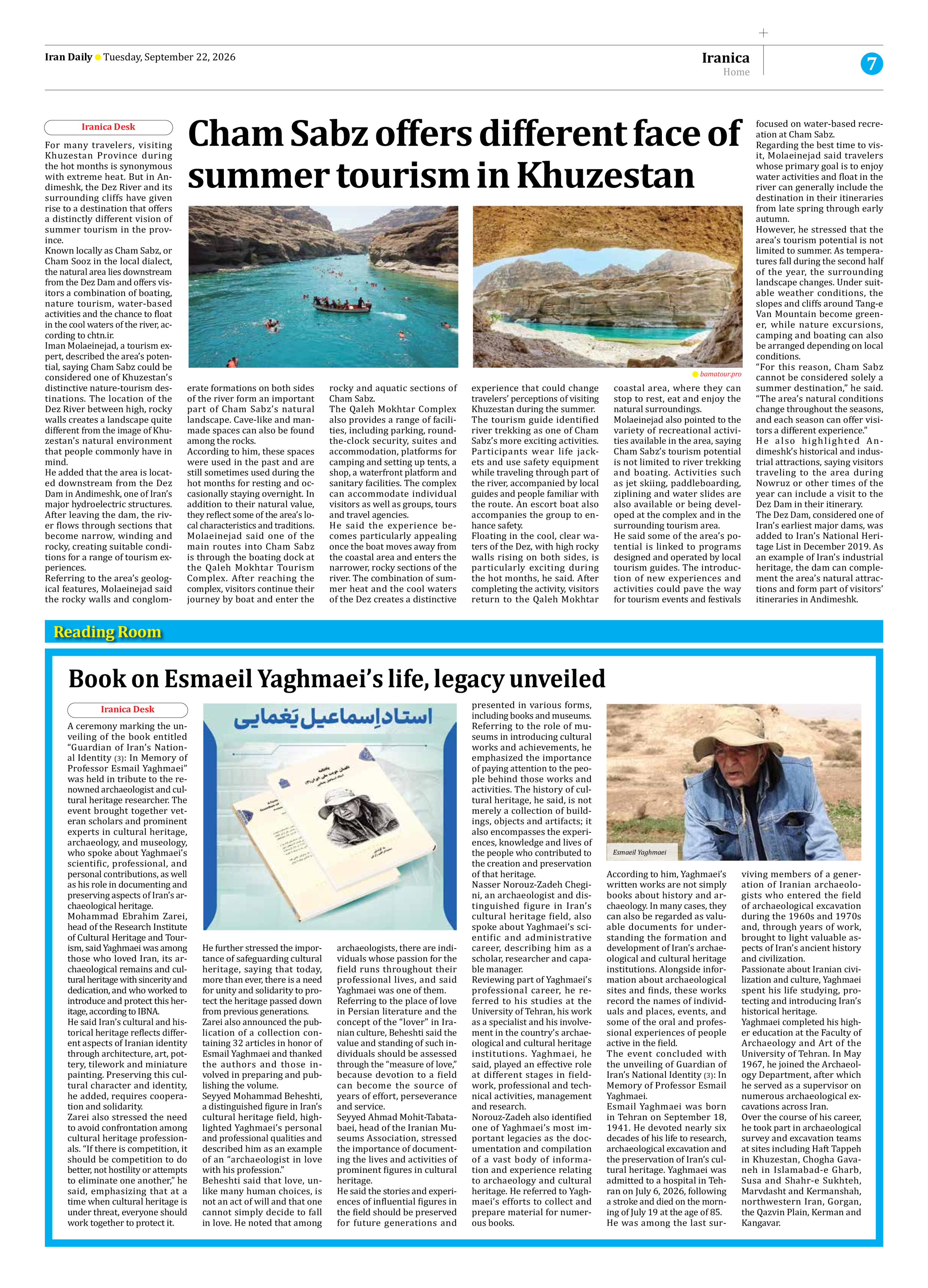
Iman Molaeinejad, a tourism expert, described the area’s potential, saying Cham Sabz could be considered one of Khuzestan’s distinctive nature-tourism destinations. The location of the Dez River between high, rocky walls creates a landscape quite different from the image of Khuzestan’s natural environment that people commonly have in mind.
He added that the area is located downstream from the Dez Dam in Andimeshk, one of Iran’s major hydroelectric structures. After leaving the dam, the river flows through sections that become narrow, winding and rocky, creating suitable conditions for a range of tourism experiences.
Referring to the area’s geological features, Molaeinejad said the rocky walls and conglomerate formations on both sides of the river form an important part of Cham Sabz’s natural landscape. Cave-like and man-made spaces can also be found among the rocks.
According to him, these spaces were used in the past and are still sometimes used during the hot months for resting and occasionally staying overnight. In addition to their natural value, they reflect some of the area’s local characteristics and traditions.
Molaeinejad said one of the main routes into Cham Sabz is through the boating dock at the Qaleh Mokhtar Tourism Complex. After reaching the complex, visitors continue their journey by boat and enter the rocky and aquatic sections of Cham Sabz.
The Qaleh Mokhtar Complex also provides a range of facilities, including parking, round-the-clock security, suites and accommodation, platforms for camping and setting up tents, a shop, a waterfront platform and sanitary facilities. The complex can accommodate individual visitors as well as groups, tours and travel agencies.
He said the experience becomes particularly appealing once the boat moves away from the coastal area and enters the narrower, rocky sections of the river. The combination of summer heat and the cool waters of the Dez creates a distinctive experience that could change travelers’ perceptions of visiting Khuzestan during the summer.
The tourism guide identified river trekking as one of Cham Sabz’s more exciting activities. Participants wear life jackets and use safety equipment while traveling through part of the river, accompanied by local guides and people familiar with the route. An escort boat also accompanies the group to enhance safety.
Floating in the cool, clear waters of the Dez, with high rocky walls rising on both sides, is particularly exciting during the hot months, he said. After completing the activity, visitors return to the Qaleh Mokhtar coastal area, where they can stop to rest, eat and enjoy the natural surroundings.
Molaeinejad also pointed to the variety of recreational activities available in the area, saying Cham Sabz’s tourism potential is not limited to river trekking and boating. Activities such as jet skiing, paddleboarding, ziplining and water slides are also available or being developed at the complex and in the surrounding tourism area.
He said some of the area’s potential is linked to programs designed and operated by local tourism guides. The introduction of new experiences and activities could pave the way for tourism events and festivals focused on water-based recreation at Cham Sabz.
Regarding the best time to visit, Molaeinejad said travelers whose primary goal is to enjoy water activities and float in the river can generally include the destination in their itineraries from late spring through early autumn.
However, he stressed that the area’s tourism potential is not limited to summer. As temperatures fall during the second half of the year, the surrounding landscape changes. Under suitable weather conditions, the slopes and cliffs around Tang-e Van Mountain become greener, while nature excursions, camping and boating can also be arranged depending on local conditions.
“For this reason, Cham Sabz cannot be considered solely a summer destination,” he said. “The area’s natural conditions change throughout the seasons, and each season can offer visitors a different experience.”
He also highlighted Andimeshk’s historical and industrial attractions, saying visitors traveling to the area during Nowruz or other times of the year can include a visit to the Dez Dam in their itinerary.
The Dez Dam, considered one of Iran’s earliest major dams, was added to Iran’s National Heritage List in December 2019. As an example of Iran’s industrial heritage, the dam can complement the area’s natural attractions and form part of visitors’ itineraries in Andimeshk.