







Quzlu holds untapped potential for rural tourism
Zanjan Province, with its diverse climate and ancient history, has always been a stage for the manifestation of culture and nature. Among the cities in this province, Mahneshan holds a special place with its unique geological landscapes and mysterious history. Mahneshan should be regarded not as a transit destination, but as a “destination for discovery” — a place where tourists can experience a new meaning of authenticity amid the corridors of history and untouched rural textures. The villages of Mahneshan are the cultural identity of this city.
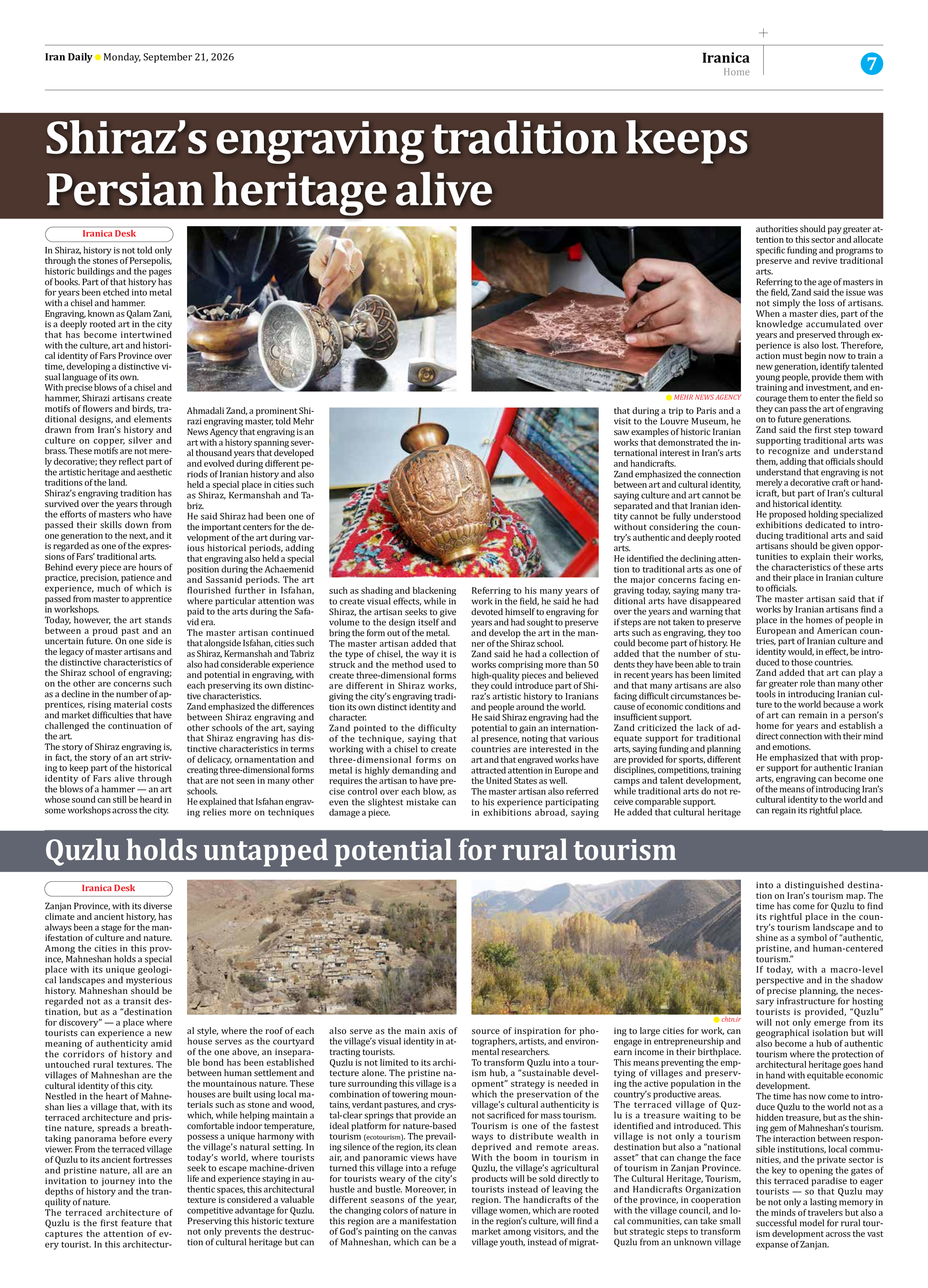
Nestled in the heart of Mahneshan lies a village that, with its terraced architecture and pristine nature, spreads a breathtaking panorama before every viewer. From the terraced village of Quzlu to its ancient fortresses and pristine nature, all are an invitation to journey into the depths of history and the tranquility of nature.
The terraced architecture of Quzlu is the first feature that captures the attention of every tourist. In this architectural style, where the roof of each house serves as the courtyard of the one above, an inseparable bond has been established between human settlement and the mountainous nature. These houses are built using local materials such as stone and wood, which, while helping maintain a comfortable indoor temperature, possess a unique harmony with the village’s natural setting. In today’s world, where tourists seek to escape machine-driven life and experience staying in authentic spaces, this architectural texture is considered a valuable competitive advantage for Quzlu. Preserving this historic texture not only prevents the destruction of cultural heritage but can also serve as the main axis of the village’s visual identity in attracting tourists.
Quzlu is not limited to its architecture alone. The pristine nature surrounding this village is a combination of towering mountains, verdant pastures, and crystal-clear springs that provide an ideal platform for nature-based tourism (ecotourism). The prevailing silence of the region, its clean air, and panoramic views have turned this village into a refuge for tourists weary of the city’s hustle and bustle. Moreover, in different seasons of the year, the changing colors of nature in this region are a manifestation of God’s painting on the canvas of Mahneshan, which can be a source of inspiration for photographers, artists, and environmental researchers.
To transform Quzlu into a tourism hub, a “sustainable development” strategy is needed in which the preservation of the village’s cultural authenticity is not sacrificed for mass tourism.
Tourism is one of the fastest ways to distribute wealth in deprived and remote areas. With the boom in tourism in Quzlu, the village’s agricultural products will be sold directly to tourists instead of leaving the region. The handicrafts of the village women, which are rooted in the region’s culture, will find a market among visitors, and the village youth, instead of migrating to large cities for work, can engage in entrepreneurship and earn income in their birthplace. This means preventing the emptying of villages and preserving the active population in the country’s productive areas.
The terraced village of Quzlu is a treasure waiting to be identified and introduced. This village is not only a tourism destination but also a “national asset” that can change the face of tourism in Zanjan Province. The Cultural Heritage, Tourism, and Handicrafts Organization of the province, in cooperation with the village council, and local communities, can take small but strategic steps to transform Quzlu from an unknown village into a distinguished destination on Iran’s tourism map. The time has come for Quzlu to find its rightful place in the country’s tourism landscape and to shine as a symbol of “authentic, pristine, and human-centered tourism.”
If today, with a macro-level perspective and in the shadow of precise planning, the necessary infrastructure for hosting tourists is provided, “Quzlu” will not only emerge from its geographical isolation but will also become a hub of authentic tourism where the protection of architectural heritage goes hand in hand with equitable economic development.
The time has now come to introduce Quzlu to the world not as a hidden treasure, but as the shining gem of Mahneshan’s tourism. The interaction between responsible institutions, local communities, and the private sector is the key to opening the gates of this terraced paradise to eager tourists — so that Quzlu may be not only a lasting memory in the minds of travelers but also a successful model for rural tourism development across the vast expanse of Zanjan.