







Poet Shahriar hailed as bridge between Iran’s national, ethnic identities
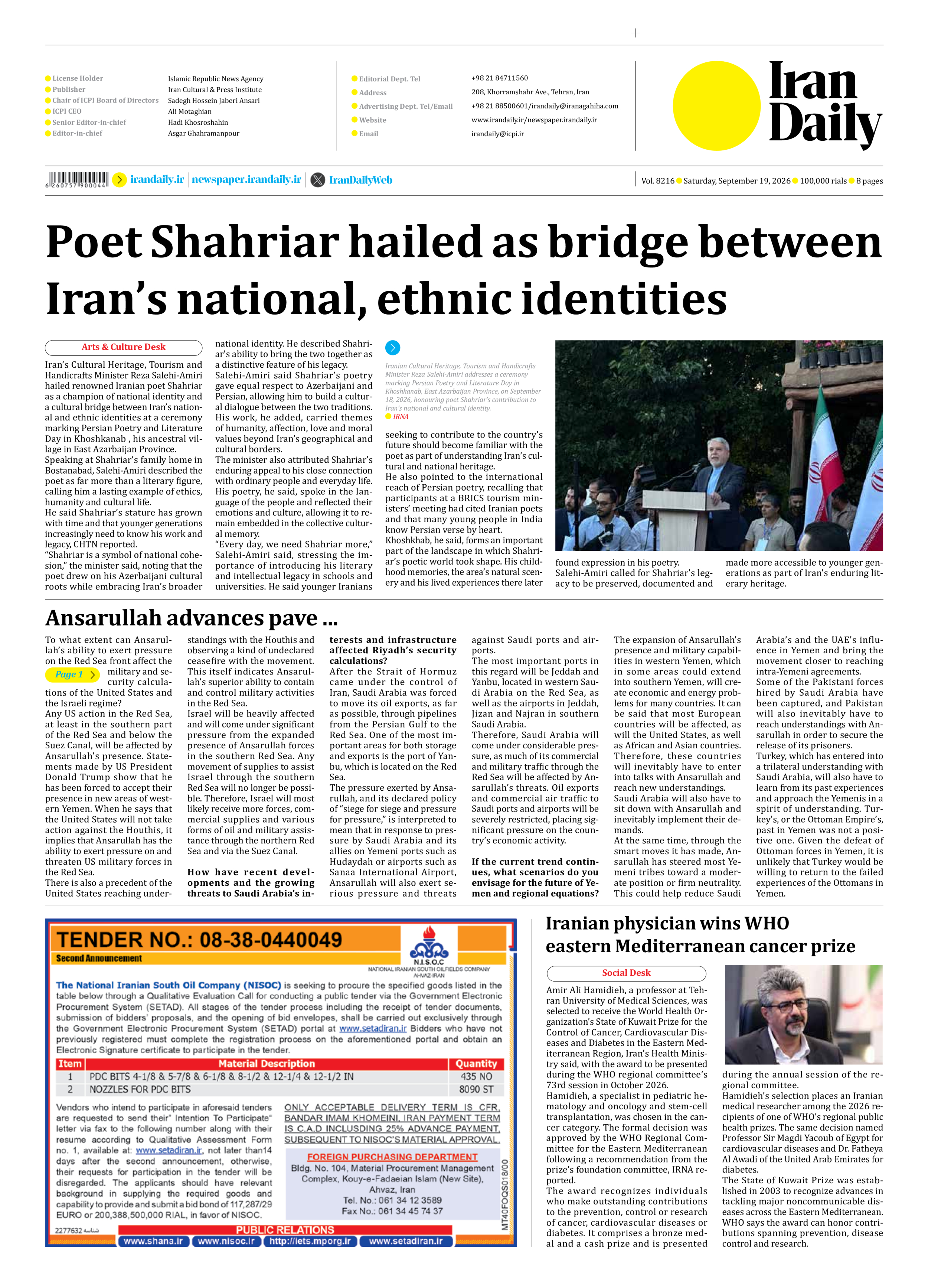
Iran’s Cultural Heritage, Tourism and Handicrafts Minister Reza Salehi-Amiri hailed renowned Iranian poet Shahriar as a champion of national identity and a cultural bridge between Iran’s national and ethnic identities at a ceremony marking Persian Poetry and Literature Day in Khoshkanab , his ancestral village in East Azarbaijan Province.
Speaking at Shahriar’s family home in Bostanabad, Salehi-Amiri described the poet as far more than a literary figure, calling him a lasting example of ethics, humanity and cultural life.
He said Shahriar’s stature has grown with time and that younger generations increasingly need to know his work and legacy, CHTN reported.
“Shahriar is a symbol of national cohesion,” the minister said, noting that the poet drew on his Azerbaijani cultural roots while embracing Iran’s broader national identity. He described Shahriar’s ability to bring the two together as a distinctive feature of his legacy.
Salehi-Amiri said Shahriar’s poetry gave equal respect to Azerbaijani and Persian, allowing him to build a cultural dialogue between the two traditions. His work, he added, carried themes of humanity, affection, love and moral values beyond Iran’s geographical and cultural borders.
The minister also attributed Shahriar’s enduring appeal to his close connection with ordinary people and everyday life. His poetry, he said, spoke in the language of the people and reflected their emotions and culture, allowing it to remain embedded in the collective cultural memory.
“Every day, we need Shahriar more,” Salehi-Amiri said, stressing the importance of introducing his literary and intellectual legacy in schools and universities. He said younger Iranians seeking to contribute to the country’s future should become familiar with the poet as part of understanding Iran’s cultural and national heritage.
He also pointed to the international reach of Persian poetry, recalling that participants at a BRICS tourism ministers’ meeting had cited Iranian poets and that many young people in India know Persian verse by heart.
Khoshkhab, he said, forms an important part of the landscape in which Shahriar’s poetic world took shape. His childhood memories, the area’s natural scenery and his lived experiences there later found expression in his poetry.
Salehi-Amiri called for Shahriar’s legacy to be preserved, documented and made more accessible to younger generations as part of Iran’s enduring literary heritage.