







Copy in clipboard...
Oil facilities damaged in war on track for restoration, minister says
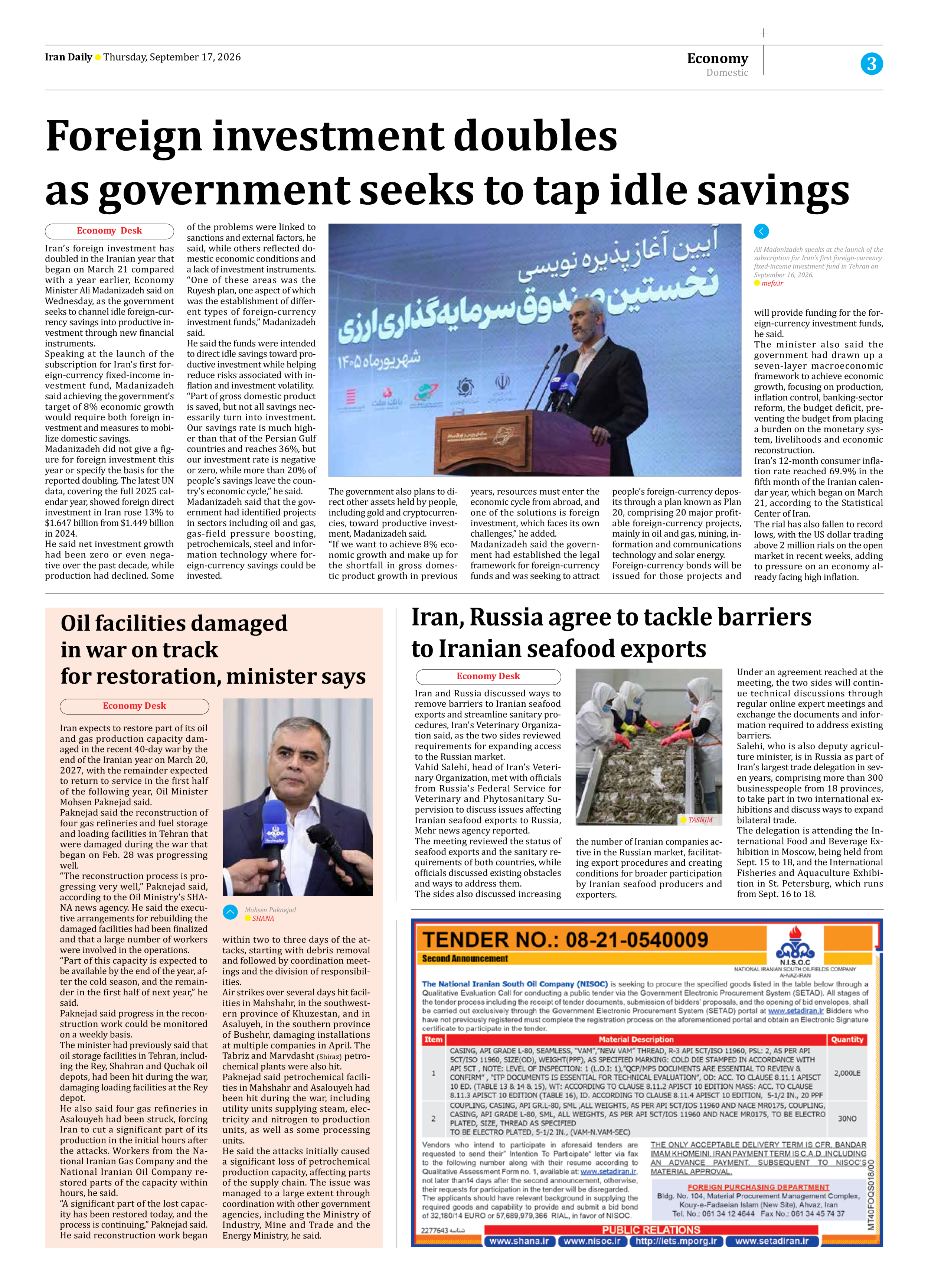
Paknejad said the reconstruction of four gas refineries and fuel storage and loading facilities in Tehran that were damaged during the war that began on Feb. 28 was progressing well.
“The reconstruction process is progressing very well,” Paknejad said, according to the Oil Ministry’s SHANA news agency. He said the executive arrangements for rebuilding the damaged facilities had been finalized and that a large number of workers were involved in the operations.
“Part of this capacity is expected to be available by the end of the year, after the cold season, and the remainder in the first half of next year,” he said.
Paknejad said progress in the reconstruction work could be monitored on a weekly basis.
The minister had previously said that oil storage facilities in Tehran, including the Rey, Shahran and Quchak oil depots, had been hit during the war, damaging loading facilities at the Rey depot.
He also said four gas refineries in Asalouyeh had been struck, forcing Iran to cut a significant part of its production in the initial hours after the attacks. Workers from the National Iranian Gas Company and the National Iranian Oil Company restored parts of the capacity within hours, he said.
“A significant part of the lost capacity has been restored today, and the process is continuing,” Paknejad said.
He said reconstruction work began within two to three days of the attacks, starting with debris removal and followed by coordination meetings and the division of responsibilities.
Air strikes over several days hit facilities in Mahshahr, in the southwestern province of Khuzestan, and in Asaluyeh, in the southern province of Bushehr, damaging installations at multiple companies in April. The Tabriz and Marvdasht (Shiraz) petrochemical plants were also hit.
Paknejad said petrochemical facilities in Mahshahr and Asalouyeh had been hit during the war, including utility units supplying steam, electricity and nitrogen to production units, as well as some processing units.
He said the attacks initially caused a significant loss of petrochemical production capacity, affecting parts of the supply chain. The issue was managed to a large extent through coordination with other government agencies, including the Ministry of Industry, Mine and Trade and the Energy Ministry, he said.