







Copy in clipboard...
Minister urges local control to unlock tourism potential in Semnan
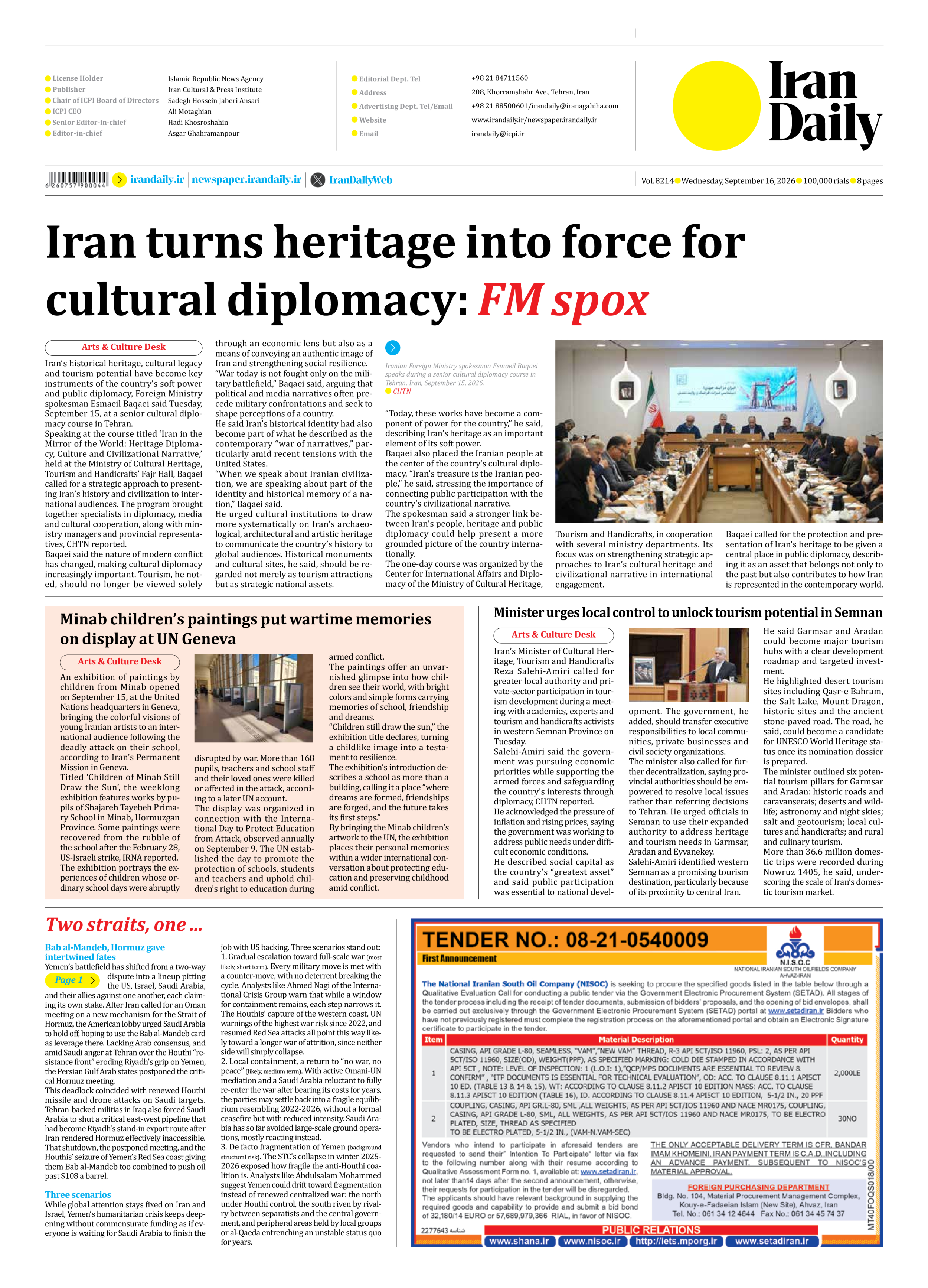
Iran’s Minister of Cultural Heritage, Tourism and Handicrafts Reza Salehi-Amiri called for greater local authority and private-sector participation in tourism development during a meeting with academics, experts and tourism and handicrafts activists in western Semnan Province on Tuesday.
Salehi-Amiri said the government was pursuing economic priorities while supporting the armed forces and safeguarding the country’s interests through diplomacy, CHTN reported.
He acknowledged the pressure of inflation and rising prices, saying the government was working to address public needs under difficult economic conditions.
He described social capital as the country’s “greatest asset” and said public participation was essential to national development. The government, he added, should transfer executive responsibilities to local communities, private businesses and civil society organizations.
The minister also called for further decentralization, saying provincial authorities should be empowered to resolve local issues rather than referring decisions to Tehran. He urged officials in Semnan to use their expanded authority to address heritage and tourism needs in Garmsar, Aradan and Eyvanekey.
Salehi-Amiri identified western Semnan as a promising tourism destination, particularly because of its proximity to central Iran.
He said Garmsar and Aradan could become major tourism hubs with a clear development roadmap and targeted investment.
He highlighted desert tourism sites including Qasr-e Bahram, the Salt Lake, Mount Dragon, historic sites and the ancient stone-paved road. The road, he said, could become a candidate for UNESCO World Heritage status once its nomination dossier is prepared.
The minister outlined six potential tourism pillars for Garmsar and Aradan: historic roads and caravanserais; deserts and wildlife; astronomy and night skies; salt and geotourism; local cultures and handicrafts; and rural and culinary tourism.
More than 36.6 million domestic trips were recorded during Nowruz 1405, he said, underscoring the scale of Iran’s domestic tourism market.