







Iran turns heritage into force for cultural diplomacy: FM spox
Iran’s historical heritage, cultural legacy and tourism potential have become key instruments of the country’s soft power and public diplomacy, Foreign Ministry spokesman Esmaeil Baqaei said Tuesday, September 15, at a senior cultural diplomacy course in Tehran.
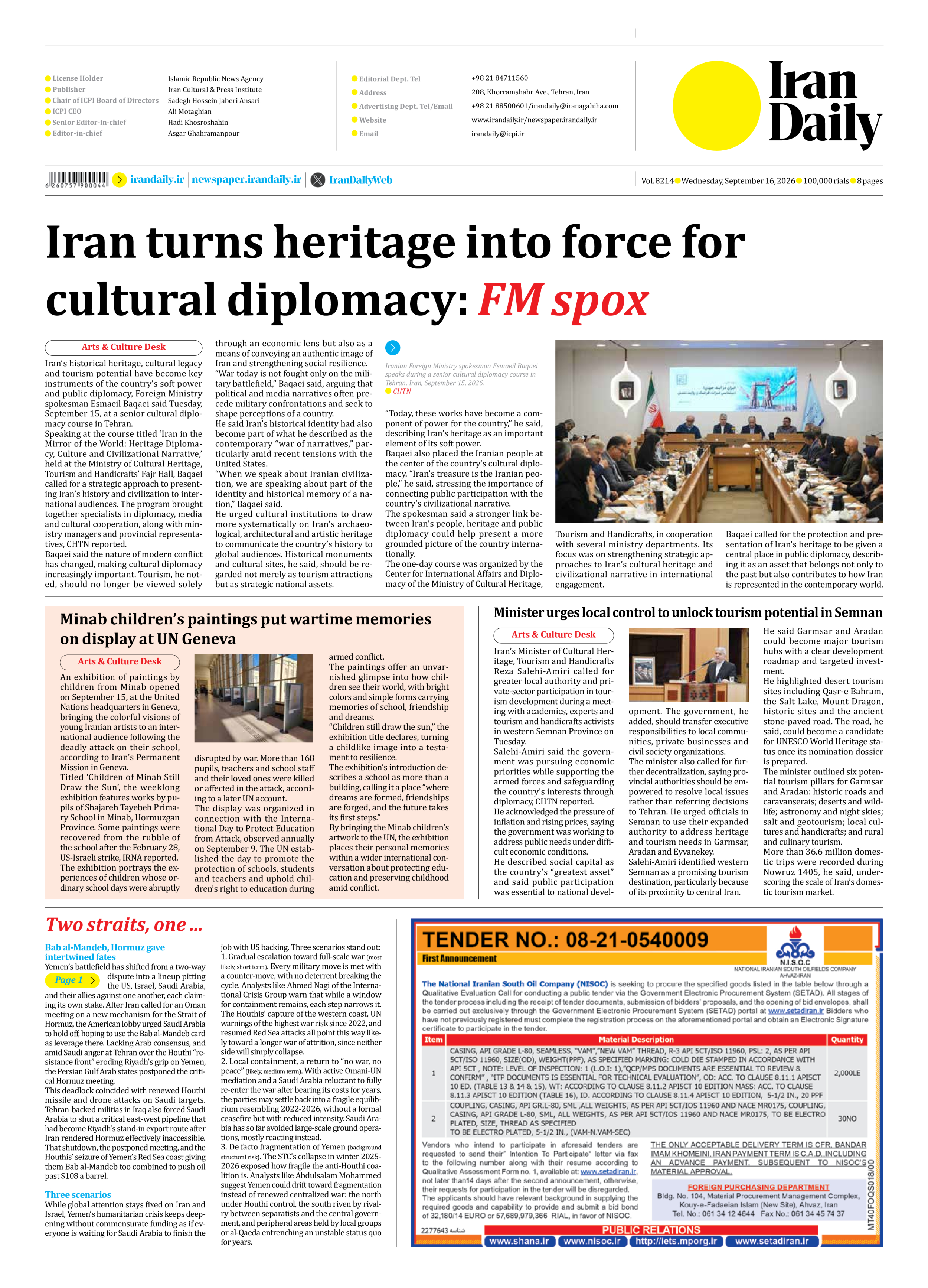
Speaking at the course titled ‘Iran in the Mirror of the World: Heritage Diplomacy, Culture and Civilizational Narrative,’ held at the Ministry of Cultural Heritage, Tourism and Handicrafts’ Fajr Hall, Baqaei called for a strategic approach to presenting Iran’s history and civilization to international audiences. The program brought together specialists in diplomacy, media and cultural cooperation, along with ministry managers and provincial representatives, CHTN reported.
Baqaei said the nature of modern conflict has changed, making cultural diplomacy increasingly important. Tourism, he noted, should no longer be viewed solely through an economic lens but also as a means of conveying an authentic image of Iran and strengthening social resilience.
“War today is not fought only on the military battlefield,” Baqaei said, arguing that political and media narratives often precede military confrontations and seek to shape perceptions of a country.
He said Iran’s historical identity had also become part of what he described as the contemporary “war of narratives,” particularly amid recent tensions with the United States.
“When we speak about Iranian civilization, we are speaking about part of the identity and historical memory of a nation,” Baqaei said.
He urged cultural institutions to draw more systematically on Iran’s archaeological, architectural and artistic heritage to communicate the country’s history to global audiences. Historical monuments and cultural sites, he said, should be regarded not merely as tourism attractions but as strategic national assets.
“Today, these works have become a component of power for the country,” he said, describing Iran’s heritage as an important element of its soft power.
Baqaei also placed the Iranian people at the center of the country’s cultural diplomacy. “Iran’s treasure is the Iranian people,” he said, stressing the importance of connecting public participation with the country’s civilizational narrative.
The spokesman said a stronger link between Iran’s people, heritage and public diplomacy could help present a more grounded picture of the country internationally.
The one-day course was organized by the Center for International Affairs and Diplomacy of the Ministry of Cultural Heritage, Tourism and Handicrafts, in cooperation with several ministry departments. Its focus was on strengthening strategic approaches to Iran’s cultural heritage and civilizational narrative in international engagement.
Baqaei called for the protection and presentation of Iran’s heritage to be given a central place in public diplomacy, describing it as an asset that belongs not only to the past but also contributes to how Iran is represented in the contemporary world.