







Lori lullabies preserve living oral heritage
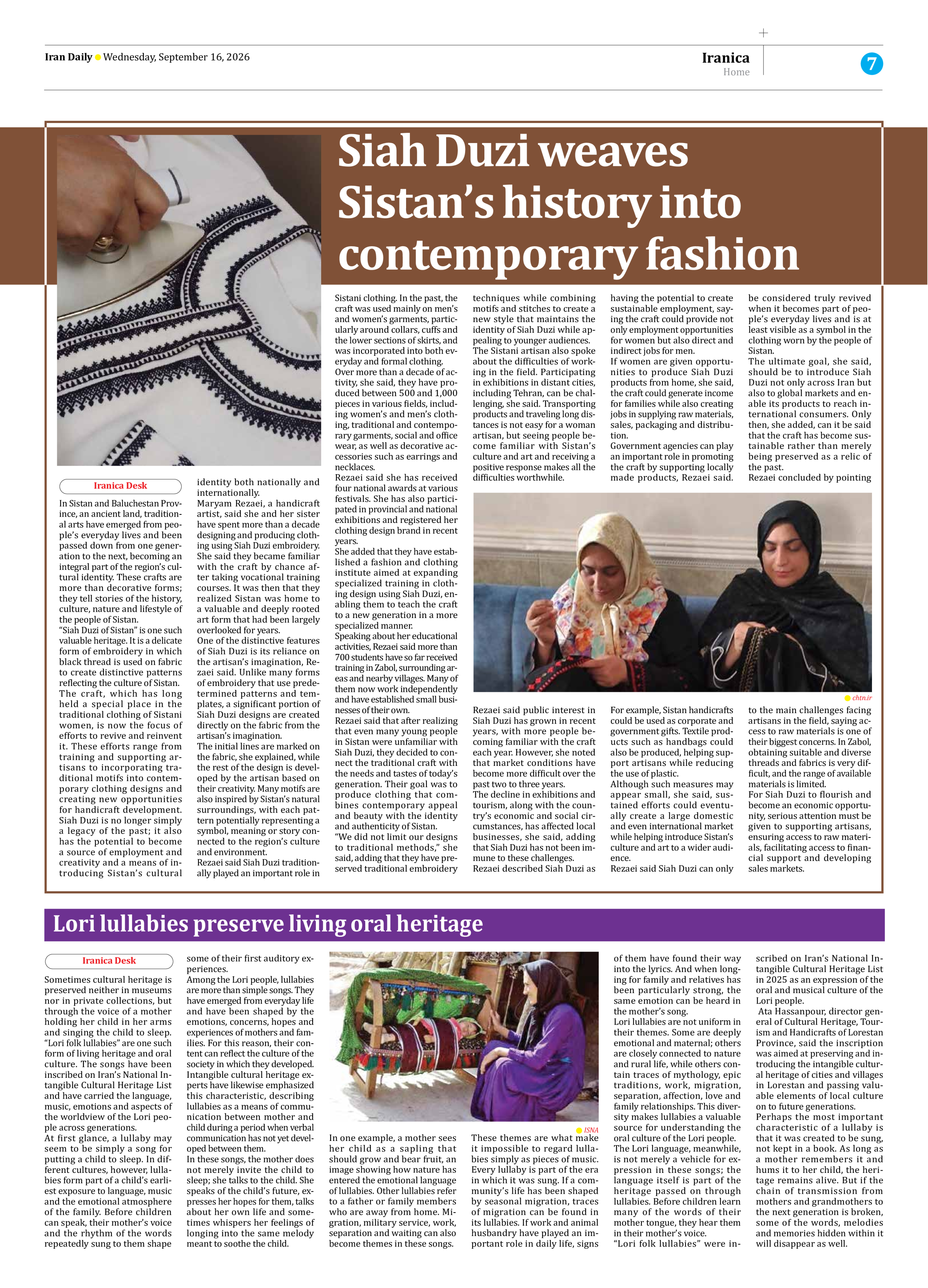
Sometimes cultural heritage is preserved neither in museums nor in private collections, but through the voice of a mother holding her child in her arms and singing the child to sleep. “Lori folk lullabies” are one such form of living heritage and oral culture. The songs have been inscribed on Iran’s National Intangible Cultural Heritage List and have carried the language, music, emotions and aspects of the worldview of the Lori people across generations.
At first glance, a lullaby may seem to be simply a song for putting a child to sleep. In different cultures, however, lullabies form part of a child’s earliest exposure to language, music and the emotional atmosphere of the family. Before children can speak, their mother’s voice and the rhythm of the words repeatedly sung to them shape some of their first auditory experiences.
Among the Lori people, lullabies are more than simple songs. They have emerged from everyday life and have been shaped by the emotions, concerns, hopes and experiences of mothers and families. For this reason, their content can reflect the culture of the society in which they developed. Intangible cultural heritage experts have likewise emphasized this characteristic, describing lullabies as a means of communication between mother and child during a period when verbal communication has not yet developed between them.
In these songs, the mother does not merely invite the child to sleep; she talks to the child. She speaks of the child’s future, expresses her hopes for them, talks about her own life and sometimes whispers her feelings of longing into the same melody meant to soothe the child.
In one example, a mother sees her child as a sapling that should grow and bear fruit, an image showing how nature has entered the emotional language of lullabies. Other lullabies refer to a father or family members who are away from home. Migration, military service, work, separation and waiting can also become themes in these songs.
These themes are what make it impossible to regard lullabies simply as pieces of music. Every lullaby is part of the era in which it was sung. If a community’s life has been shaped by seasonal migration, traces of migration can be found in its lullabies. If work and animal husbandry have played an important role in daily life, signs of them have found their way into the lyrics. And when longing for family and relatives has been particularly strong, the same emotion can be heard in the mother’s song.
Lori lullabies are not uniform in their themes. Some are deeply emotional and maternal; others are closely connected to nature and rural life, while others contain traces of mythology, epic traditions, work, migration, separation, affection, love and family relationships. This diversity makes lullabies a valuable source for understanding the oral culture of the Lori people.
The Lori language, meanwhile, is not merely a vehicle for expression in these songs; the language itself is part of the heritage passed on through lullabies. Before children learn many of the words of their mother tongue, they hear them in their mother’s voice.
“Lori folk lullabies” were inscribed on Iran’s National Intangible Cultural Heritage List in 2025 as an expression of the oral and musical culture of the Lori people.
Ata Hassanpour, director general of Cultural Heritage, Tourism and Handicrafts of Lorestan Province, said the inscription was aimed at preserving and introducing the intangible cultural heritage of cities and villages in Lorestan and passing valuable elements of local culture on to future generations.
Perhaps the most important characteristic of a lullaby is that it was created to be sung, not kept in a book. As long as a mother remembers it and hums it to her child, the heritage remains alive. But if the chain of transmission from mothers and grandmothers to the next generation is broken, some of the words, melodies and memories hidden within it will disappear as well.