







Handicrafts breathe new life into Shiraz’s historic neighborhoods
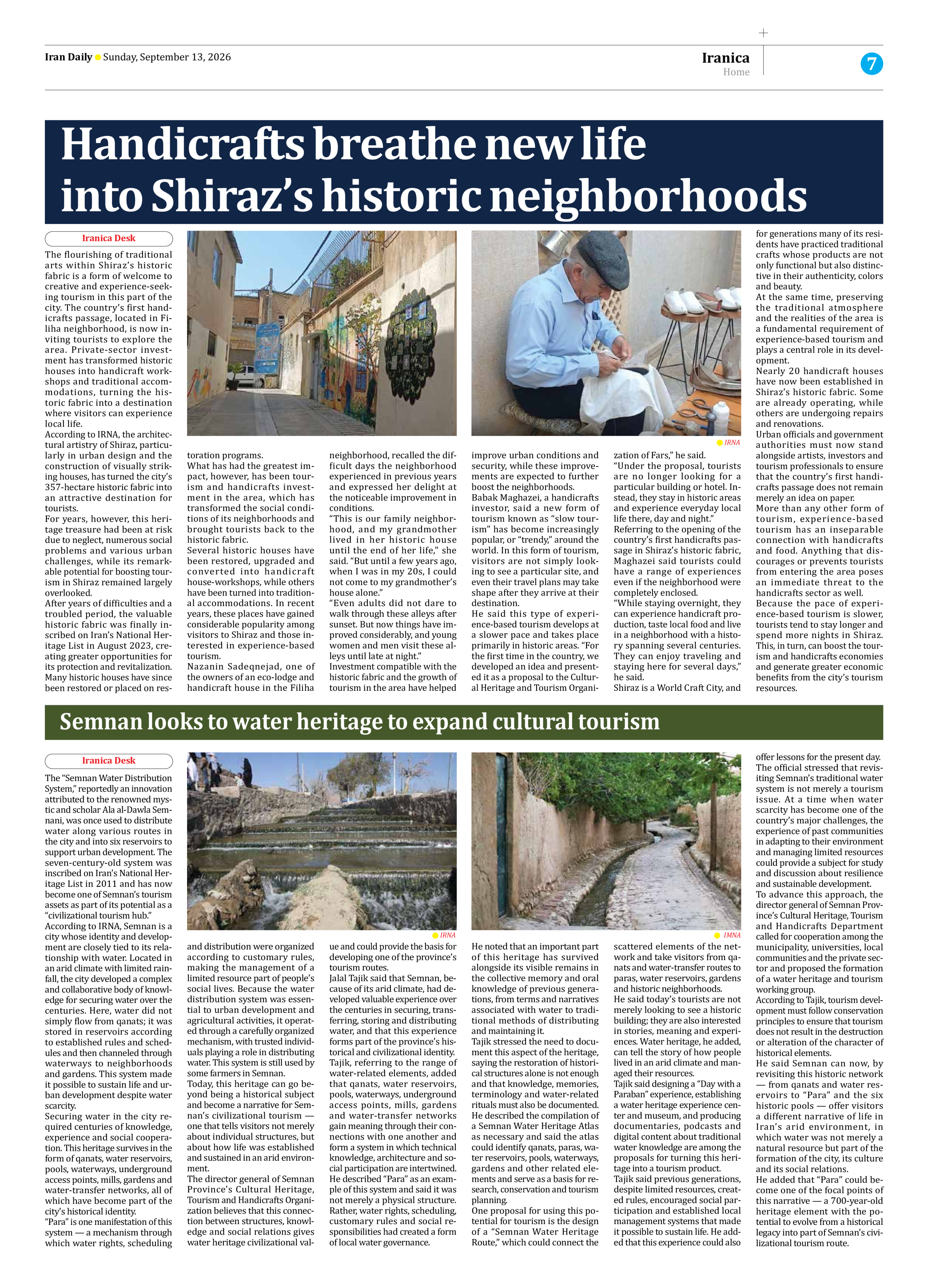
The flourishing of traditional arts within Shiraz’s historic fabric is a form of welcome to creative and experience-seeking tourism in this part of the city. The country’s first handicrafts passage, located in Filiha neighborhood, is now inviting tourists to explore the area. Private-sector investment has transformed historic houses into handicraft workshops and traditional accommodations, turning the historic fabric into a destination where visitors can experience local life.
According to IRNA, the architectural artistry of Shiraz, particularly in urban design and the construction of visually striking houses, has turned the city’s 357-hectare historic fabric into an attractive destination for tourists.
For years, however, this heritage treasure had been at risk due to neglect, numerous social problems and various urban challenges, while its remarkable potential for boosting tourism in Shiraz remained largely overlooked.
After years of difficulties and a troubled period, the valuable historic fabric was finally inscribed on Iran’s National Heritage List in August 2023, creating greater opportunities for its protection and revitalization. Many historic houses have since been restored or placed on restoration programs.
What has had the greatest impact, however, has been tourism and handicrafts investment in the area, which has transformed the social conditions of its neighborhoods and brought tourists back to the historic fabric.
Several historic houses have been restored, upgraded and converted into handicraft house-workshops, while others have been turned into traditional accommodations. In recent years, these places have gained considerable popularity among visitors to Shiraz and those interested in experience-based tourism.
Nazanin Sadeqnejad, one of the owners of an eco-lodge and handicraft house in the Filiha neighborhood, recalled the difficult days the neighborhood experienced in previous years and expressed her delight at the noticeable improvement in conditions.
“This is our family neighborhood, and my grandmother lived in her historic house until the end of her life,” she said. “But until a few years ago, when I was in my 20s, I could not come to my grandmother’s house alone.”
“Even adults did not dare to walk through these alleys after sunset. But now things have improved considerably, and young women and men visit these alleys until late at night.”
Investment compatible with the historic fabric and the growth of tourism in the area have helped improve urban conditions and security, while these improvements are expected to further boost the neighborhoods.
Babak Maghazei, a handicrafts investor, said a new form of tourism known as “slow tourism” has become increasingly popular, or “trendy,” around the world. In this form of tourism, visitors are not simply looking to see a particular site, and even their travel plans may take shape after they arrive at their destination.
He said this type of experience-based tourism develops at a slower pace and takes place primarily in historic areas. “For the first time in the country, we developed an idea and presented it as a proposal to the Cultural Heritage and Tourism Organization of Fars,” he said.
“Under the proposal, tourists are no longer looking for a particular building or hotel. Instead, they stay in historic areas and experience everyday local life there, day and night.”
Referring to the opening of the country’s first handicrafts passage in Shiraz’s historic fabric, Maghazei said tourists could have a range of experiences even if the neighborhood were completely enclosed.
“While staying overnight, they can experience handicraft production, taste local food and live in a neighborhood with a history spanning several centuries. They can enjoy traveling and staying here for several days,” he said.
Shiraz is a World Craft City, and for generations many of its residents have practiced traditional crafts whose products are not only functional but also distinctive in their authenticity, colors and beauty.
At the same time, preserving the traditional atmosphere and the realities of the area is a fundamental requirement of experience-based tourism and plays a central role in its development.
Nearly 20 handicraft houses have now been established in Shiraz’s historic fabric. Some are already operating, while others are undergoing repairs and renovations.
Urban officials and government authorities must now stand alongside artists, investors and tourism professionals to ensure that the country’s first handicrafts passage does not remain merely an idea on paper.
More than any other form of tourism, experience-based tourism has an inseparable connection with handicrafts and food. Anything that discourages or prevents tourists from entering the area poses an immediate threat to the handicrafts sector as well.
Because the pace of experience-based tourism is slower, tourists tend to stay longer and spend more nights in Shiraz. This, in turn, can boost the tourism and handicrafts economies and generate greater economic benefits from the city’s tourism resources.