







Sirik blends pristine nature with maritime heritage
In southeastern Iran, where the waters of the Gulf of Oman meet the Makoran coast, lies a district far removed from the crowds of the south’s better-known destinations. Sirik, with its sandy beaches, mangrove forests, valuable wetlands, extensive palm groves, and seafaring and Balochi culture, showcases one of the most distinctive faces of Hormozgan Province.
Most travelers associate southern Iran with Qeshm, Kish or Bandar Abbas. Sirik, however, offers a different experience, with its appeal rooted not in shopping centers and large hotels, but in its pristine nature, tranquil coastline and traditional local way of life. Visitors can walk along the clear waters of the Gulf of Oman, watch fishing boats, and explore creeks and mangrove forests that form one of the most valuable ecosystems in southern Iran.
Sirik is a district in Hormozgan Province, located in the eastern part of the province along the Makoran coast. It was separated from Minab in 2007 and established as an independent district. The city of Sirik serves as its administrative center, while Kuhestak and Garuk are also among its towns.
Sirik is bordered by Minab to the north, Bashagard to the east, Jask to the south, and the Gulf of Oman to the west. Its approximately 140-kilometer coastline is the area’s most prominent geographical feature, much of which has yet to experience extensive tourism development.
Its location along the historic Makoran coast has also given Sirik particular significance. The area has long been a route for sailors, merchants and fishermen, and the community’s longstanding connection with the sea remains visible in everyday life.
What sets Sirik apart from many other coastal towns in Iran is the diversity of its natural landscapes. Within a relatively short distance, visitors can travel from the Gulf of Oman shoreline to lush palm groves, while the Bashagard highlands rise in the distance.
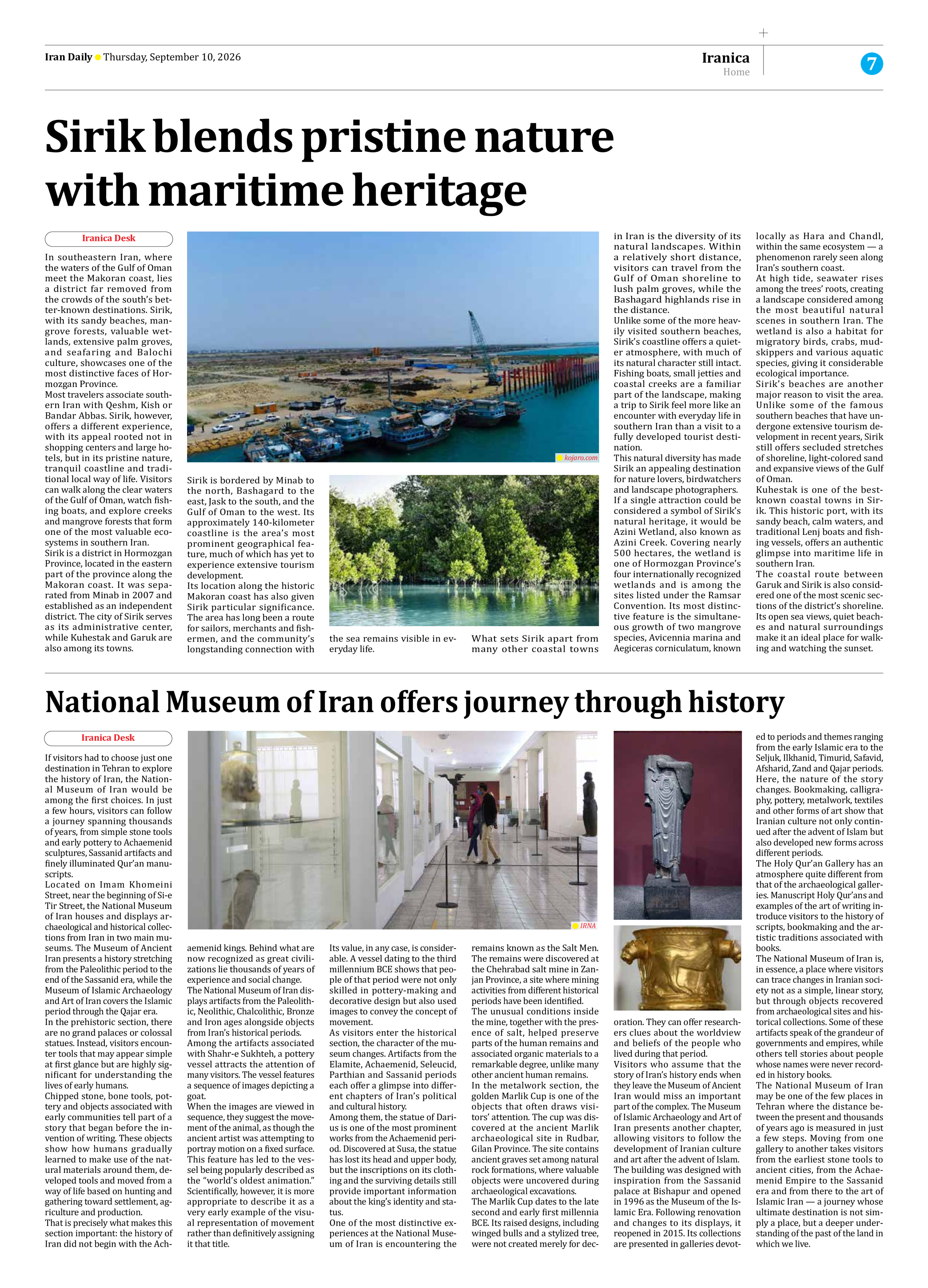
Unlike some of the more heavily visited southern beaches, Sirik’s coastline offers a quieter atmosphere, with much of its natural character still intact. Fishing boats, small jetties and coastal creeks are a familiar part of the landscape, making a trip to Sirik feel more like an encounter with everyday life in southern Iran than a visit to a fully developed tourist destination.
This natural diversity has made Sirik an appealing destination for nature lovers, birdwatchers and landscape photographers.
If a single attraction could be considered a symbol of Sirik’s natural heritage, it would be Azini Wetland, also known as Azini Creek. Covering nearly 500 hectares, the wetland is one of Hormozgan Province’s four internationally recognized wetlands and is among the sites listed under the Ramsar Convention. Its most distinctive feature is the simultaneous growth of two mangrove species, Avicennia marina and Aegiceras corniculatum, known locally as Hara and Chandl, within the same ecosystem — a phenomenon rarely seen along Iran’s southern coast.
At high tide, seawater rises among the trees’ roots, creating a landscape considered among the most beautiful natural scenes in southern Iran. The wetland is also a habitat for migratory birds, crabs, mudskippers and various aquatic species, giving it considerable ecological importance.
Sirik’s beaches are another major reason to visit the area. Unlike some of the famous southern beaches that have undergone extensive tourism development in recent years, Sirik still offers secluded stretches of shoreline, light-colored sand and expansive views of the Gulf of Oman.
Kuhestak is one of the best-known coastal towns in Sirik. This historic port, with its sandy beach, calm waters, and traditional Lenj boats and fishing vessels, offers an authentic glimpse into maritime life in southern Iran.
The coastal route between Garuk and Sirik is also considered one of the most scenic sections of the district’s shoreline. Its open sea views, quiet beaches and natural surroundings make it an ideal place for walking and watching the sunset.