







Persian historical artifacts in China safe, secure
Iranian historical artifacts currently in China are being kept in complete safety and will return to the country under binding exhibition agreements, National Museum of Iran Director Jebrael Nokandeh said Monday, addressing concerns over more than 150 objects whose return was delayed by the suspension of flights during the war.
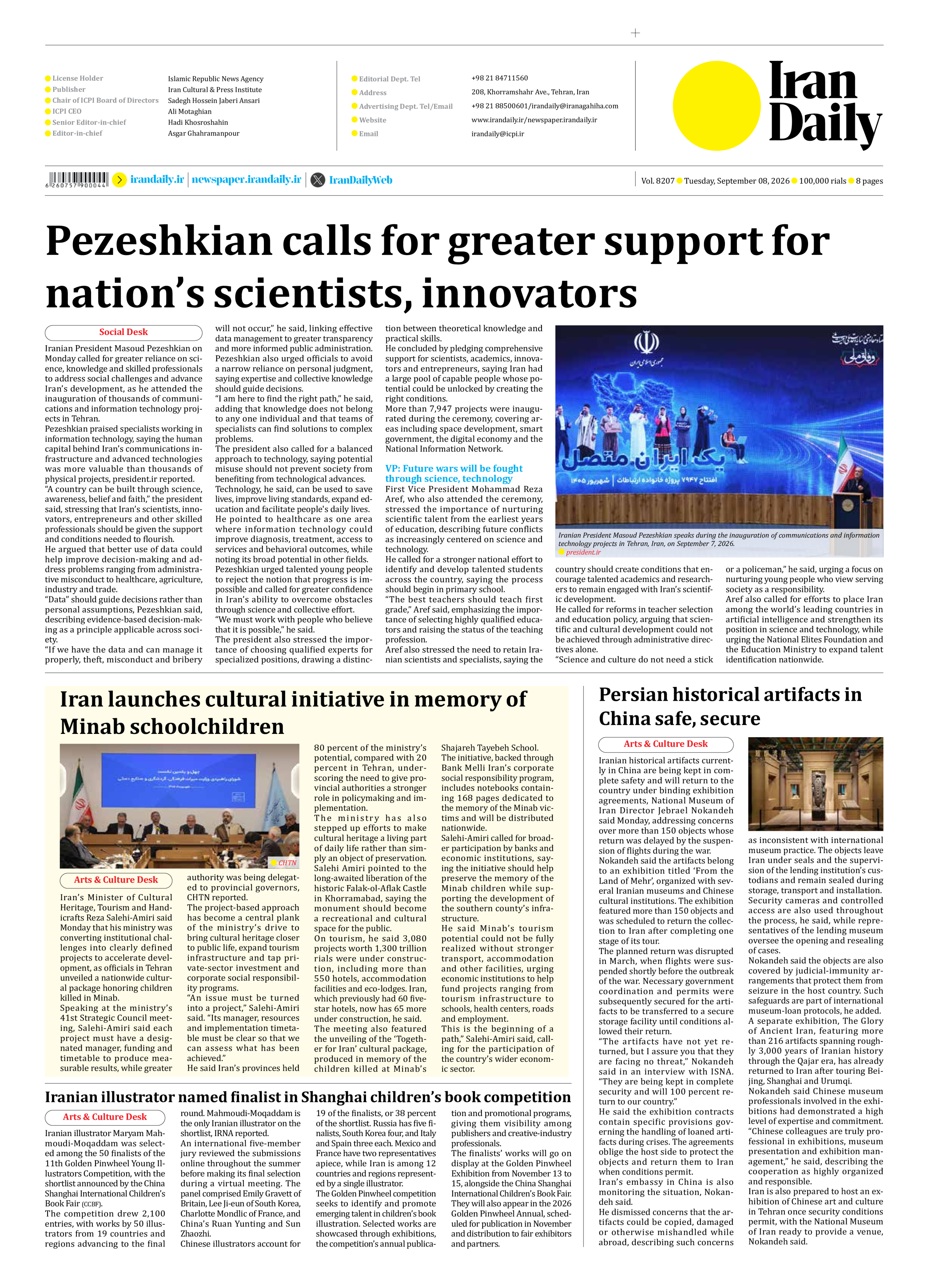
Nokandeh said the artifacts belong to an exhibition titled ‘From the Land of Mehr’, organized with several Iranian museums and Chinese cultural institutions. The exhibition featured more than 150 objects and was scheduled to return the collection to Iran after completing one stage of its tour.
The planned return was disrupted in March, when flights were suspended shortly before the outbreak of the war. Necessary government coordination and permits were subsequently secured for the artifacts to be transferred to a secure storage facility until conditions allowed their return.
“The artifacts have not yet returned, but I assure you that they are facing no threat,” Nokandeh said in an interview with ISNA. “They are being kept in complete security and will 100 percent return to our country.”
He said the exhibition contracts contain specific provisions governing the handling of loaned artifacts during crises. The agreements oblige the host side to protect the objects and return them to Iran when conditions permit.
Iran’s embassy in China is also monitoring the situation, Nokandeh said.
He dismissed concerns that the artifacts could be copied, damaged or otherwise mishandled while abroad, describing such concerns as inconsistent with international museum practice. The objects leave Iran under seals and the supervision of the lending institution’s custodians and remain sealed during storage, transport and installation.
Security cameras and controlled access are also used throughout the process, he said, while representatives of the lending museum oversee the opening and resealing of cases.
Nokandeh said the objects are also covered by judicial-immunity arrangements that protect them from seizure in the host country. Such safeguards are part of international museum-loan protocols, he added.
A separate exhibition, The Glory of Ancient Iran, featuring more than 216 artifacts spanning roughly 3,000 years of Iranian history through the Qajar era, has already returned to Iran after touring Beijing, Shanghai and Urumqi.
Nokandeh said Chinese museum professionals involved in the exhibitions had demonstrated a high level of expertise and commitment.
“Chinese colleagues are truly professional in exhibitions, museum presentation and exhibition management,” he said, describing the cooperation as highly organized and responsible.
Iran is also prepared to host an exhibition of Chinese art and culture in Tehran once security conditions permit, with the National Museum of Iran ready to provide a venue, Nokandeh said.