







Russia’s creative-industry shift opens new door for Iranian publishing
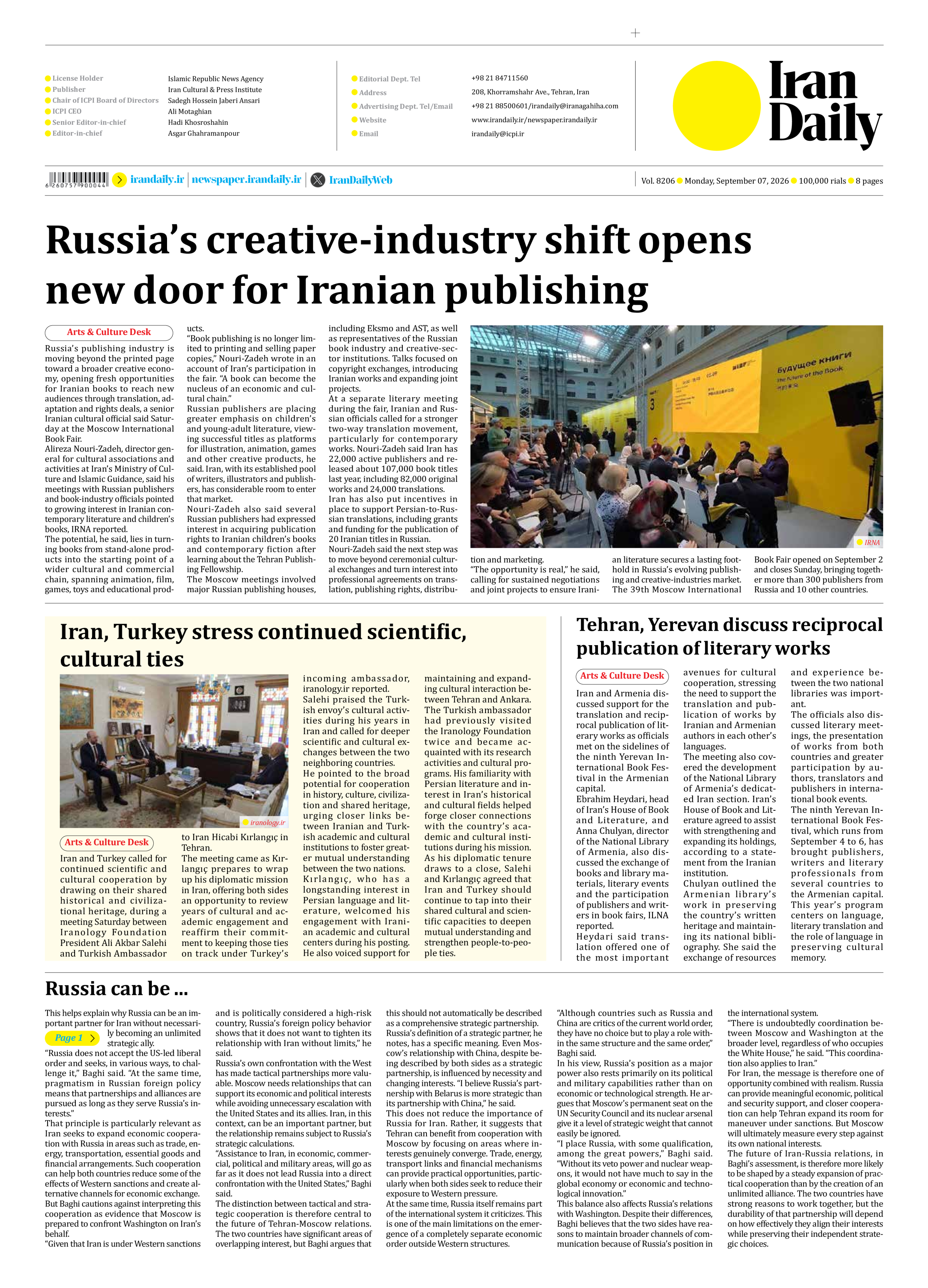
Russia’s publishing industry is moving beyond the printed page toward a broader creative economy, opening fresh opportunities for Iranian books to reach new audiences through translation, adaptation and rights deals, a senior Iranian cultural official said Saturday at the Moscow International Book Fair.
Alireza Nouri-Zadeh, director general for cultural associations and activities at Iran’s Ministry of Culture and Islamic Guidance, said his meetings with Russian publishers and book-industry officials pointed to growing interest in Iranian contemporary literature and children’s books, IRNA reported.
The potential, he said, lies in turning books from stand-alone products into the starting point of a wider cultural and commercial chain, spanning animation, film, games, toys and educational products.
“Book publishing is no longer limited to printing and selling paper copies,” Nouri-Zadeh wrote in an account of Iran’s participation in the fair. “A book can become the nucleus of an economic and cultural chain.”
Russian publishers are placing greater emphasis on children’s and young-adult literature, viewing successful titles as platforms for illustration, animation, games and other creative products, he said. Iran, with its established pool of writers, illustrators and publishers, has considerable room to enter that market.
Nouri-Zadeh also said several Russian publishers had expressed interest in acquiring publication rights to Iranian children’s books and contemporary fiction after learning about the Tehran Publishing Fellowship.
The Moscow meetings involved major Russian publishing houses, including Eksmo and AST, as well as representatives of the Russian book industry and creative-sector institutions. Talks focused on copyright exchanges, introducing Iranian works and expanding joint projects.
At a separate literary meeting during the fair, Iranian and Russian officials called for a stronger two-way translation movement, particularly for contemporary works. Nouri-Zadeh said Iran has 22,000 active publishers and released about 107,000 book titles last year, including 82,000 original works and 24,000 translations.
Iran has also put incentives in place to support Persian-to-Russian translations, including grants and funding for the publication of 20 Iranian titles in Russian.
Nouri-Zadeh said the next step was to move beyond ceremonial cultural exchanges and turn interest into professional agreements on translation, publishing rights, distribution and marketing.
“The opportunity is real,” he said, calling for sustained negotiations and joint projects to ensure Iranian literature secures a lasting foothold in Russia’s evolving publishing and creative-industries market.
The 39th Moscow International Book Fair opened on September 2 and closes Sunday, bringing together more than 300 publishers from Russia and 10 other countries.