







Izgam Dasht reveals centuries of human settlement in western Mazandaran
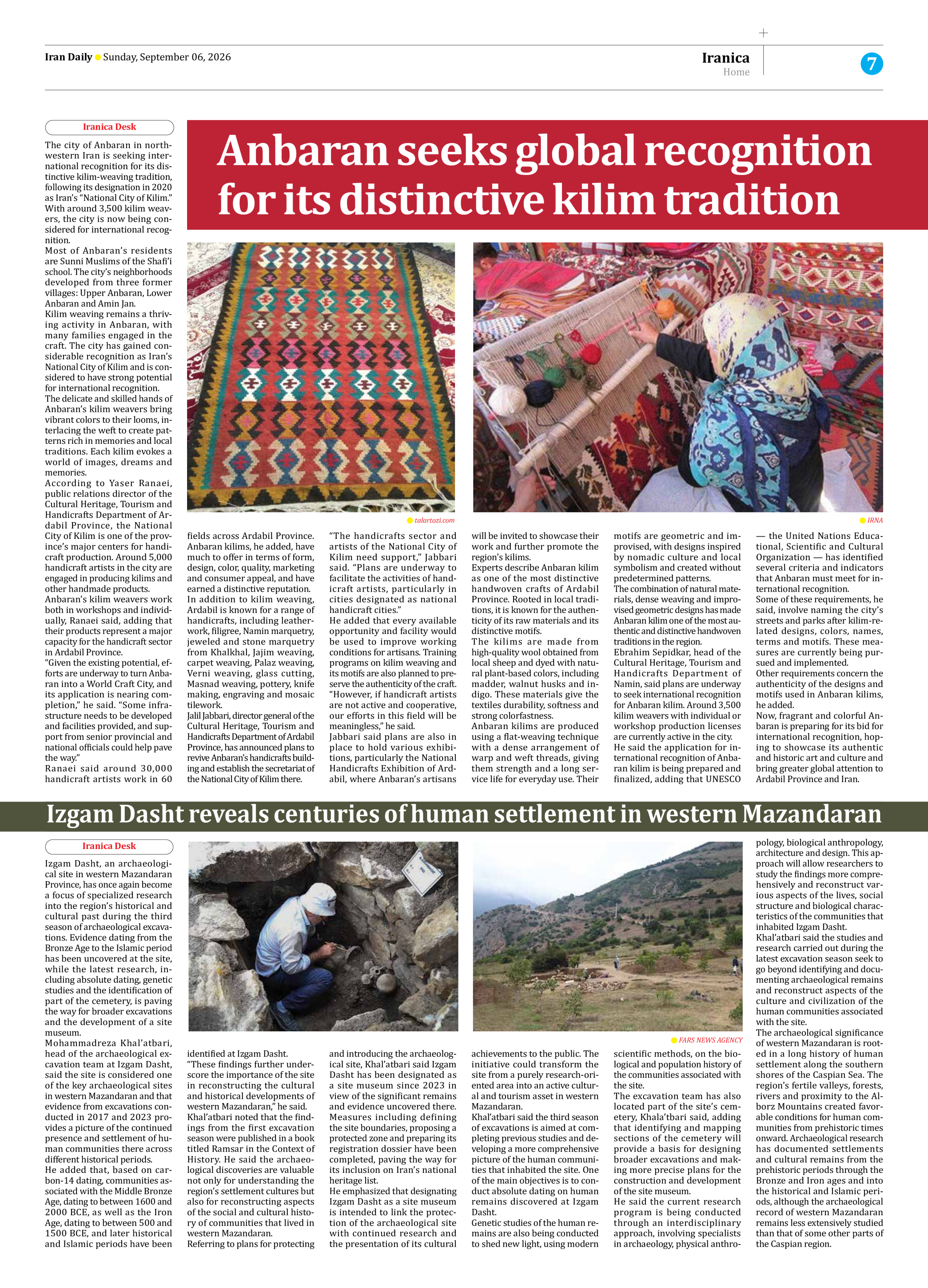
Izgam Dasht, an archaeological site in western Mazandaran Province, has once again become a focus of specialized research into the region’s historical and cultural past during the third season of archaeological excavations. Evidence dating from the Bronze Age to the Islamic period has been uncovered at the site, while the latest research, including absolute dating, genetic studies and the identification of part of the cemetery, is paving the way for broader excavations and the development of a site museum.
Mohammadreza Khal’atbari, head of the archaeological excavation team at Izgam Dasht, said the site is considered one of the key archaeological sites in western Mazandaran and that evidence from excavations conducted in 2017 and 2023 provides a picture of the continued presence and settlement of human communities there across different historical periods.
He added that, based on carbon-14 dating, communities associated with the Middle Bronze Age, dating to between 1600 and 2000 BCE, as well as the Iron Age, dating to between 500 and 1500 BCE, and later historical and Islamic periods have been identified at Izgam Dasht.
“These findings further underscore the importance of the site in reconstructing the cultural and historical developments of western Mazandaran,” he said.
Khal’atbari noted that the findings from the first excavation season were published in a book titled Ramsar in the Context of History. He said the archaeological discoveries are valuable not only for understanding the region’s settlement cultures but also for reconstructing aspects of the social and cultural history of communities that lived in western Mazandaran.
Referring to plans for protecting and introducing the archaeological site, Khal’atbari said Izgam Dasht has been designated as a site museum since 2023 in view of the significant remains and evidence uncovered there. Measures including defining the site boundaries, proposing a protected zone and preparing its registration dossier have been completed, paving the way for its inclusion on Iran’s national heritage list.
He emphasized that designating Izgam Dasht as a site museum is intended to link the protection of the archaeological site with continued research and the presentation of its cultural achievements to the public. The initiative could transform the site from a purely research-oriented area into an active cultural and tourism asset in western Mazandaran.
Khal’atbari said the third season of excavations is aimed at completing previous studies and developing a more comprehensive picture of the human communities that inhabited the site. One of the main objectives is to conduct absolute dating on human remains discovered at Izgam Dasht.
Genetic studies of the human remains are also being conducted to shed new light, using modern scientific methods, on the biological and population history of the communities associated with the site.
The excavation team has also located part of the site’s cemetery, Khala’tbari said, adding that identifying and mapping sections of the cemetery will provide a basis for designing broader excavations and making more precise plans for the construction and development of the site museum.
He said the current research program is being conducted through an interdisciplinary approach, involving specialists in archaeology, physical anthropology, biological anthropology, architecture and design. This approach will allow researchers to study the findings more comprehensively and reconstruct various aspects of the lives, social structure and biological characteristics of the communities that inhabited Izgam Dasht.
Khal’atbari said the studies and research carried out during the latest excavation season seek to go beyond identifying and documenting archaeological remains and reconstruct aspects of the culture and civilization of the human communities associated with the site.
The archaeological significance of western Mazandaran is rooted in a long history of human settlement along the southern shores of the Caspian Sea. The region’s fertile valleys, forests, rivers and proximity to the Alborz Mountains created favorable conditions for human communities from prehistoric times onward. Archaeological research has documented settlements and cultural remains from the prehistoric periods through the Bronze and Iron ages and into the historical and Islamic periods, although the archaeological record of western Mazandaran remains less extensively studied than that of some other parts of the Caspian region.