







Semnan’s historic core gains national heritage status
The historic areas of the Nasar and Esfanjan neighborhoods in Semnan have been officially added to Iran’s National Heritage List after completing the required legal procedures, opening a new chapter in efforts to preserve and reinterpret the city’s historical identity.
The registration was formally notified by Seyyed Reza Salehi Amiri, minister of Cultural Heritage, Tourism and Handicrafts, to Semnan Governor-General Mohammad-Javad Kolivand.
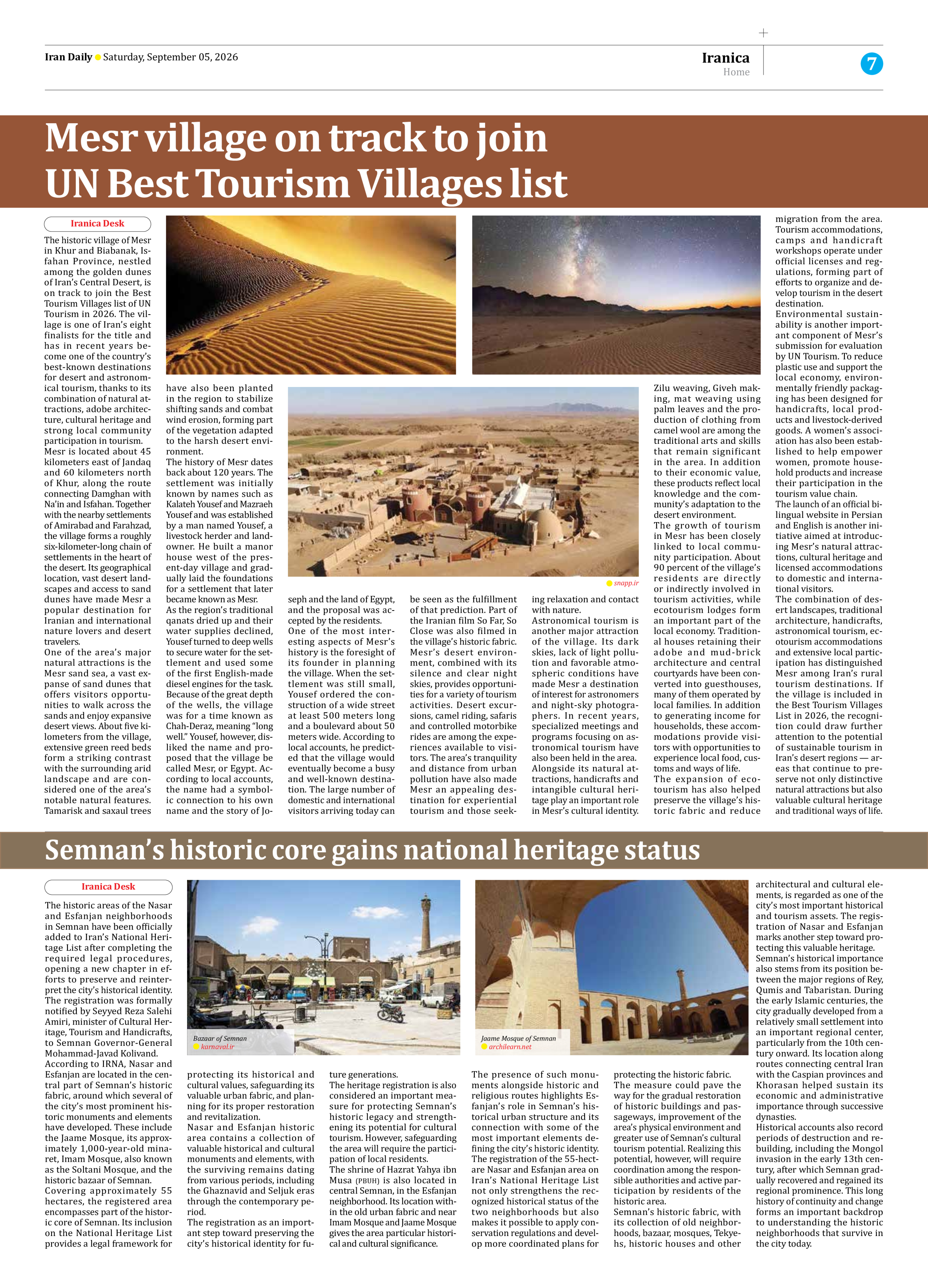
According to IRNA, Nasar and Esfanjan are located in the central part of Semnan’s historic fabric, around which several of the city’s most prominent historic monuments and elements have developed. These include the Jaame Mosque, its approximately 1,000-year-old minaret, Imam Mosque, also known as the Soltani Mosque, and the historic bazaar of Semnan.
Covering approximately 55 hectares, the registered area encompasses part of the historic core of Semnan. Its inclusion on the National Heritage List provides a legal framework for protecting its historical and cultural values, safeguarding its valuable urban fabric, and planning for its proper restoration and revitalization.
Nasar and Esfanjan historic area contains a collection of valuable historical and cultural monuments and elements, with the surviving remains dating from various periods, including the Ghaznavid and Seljuk eras through the contemporary period.
The registration as an important step toward preserving the city’s historical identity for future generations.
The heritage registration is also considered an important measure for protecting Semnan’s historic legacy and strengthening its potential for cultural tourism. However, safeguarding the area will require the participation of local residents.
The shrine of Hazrat Yahya ibn Musa (PBUH) is also located in central Semnan, in the Esfanjan neighborhood. Its location within the old urban fabric and near Imam Mosque and Jaame Mosque gives the area particular historical and cultural significance.
The presence of such monuments alongside historic and religious routes highlights Esfanjan’s role in Semnan’s historical urban structure and its connection with some of the most important elements defining the city’s historic identity.
The registration of the 55-hectare Nasar and Esfanjan area on Iran’s National Heritage List not only strengthens the recognized historical status of the two neighborhoods but also makes it possible to apply conservation regulations and develop more coordinated plans for protecting the historic fabric.
The measure could pave the way for the gradual restoration of historic buildings and passageways, improvement of the area’s physical environment and greater use of Semnan’s cultural tourism potential. Realizing this potential, however, will require coordination among the responsible authorities and active participation by residents of the historic area.
Semnan’s historic fabric, with its collection of old neighborhoods, bazaar, mosques, Tekyehs, historic houses and other architectural and cultural elements, is regarded as one of the city’s most important historical and tourism assets. The registration of Nasar and Esfanjan marks another step toward protecting this valuable heritage.
Semnan’s historical importance also stems from its position between the major regions of Rey, Qumis and Tabaristan. During the early Islamic centuries, the city gradually developed from a relatively small settlement into an important regional center, particularly from the 10th century onward. Its location along routes connecting central Iran with the Caspian provinces and Khorasan helped sustain its economic and administrative importance through successive dynasties.
Historical accounts also record periods of destruction and rebuilding, including the Mongol invasion in the early 13th century, after which Semnan gradually recovered and regained its regional prominence. This long history of continuity and change forms an important backdrop to understanding the historic neighborhoods that survive in the city today.