







Yabr Ice House preserves centuries of climate-smart architecture
Amid the bustle of modern life and the rapid pace of urban development, historic structures still stand in corners of Iran’s cities and villages, offering glimpses into the lives of generations past. Each brick and wall bears witness to the knowledge, experience and way of life of those who came before us.
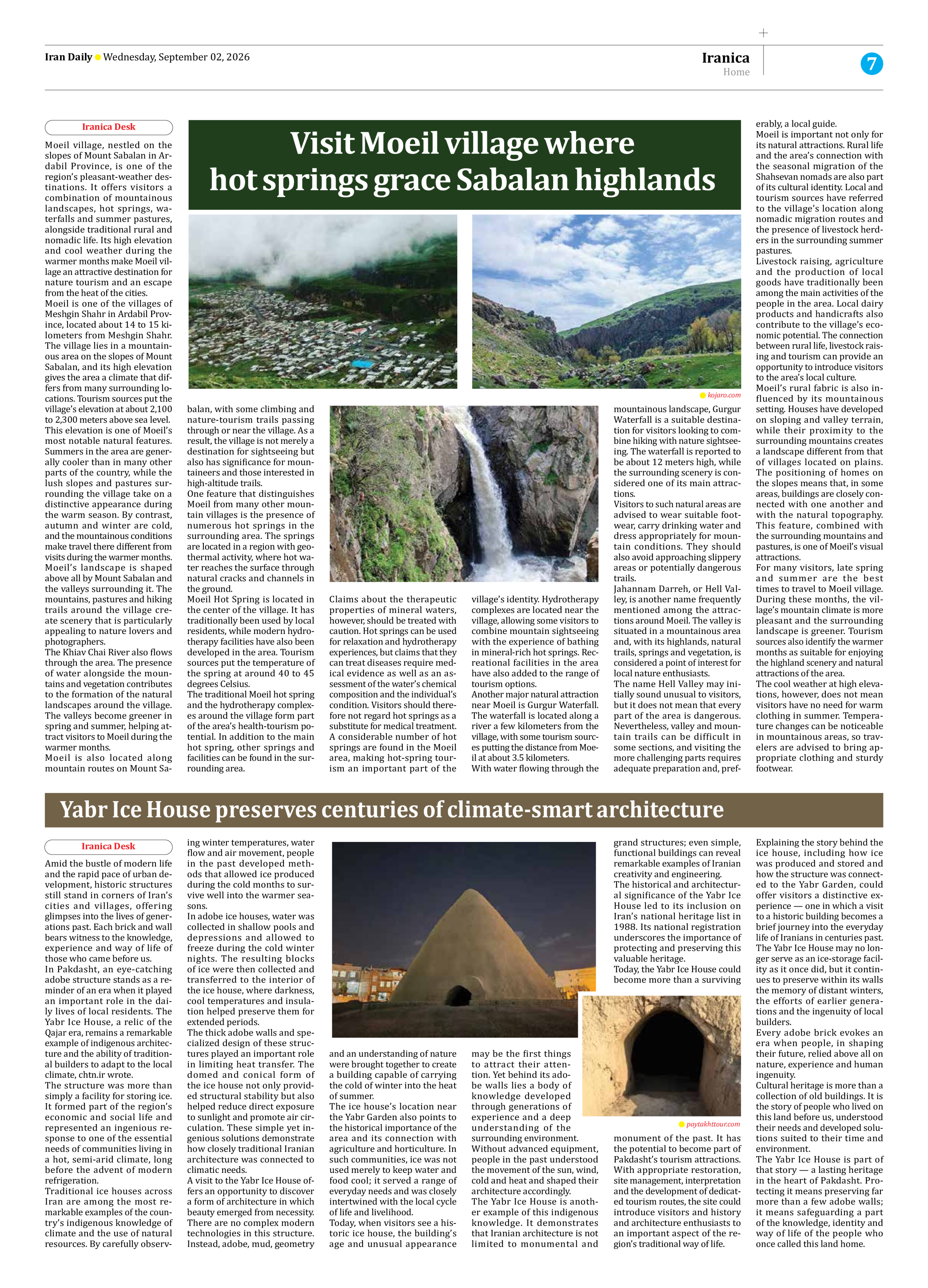
In Pakdasht, an eye-catching adobe structure stands as a reminder of an era when it played an important role in the daily lives of local residents. The Yabr Ice House, a relic of the Qajar era, remains a remarkable example of indigenous architecture and the ability of traditional builders to adapt to the local climate, chtn.ir wrote.
The structure was more than simply a facility for storing ice. It formed part of the region’s economic and social life and represented an ingenious response to one of the essential needs of communities living in a hot, semi-arid climate, long before the advent of modern refrigeration.
Traditional ice houses across Iran are among the most remarkable examples of the country’s indigenous knowledge of climate and the use of natural resources. By carefully observing winter temperatures, water flow and air movement, people in the past developed methods that allowed ice produced during the cold months to survive well into the warmer seasons.
In adobe ice houses, water was collected in shallow pools and depressions and allowed to freeze during the cold winter nights. The resulting blocks of ice were then collected and transferred to the interior of the ice house, where darkness, cool temperatures and insulation helped preserve them for extended periods.
The thick adobe walls and specialized design of these structures played an important role in limiting heat transfer. The domed and conical form of the ice house not only provided structural stability but also helped reduce direct exposure to sunlight and promote air circulation. These simple yet ingenious solutions demonstrate how closely traditional Iranian architecture was connected to climatic needs.
A visit to the Yabr Ice House offers an opportunity to discover a form of architecture in which beauty emerged from necessity.
There are no complex modern technologies in this structure. Instead, adobe, mud, geometry and an understanding of nature were brought together to create a building capable of carrying the cold of winter into the heat of summer.
The ice house’s location near the Yabr Garden also points to the historical importance of the area and its connection with agriculture and horticulture. In such communities, ice was not used merely to keep water and food cool; it served a range of everyday needs and was closely intertwined with the local cycle of life and livelihood.
Today, when visitors see a historic ice house, the building’s age and unusual appearance may be the first things to attract their attention. Yet behind its adobe walls lies a body of knowledge developed through generations of experience and a deep understanding of the surrounding environment.
Without advanced equipment, people in the past understood the movement of the sun, wind, cold and heat and shaped their architecture accordingly.
The Yabr Ice House is another example of this indigenous knowledge. It demonstrates that Iranian architecture is not limited to monumental and grand structures; even simple, functional buildings can reveal remarkable examples of Iranian creativity and engineering.
The historical and architectural significance of the Yabr Ice House led to its inclusion on Iran’s national heritage list in 1988. Its national registration underscores the importance of protecting and preserving this valuable heritage.
Today, the Yabr Ice House could become more than a surviving monument of the past. It has the potential to become part of Pakdasht’s tourism attractions. With appropriate restoration, site management, interpretation and the development of dedicated tourism routes, the site could introduce visitors and history and architecture enthusiasts to an important aspect of the region’s traditional way of life.
Explaining the story behind the ice house, including how ice was produced and stored and how the structure was connected to the Yabr Garden, could offer visitors a distinctive experience — one in which a visit to a historic building becomes a brief journey into the everyday life of Iranians in centuries past.
The Yabr Ice House may no longer serve as an ice-storage facility as it once did, but it continues to preserve within its walls the memory of distant winters, the efforts of earlier generations and the ingenuity of local builders.
Every adobe brick evokes an era when people, in shaping their future, relied above all on nature, experience and human ingenuity.
Cultural heritage is more than a collection of old buildings. It is the story of people who lived on this land before us, understood their needs and developed solutions suited to their time and environment.
The Yabr Ice House is part of that story — a lasting heritage in the heart of Pakdasht. Protecting it means preserving far more than a few adobe walls; it means safeguarding a part of the knowledge, identity and way of life of the people who once called this land home.