







Visit Moeil village where hot springs grace Sabalan highlands
Moeil village, nestled on the slopes of Mount Sabalan in Ardabil Province, is one of the region’s pleasant-weather destinations. It offers visitors a combination of mountainous landscapes, hot springs, waterfalls and summer pastures, alongside traditional rural and nomadic life. Its high elevation and cool weather during the warmer months make Moeil village an attractive destination for nature tourism and an escape from the heat of the cities.
Moeil is one of the villages of Meshgin Shahr in Ardabil Province, located about 14 to 15 kilometers from Meshgin Shahr. The village lies in a mountainous area on the slopes of Mount Sabalan, and its high elevation gives the area a climate that differs from many surrounding locations. Tourism sources put the village’s elevation at about 2,100 to 2,300 meters above sea level.
This elevation is one of Moeil’s most notable natural features. Summers in the area are generally cooler than in many other parts of the country, while the lush slopes and pastures surrounding the village take on a distinctive appearance during the warm season. By contrast, autumn and winter are cold, and the mountainous conditions make travel there different from visits during the warmer months.
Moeil’s landscape is shaped above all by Mount Sabalan and the valleys surrounding it. The mountains, pastures and hiking trails around the village create scenery that is particularly appealing to nature lovers and photographers.
The Khiav Chai River also flows through the area. The presence of water alongside the mountains and vegetation contributes to the formation of the natural landscapes around the village. The valleys become greener in spring and summer, helping attract visitors to Moeil during the warmer months.
Moeil is also located along mountain routes on Mount Sabalan, with some climbing and nature-tourism trails passing through or near the village. As a result, the village is not merely a destination for sightseeing but also has significance for mountaineers and those interested in high-altitude trails.
One feature that distinguishes Moeil from many other mountain villages is the presence of numerous hot springs in the surrounding area. The springs are located in a region with geothermal activity, where hot water reaches the surface through natural cracks and channels in the ground.
Moeil Hot Spring is located in the center of the village. It has traditionally been used by local residents, while modern hydrotherapy facilities have also been developed in the area. Tourism sources put the temperature of the spring at around 40 to 45 degrees Celsius.
The traditional Moeil hot spring and the hydrotherapy complexes around the village form part of the area’s health-tourism potential. In addition to the main hot spring, other springs and facilities can be found in the surrounding area.
Claims about the therapeutic properties of mineral waters, however, should be treated with caution. Hot springs can be used for relaxation and hydrotherapy experiences, but claims that they can treat diseases require medical evidence as well as an assessment of the water’s chemical composition and the individual’s condition. Visitors should therefore not regard hot springs as a substitute for medical treatment.
A considerable number of hot springs are found in the Moeil area, making hot-spring tourism an important part of the village’s identity. Hydrotherapy complexes are located near the village, allowing some visitors to combine mountain sightseeing with the experience of bathing in mineral-rich hot springs. Recreational facilities in the area have also added to the range of tourism options.
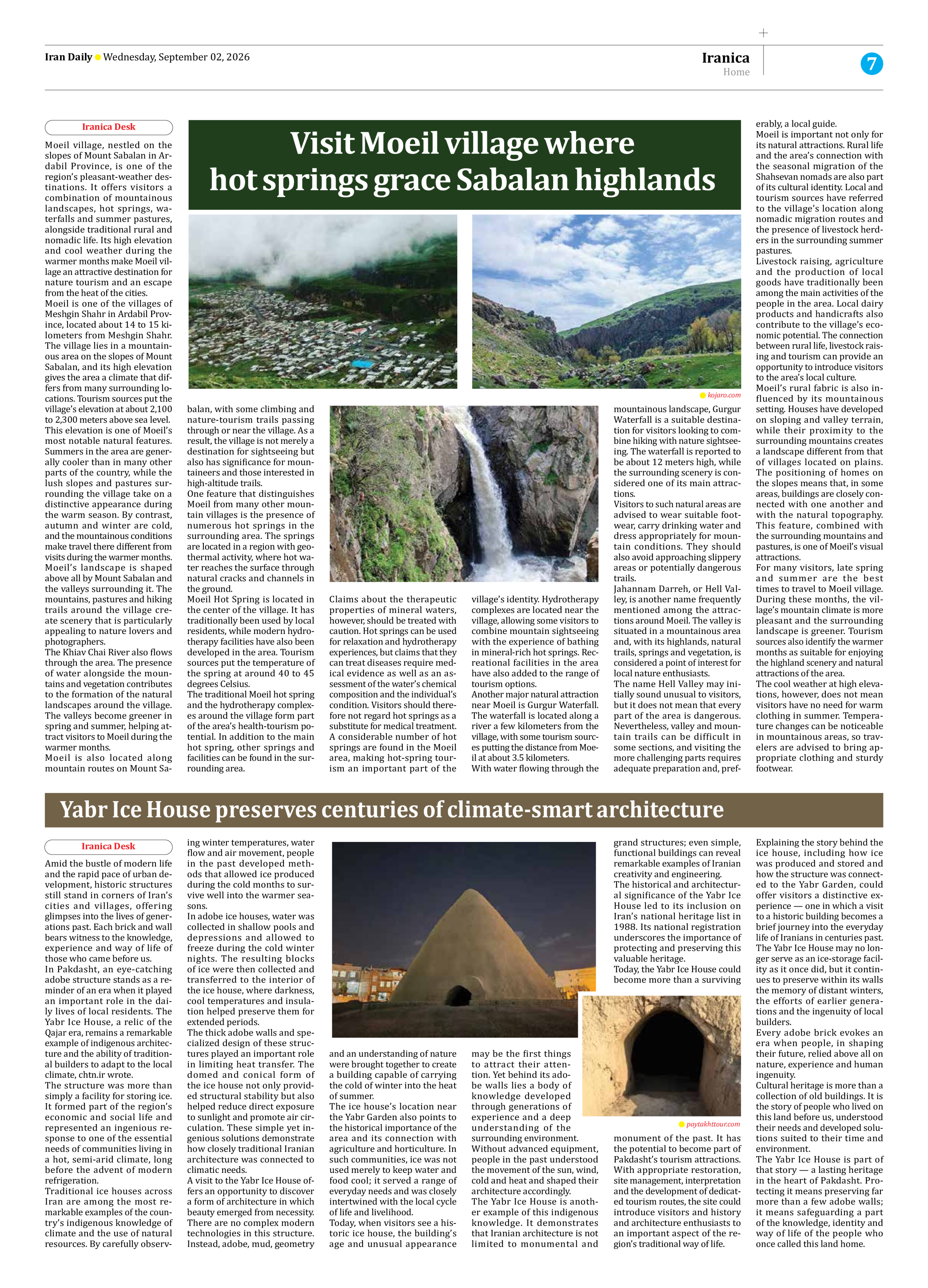
Another major natural attraction near Moeil is Gurgur Waterfall. The waterfall is located along a river a few kilometers from the village, with some tourism sources putting the distance from Moeil at about 3.5 kilometers.
With water flowing through the mountainous landscape, Gurgur Waterfall is a suitable destination for visitors looking to combine hiking with nature sightseeing. The waterfall is reported to be about 12 meters high, while the surrounding scenery is considered one of its main attractions.
Visitors to such natural areas are advised to wear suitable footwear, carry drinking water and dress appropriately for mountain conditions. They should also avoid approaching slippery areas or potentially dangerous trails.
Jahannam Darreh, or Hell Valley, is another name frequently mentioned among the attractions around Moeil. The valley is situated in a mountainous area and, with its highlands, natural trails, springs and vegetation, is considered a point of interest for local nature enthusiasts.
The name Hell Valley may initially sound unusual to visitors, but it does not mean that every part of the area is dangerous. Nevertheless, valley and mountain trails can be difficult in some sections, and visiting the more challenging parts requires adequate preparation and, preferably, a local guide.
Moeil is important not only for its natural attractions. Rural life and the area’s connection with the seasonal migration of the Shahsevan nomads are also part of its cultural identity. Local and tourism sources have referred to the village’s location along nomadic migration routes and the presence of livestock herders in the surrounding summer pastures.
Livestock raising, agriculture and the production of local goods have traditionally been among the main activities of the people in the area. Local dairy products and handicrafts also contribute to the village’s economic potential. The connection between rural life, livestock raising and tourism can provide an opportunity to introduce visitors to the area’s local culture.
Moeil’s rural fabric is also influenced by its mountainous setting. Houses have developed on sloping and valley terrain, while their proximity to the surrounding mountains creates a landscape different from that of villages located on plains. The positioning of homes on the slopes means that, in some areas, buildings are closely connected with one another and with the natural topography. This feature, combined with the surrounding mountains and pastures, is one of Moeil’s visual attractions.
For many visitors, late spring and summer are the best times to travel to Moeil village. During these months, the village’s mountain climate is more pleasant and the surrounding landscape is greener. Tourism sources also identify the warmer months as suitable for enjoying the highland scenery and natural attractions of the area.
The cool weather at high elevations, however, does not mean visitors have no need for warm clothing in summer. Temperature changes can be noticeable in mountainous areas, so travelers are advised to bring appropriate clothing and sturdy footwear.