







Dom-e Asb Canyon offers hidden natural escape near Shiraz
Fars Province is not limited to famous attractions such as Hafezieh, Persepolis, and Maharloo Lake. A short distance away from the city’s busy streets, hidden among mountains and oak forests, lie natural wonders that many travelers may not even have heard of.
Dom-e Asb Canyon is one of these hidden gems, where the sound of flowing water, the shade of trees, and the movement of squirrels among oak branches create an unforgettable experience.
Located about 50 kilometers south of Shiraz, Dom-e Asb Canyon can be reached through the Kohmareh Sorkhi region, a mountainous, green, and pleasant area near the village of Karreh Bas.
The mountains of this region form part of the southern ranges of the Zagros Mountains. The highest peak in the area is Daloo, standing at around 3,200 meters above sea level, which gives the region its cool and pleasant climate.
Story behind the name
At the end of the canyon lies a waterfall whose shape resembles a horse’s tail as it falls — narrow, elongated, and flowing, like a white horse’s tail hanging from the edge of a cliff. This resemblance has led locals and nature lovers to call the canyon “Dom-e Asb,” meaning “Horse Tail.”
The waterfall is the highlight of the canyon trekking route, where the sound of water and the cool mist rising from the falls refresh visitors after the journey.
Land of tribes and mountains
Kohmareh Sorkhi is not only known for its natural beauty but also for its historical and cultural significance. During the Sassanid period, the area was known as “Ram Divan.” The term “Ram” was used at the time to refer to tribes and nomadic groups.
The Ram Divan group and other nomadic communities of the region have continued their seasonal migration between summer and winter pastures for generations, forming an important part of Kohmareh Sorkhi’s local culture.
Visitors may encounter black tents, herds of sheep and goats, and the simple lifestyle of nomadic communities along the route to the canyon or in the surrounding plains — an experience that offers a unique connection with nature.
Karreh Bas Village
Dom-e Asb Canyon is located near Karreh Bas village, which serves as the gateway to this natural attraction. The village, part of the Kohmareh Sorkhi region, is surrounded by farms, orchards, and rural homes.
Local residents are mainly engaged in agriculture, gardening, and livestock farming. Visitors who spend time with villagers can experience local traditions, dialects, traditional foods, and the hospitality of the people of the region.
Natural landscape
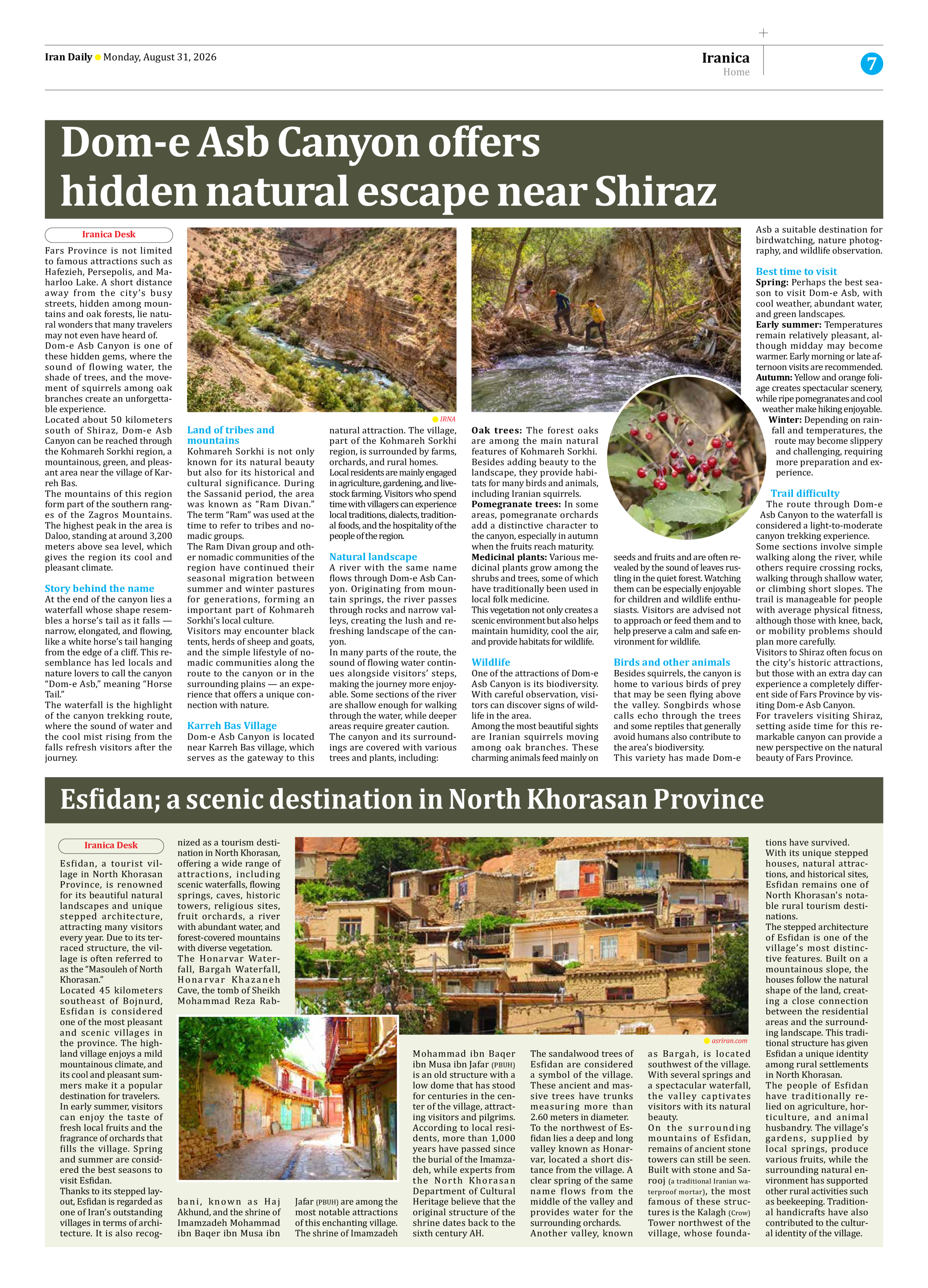
A river with the same name flows through Dom-e Asb Canyon. Originating from mountain springs, the river passes through rocks and narrow valleys, creating the lush and refreshing landscape of the canyon.
In many parts of the route, the sound of flowing water continues alongside visitors’ steps, making the journey more enjoyable. Some sections of the river are shallow enough for walking through the water, while deeper areas require greater caution.
The canyon and its surroundings are covered with various trees and plants, including:
Oak trees: The forest oaks are among the main natural features of Kohmareh Sorkhi. Besides adding beauty to the landscape, they provide habitats for many birds and animals, including Iranian squirrels.
Pomegranate trees: In some areas, pomegranate orchards add a distinctive character to the canyon, especially in autumn when the fruits reach maturity.
Medicinal plants: Various medicinal plants grow among the shrubs and trees, some of which have traditionally been used in local folk medicine.
This vegetation not only creates a scenic environment but also helps maintain humidity, cool the air, and provide habitats for wildlife.
Wildlife
One of the attractions of Dom-e Asb Canyon is its biodiversity. With careful observation, visitors can discover signs of wildlife in the area.
Among the most beautiful sights are Iranian squirrels moving among oak branches. These charming animals feed mainly on seeds and fruits and are often revealed by the sound of leaves rustling in the quiet forest. Watching them can be especially enjoyable for children and wildlife enthusiasts. Visitors are advised not to approach or feed them and to help preserve a calm and safe environment for wildlife.
Birds and other animals
Besides squirrels, the canyon is home to various birds of prey that may be seen flying above the valley. Songbirds whose calls echo through the trees and some reptiles that generally avoid humans also contribute to the area’s biodiversity.
This variety has made Dom-e Asb a suitable destination for birdwatching, nature photography, and wildlife observation.
Best time to visit
Spring: Perhaps the best season to visit Dom-e Asb, with cool weather, abundant water, and green landscapes.
Early summer: Temperatures remain relatively pleasant, although midday may become warmer. Early morning or late afternoon visits are recommended.
Autumn: Yellow and orange foliage creates spectacular scenery, while ripe pomegranates and cool weather make hiking enjoyable.
Winter: Depending on rainfall and temperatures, the route may become slippery and challenging, requiring more preparation and experience.
Trail difficulty
The route through Dom-e Asb Canyon to the waterfall is considered a light-to-moderate canyon trekking experience.
Some sections involve simple walking along the river, while others require crossing rocks, walking through shallow water, or climbing short slopes. The trail is manageable for people with average physical fitness, although those with knee, back, or mobility problems should plan more carefully.
Visitors to Shiraz often focus on the city’s historic attractions, but those with an extra day can experience a completely different side of Fars Province by visiting Dom-e Asb Canyon.
For travelers visiting Shiraz, setting aside time for this remarkable canyon can provide a new perspective on the natural beauty of Fars Province.