





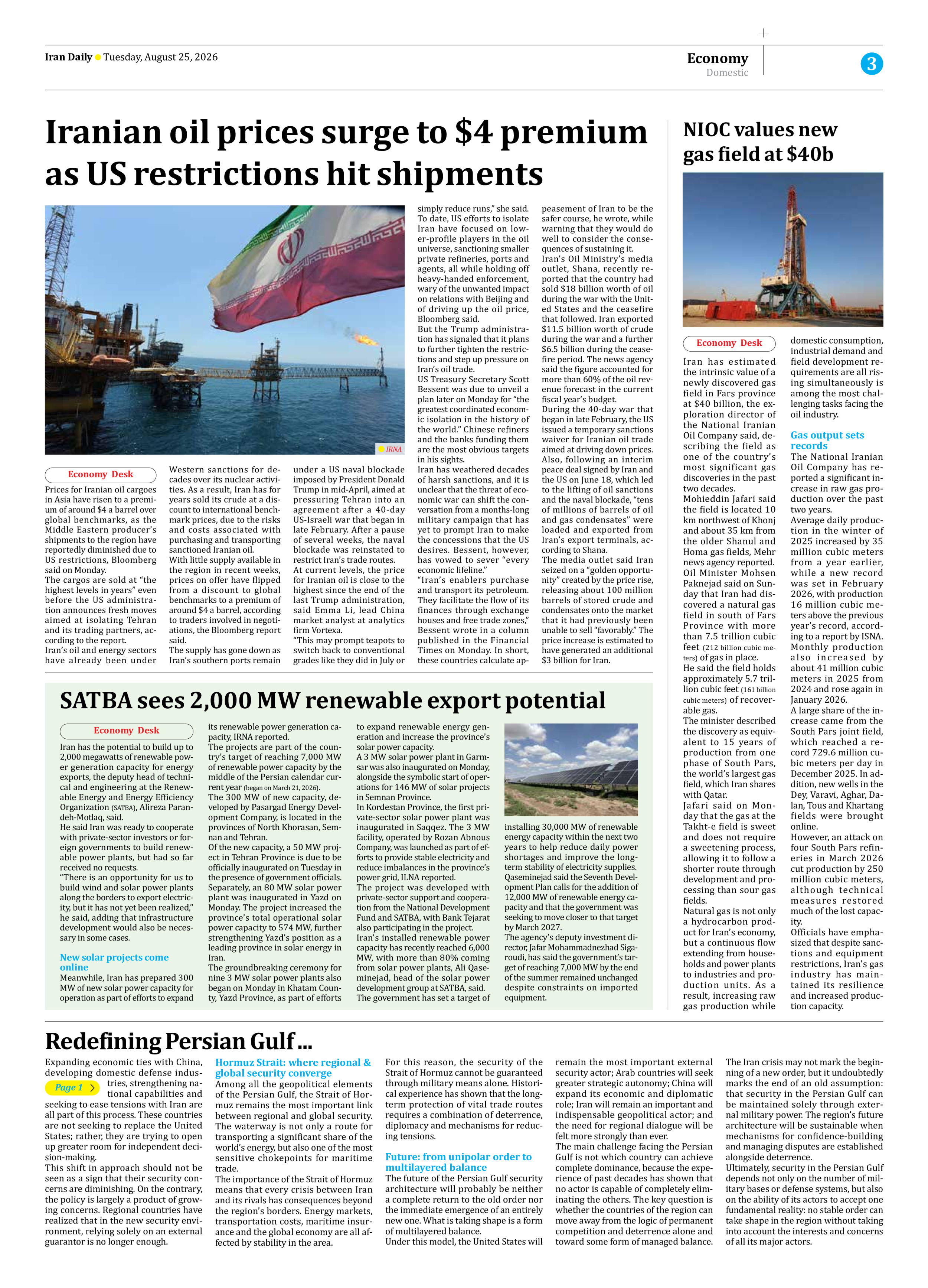


Iranian oil prices surge to $4 premium as US restrictions hit shipments
Prices for Iranian oil cargoes in Asia have risen to a premium of around $4 a barrel over global benchmarks, as the Middle Eastern producer’s shipments to the region have reportedly diminished due to US restrictions, Bloomberg said on Monday.
The cargos are sold at “the highest levels in years” even before the US administration announces fresh moves aimed at isolating Tehran and its trading partners, according to the report.
Iran’s oil and energy sectors have already been under Western sanctions for decades over its nuclear activities. As a result, Iran has for years sold its crude at a discount to international benchmark prices, due to the risks and costs associated with purchasing and transporting sanctioned Iranian oil.
With little supply available in the region in recent weeks, prices on offer have flipped from a discount to global benchmarks to a premium of around $4 a barrel, according to traders involved in negotiations, the Bloomberg report said.
The supply has gone down as Iran’s southern ports remain under a US naval blockade imposed by President Donald Trump in mid-April, aimed at pressuring Tehran into an agreement after a 40-day US-Israeli war that began in late February. After a pause of several weeks, the naval blockade was reinstated to restrict Iran’s trade routes.
At current levels, the price for Iranian oil is close to the highest since the end of the last Trump administration, said Emma Li, lead China market analyst at analytics firm Vortexa.
“This may prompt teapots to switch back to conventional grades like they did in July or simply reduce runs,” she said.
To date, US efforts to isolate Iran have focused on lower-profile players in the oil universe, sanctioning smaller private refineries, ports and agents, all while holding off heavy-handed enforcement, wary of the unwanted impact on relations with Beijing and of driving up the oil price, Bloomberg said.
But the Trump administration has signaled that it plans to further tighten the restrictions and step up pressure on Iran’s oil trade.
US Treasury Secretary Scott Bessent was due to unveil a plan later on Monday for “the greatest coordinated economic isolation in the history of the world.” Chinese refiners and the banks funding them are the most obvious targets in his sights.
Iran has weathered decades of harsh sanctions, and it is unclear that the threat of economic war can shift the conversation from a months-long military campaign that has yet to prompt Iran to make the concessions that the US desires. Bessent, however, has vowed to sever “every economic lifeline.”
“Iran’s enablers purchase and transport its petroleum. They facilitate the flow of its finances through exchange houses and free trade zones,” Bessent wrote in a column published in the Financial Times on Monday. In short, these countries calculate appeasement of Iran to be the safer course, he wrote, while warning that they would do well to consider the consequences of sustaining it.
Iran’s Oil Ministry’s media outlet, Shana, recently reported that the country had sold $18 billion worth of oil during the war with the United States and the ceasefire that followed. Iran exported $11.5 billion worth of crude during the war and a further $6.5 billion during the ceasefire period. The news agency said the figure accounted for more than 60% of the oil revenue forecast in the current fiscal year’s budget.
During the 40-day war that began in late February, the US issued a temporary sanctions waiver for Iranian oil trade aimed at driving down prices.
Also, following an interim peace deal signed by Iran and the US on June 18, which led to the lifting of oil sanctions and the naval blockade, “tens of millions of barrels of oil and gas condensates” were loaded and exported from Iran’s export terminals, according to Shana.
The media outlet said Iran seized on a “golden opportunity” created by the price rise, releasing about 100 million barrels of stored crude and condensates onto the market that it had previously been unable to sell “favorably.” The price increase is estimated to have generated an additional $3 billion for Iran.