







Pirgol Mud Volcano combines geological wonders with tourism potential
Sistan and Baluchestan Province, a land rich in geological wonders and pristine natural landscapes, has long attracted nature lovers and researchers. Among its natural phenomena, mud volcanoes stand out not only as rare geomorphological features but also as valuable assets for sustainable development and the expansion of health tourism.
Located southwest of Khash, the Pirgol Mud Volcano is a rare geological phenomenon with significant natural, therapeutic and tourism potential. Despite its distinctive features, the site remains relatively unknown. Developing basic infrastructure, promoting the attraction more widely and preparing a comprehensive plan to harness its health tourism potential could turn the area into a major ecotourism destination in southeastern Iran, according to IRNA.
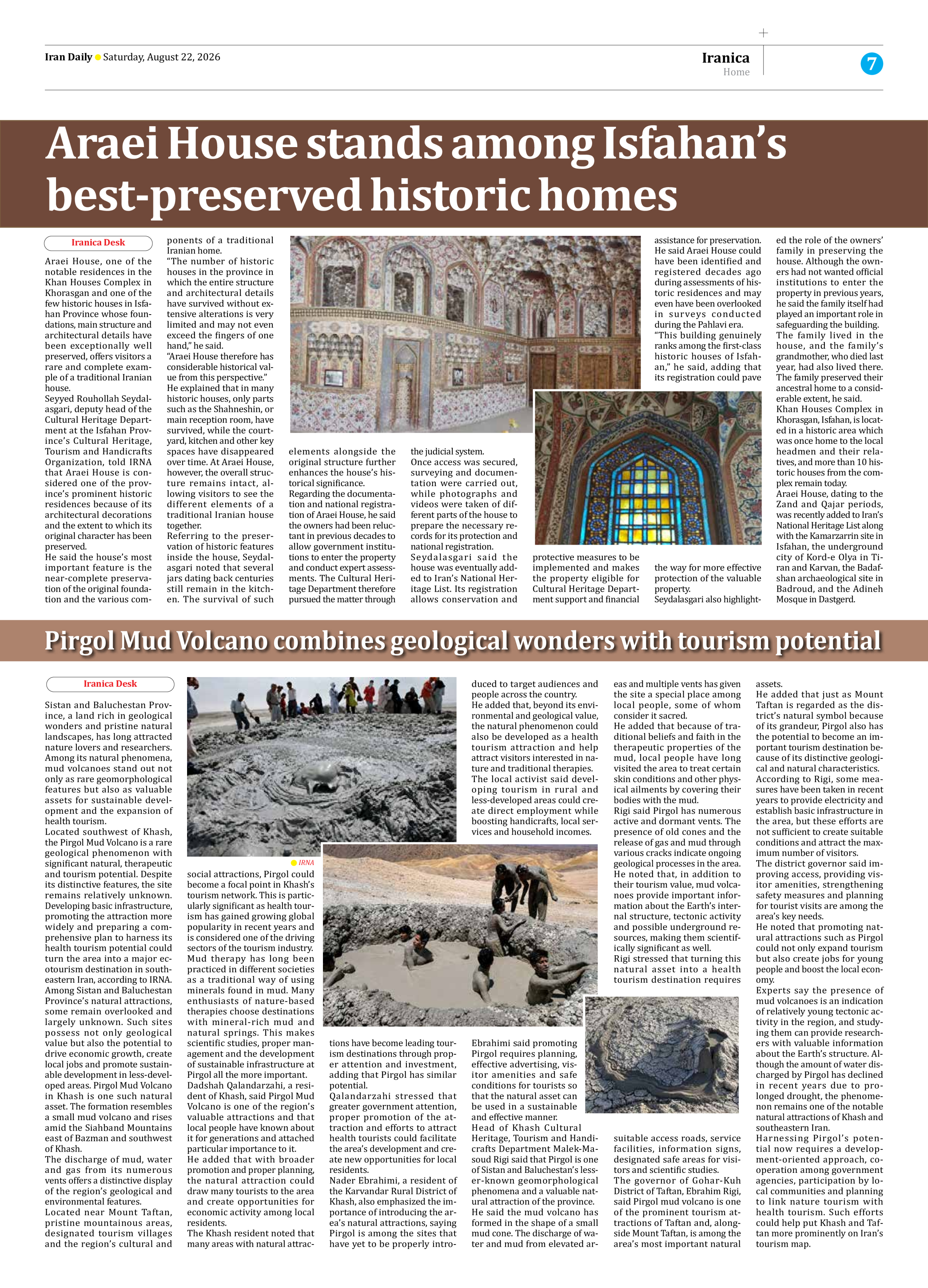
Among Sistan and Baluchestan Province’s natural attractions, some remain overlooked and largely unknown. Such sites possess not only geological value but also the potential to drive economic growth, create local jobs and promote sustainable development in less-developed areas. Pirgol Mud Volcano in Khash is one such natural asset. The formation resembles a small mud volcano and rises amid the Siahband Mountains east of Bazman and southwest of Khash.
The discharge of mud, water and gas from its numerous vents offers a distinctive display of the region’s geological and environmental features.
Located near Mount Taftan, pristine mountainous areas, designated tourism villages and the region’s cultural and social attractions, Pirgol could become a focal point in Khash’s tourism network. This is particularly significant as health tourism has gained growing global popularity in recent years and is considered one of the driving sectors of the tourism industry.
Mud therapy has long been practiced in different societies as a traditional way of using minerals found in mud. Many enthusiasts of nature-based therapies choose destinations with mineral-rich mud and natural springs. This makes scientific studies, proper management and the development of sustainable infrastructure at Pirgol all the more important.
Dadshah Qalandarzahi, a resident of Khash, said Pirgol Mud Volcano is one of the region’s valuable attractions and that local people have known about it for generations and attached particular importance to it.
He added that with broader promotion and proper planning, the natural attraction could draw many tourists to the area and create opportunities for economic activity among local residents.
The Khash resident noted that many areas with natural attractions have become leading tourism destinations through proper attention and investment, adding that Pirgol has similar potential.
Qalandarzahi stressed that greater government attention, proper promotion of the attraction and efforts to attract health tourists could facilitate the area’s development and create new opportunities for local residents.
Nader Ebrahimi, a resident of the Karvandar Rural District of Khash, also emphasized the importance of introducing the area’s natural attractions, saying Pirgol is among the sites that have yet to be properly introduced to target audiences and people across the country.
He added that, beyond its environmental and geological value, the natural phenomenon could also be developed as a health tourism attraction and help attract visitors interested in nature and traditional therapies.
The local activist said developing tourism in rural and less-developed areas could create direct employment while boosting handicrafts, local services and household incomes.
Ebrahimi said promoting Pirgol requires planning, effective advertising, visitor amenities and safe conditions for tourists so that the natural asset can be used in a sustainable and effective manner.
Head of Khash Cultural Heritage, Tourism and Handicrafts Department Malek-Masoud Rigi said that Pirgol is one of Sistan and Baluchestan’s lesser-known geomorphological phenomena and a valuable natural attraction of the province.
He said the mud volcano has formed in the shape of a small mud cone. The discharge of water and mud from elevated areas and multiple vents has given the site a special place among local people, some of whom consider it sacred.
He added that because of traditional beliefs and faith in the therapeutic properties of the mud, local people have long visited the area to treat certain skin conditions and other physical ailments by covering their bodies with the mud.
Rigi said Pirgol has numerous active and dormant vents. The presence of old cones and the release of gas and mud through various cracks indicate ongoing geological processes in the area.
He noted that, in addition to their tourism value, mud volcanoes provide important information about the Earth’s internal structure, tectonic activity and possible underground resources, making them scientifically significant as well.
Rigi stressed that turning this natural asset into a health tourism destination requires suitable access roads, service facilities, information signs, designated safe areas for visitors and scientific studies.
The governor of Gohar-Kuh District of Taftan, Ebrahim Rigi, said Pirgol mud volcano is one of the prominent tourism attractions of Taftan and, alongside Mount Taftan, is among the area’s most important natural assets.
He added that just as Mount Taftan is regarded as the district’s natural symbol because of its grandeur, Pirgol also has the potential to become an important tourism destination because of its distinctive geological and natural characteristics.
According to Rigi, some measures have been taken in recent years to provide electricity and establish basic infrastructure in the area, but these efforts are not sufficient to create suitable conditions and attract the maximum number of visitors.
The district governor said improving access, providing visitor amenities, strengthening safety measures and planning for tourist visits are among the area’s key needs.
He noted that promoting natural attractions such as Pirgol could not only expand tourism but also create jobs for young people and boost the local economy.
Experts say the presence of mud volcanoes is an indication of relatively young tectonic activity in the region, and studying them can provide researchers with valuable information about the Earth’s structure. Although the amount of water discharged by Pirgol has declined in recent years due to prolonged drought, the phenomenon remains one of the notable natural attractions of Khash and southeastern Iran.
Harnessing Pirgol’s potential now requires a development-oriented approach, cooperation among government agencies, participation by local communities and planning to link nature tourism with health tourism. Such efforts could help put Khash and Taftan more prominently on Iran’s tourism map.