





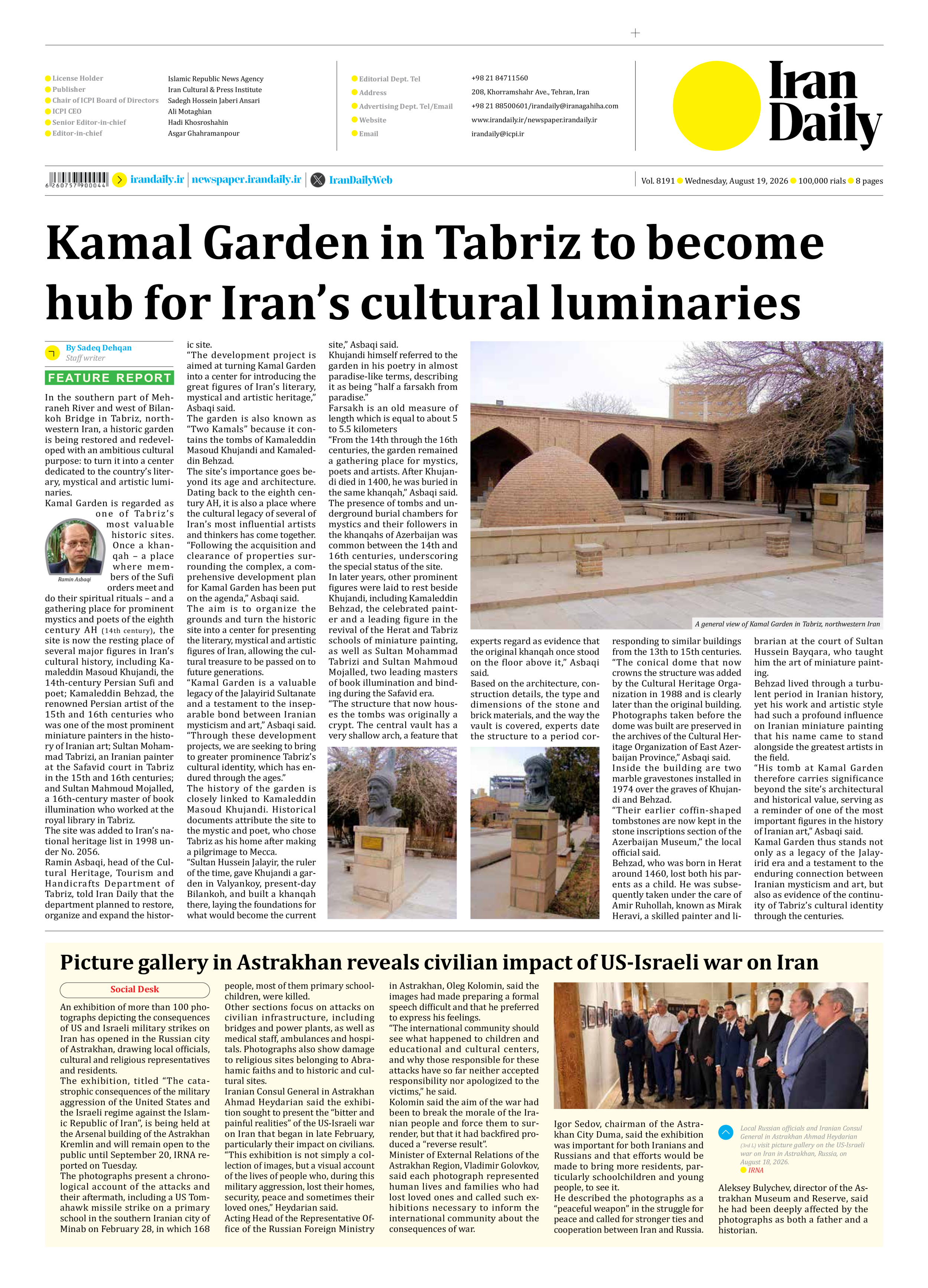


Picture gallery in Astrakhan reveals civilian impact of US-Israeli war on Iran
An exhibition of more than 100 photographs depicting the consequences of US and Israeli military strikes on Iran has opened in the Russian city of Astrakhan, drawing local officials, cultural and religious representatives and residents.
The exhibition, titled “The catastrophic consequences of the military aggression of the United States and the Israeli regime against the Islamic Republic of Iran”, is being held at the Arsenal building of the Astrakhan Kremlin and will remain open to the public until September 20, IRNA reported on Tuesday.
The photographs present a chronological account of the attacks and their aftermath, including a US Tomahawk missile strike on a primary school in the southern Iranian city of Minab on February 28, in which 168 people, most of them primary schoolchildren, were killed.
Other sections focus on attacks on civilian infrastructure, including bridges and power plants, as well as medical staff, ambulances and hospitals. Photographs also show damage to religious sites belonging to Abrahamic faiths and to historic and cultural sites.
Iranian Consul General in Astrakhan Ahmad Heydarian said the exhibition sought to present the “bitter and painful realities” of the US-Israeli war on Iran that began in late February, particularly their impact on civilians.
“This exhibition is not simply a collection of images, but a visual account of the lives of people who, during this military aggression, lost their homes, security, peace and sometimes their loved ones,” Heydarian said.
Acting Head of the Representative Office of the Russian Foreign Ministry in Astrakhan, Oleg Kolomin, said the images had made preparing a formal speech difficult and that he preferred to express his feelings.
“The international community should see what happened to children and educational and cultural centers, and why those responsible for these attacks have so far neither accepted responsibility nor apologized to the victims,” he said.
Kolomin said the aim of the war had been to break the morale of the Iranian people and force them to surrender, but that it had backfired produced a “reverse result”.
Minister of External Relations of the Astrakhan Region, Vladimir Golovkov, said each photograph represented human lives and families who had lost loved ones and called such exhibitions necessary to inform the international community about the consequences of war.
Igor Sedov, chairman of the Astrakhan City Duma, said the exhibition was important for both Iranians and Russians and that efforts would be made to bring more residents, particularly schoolchildren and young people, to see it.
He described the photographs as a “peaceful weapon” in the struggle for peace and called for stronger ties and cooperation between Iran and Russia.
Aleksey Bulychev, director of the Astrakhan Museum and Reserve, said he had been deeply affected by the photographs as both a father and a historian.