







Creative industries could drive economy, cultural influence, minister says
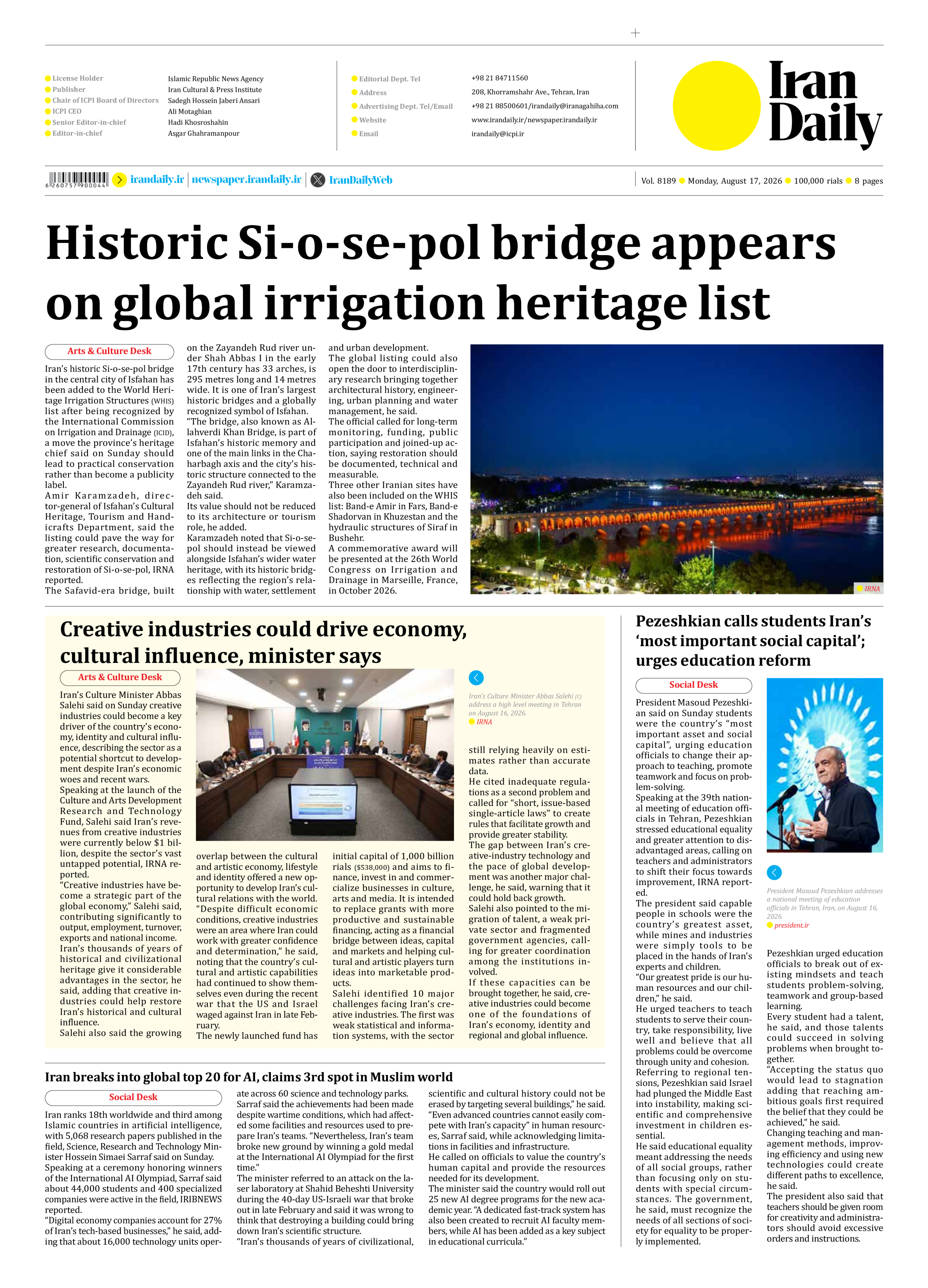
Iran’s Culture Minister Abbas Salehi said on Sunday creative industries could become a key driver of the country’s economy, identity and cultural influence, describing the sector as a potential shortcut to development despite Iran’s economic woes and recent wars.
Speaking at the launch of the Culture and Arts Development Research and Technology Fund, Salehi said Iran’s revenues from creative industries were currently below $1 billion, despite the sector’s vast untapped potential, IRNA reported.
“Creative industries have become a strategic part of the global economy,” Salehi said, contributing significantly to output, employment, turnover, exports and national income.
Iran’s thousands of years of historical and civilizational heritage give it considerable advantages in the sector, he said, adding that creative industries could help restore Iran’s historical and cultural influence.
Salehi also said the growing overlap between the cultural and artistic economy, lifestyle and identity offered a new opportunity to develop Iran’s cultural relations with the world.
“Despite difficult economic conditions, creative industries were an area where Iran could work with greater confidence and determination,” he said, noting that the country’s cultural and artistic capabilities had continued to show themselves even during the recent war that the US and Israel waged against Iran in late February.
The newly launched fund has initial capital of 1,000 billion rials ($538,000) and aims to finance, invest in and commercialize businesses in culture, arts and media. It is intended to replace grants with more productive and sustainable financing, acting as a financial bridge between ideas, capital and markets and helping cultural and artistic players turn ideas into marketable products.
Salehi identified 10 major challenges facing Iran’s creative industries. The first was weak statistical and information systems, with the sector still relying heavily on estimates rather than accurate data.
He cited inadequate regulations as a second problem and called for “short, issue-based single-article laws” to create rules that facilitate growth and provide greater stability.
The gap between Iran’s creative-industry technology and the pace of global development was another major challenge, he said, warning that it could hold back growth.
Salehi also pointed to the migration of talent, a weak private sector and fragmented government agencies, calling for greater coordination among the institutions involved.
If these capacities can be brought together, he said, creative industries could become one of the foundations of Iran’s economy, identity and regional and global influence.