





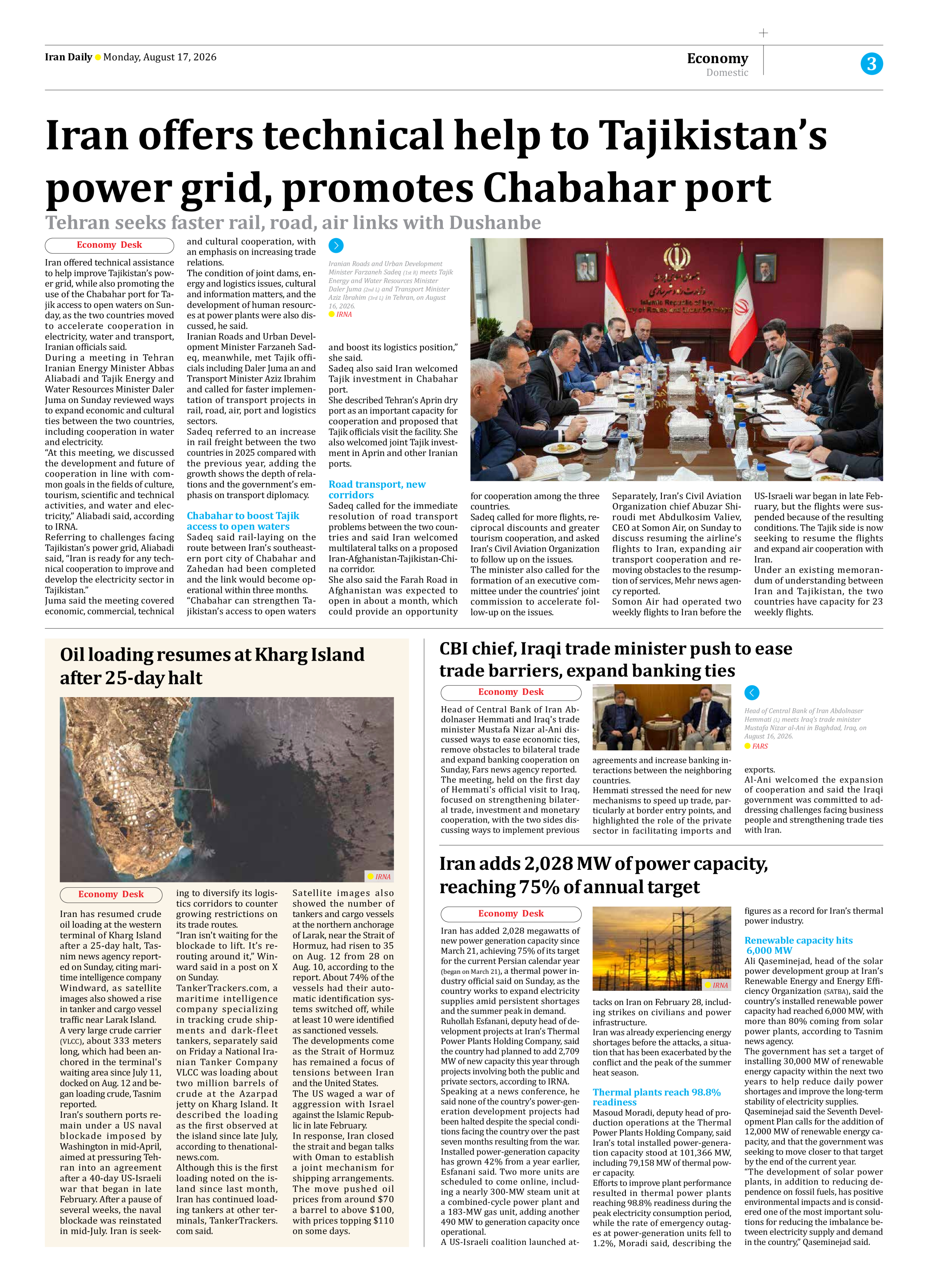


Iran adds 2,028 MW of power capacity, reaching 75% of annual target
Iran has added 2,028 megawatts of new power generation capacity since March 21, achieving 75% of its target for the current Persian calendar year (began on March 21), a thermal power industry official said on Sunday, as the country works to expand electricity supplies amid persistent shortages and the summer peak in demand.
Ruhollah Esfanani, deputy head of development projects at Iran’s Thermal Power Plants Holding Company, said the country had planned to add 2,709 MW of new capacity this year through projects involving both the public and private sectors, according to IRNA.
Speaking at a news conference, he said none of the country’s power-generation development projects had been halted despite the special conditions facing the country over the past seven months resulting from the war.
Installed power-generation capacity has grown 42% from a year earlier, Esfanani said. Two more units are scheduled to come online, including a nearly 300-MW steam unit at a combined-cycle power plant and a 183-MW gas unit, adding another 490 MW to generation capacity once operational.
A US-Israeli coalition launched attacks on Iran on February 28, including strikes on civilians and power infrastructure.
Iran was already experiencing energy shortages before the attacks, a situation that has been exacerbated by the conflict and the peak of the summer heat season.
Thermal plants reach 98.8% readiness
Masoud Moradi, deputy head of production operations at the Thermal Power Plants Holding Company, said Iran’s total installed power-generation capacity stood at 101,366 MW, including 79,158 MW of thermal power capacity.
Efforts to improve plant performance resulted in thermal power plants reaching 98.8% readiness during the peak electricity consumption period, while the rate of emergency outages at power-generation units fell to 1.2%, Moradi said, describing the figures as a record for Iran’s thermal power industry.
Renewable capacity hits
6,000 MW
Ali Qaseminejad, head of the solar power development group at Iran’s Renewable Energy and Energy Efficiency Organization (SATBA), said the country’s installed renewable power capacity had reached 6,000 MW, with more than 80% coming from solar power plants, according to Tasnim news agency.
The government has set a target of installing 30,000 MW of renewable energy capacity within the next two years to help reduce daily power shortages and improve the long-term stability of electricity supplies.
Qaseminejad said the Seventh Development Plan calls for the addition of 12,000 MW of renewable energy capacity, and that the government was seeking to move closer to that target by the end of the current year.
“The development of solar power plants, in addition to reducing dependence on fossil fuels, has positive environmental impacts and is considered one of the most important solutions for reducing the imbalance between electricity supply and demand in the country,” Qaseminejad said.