





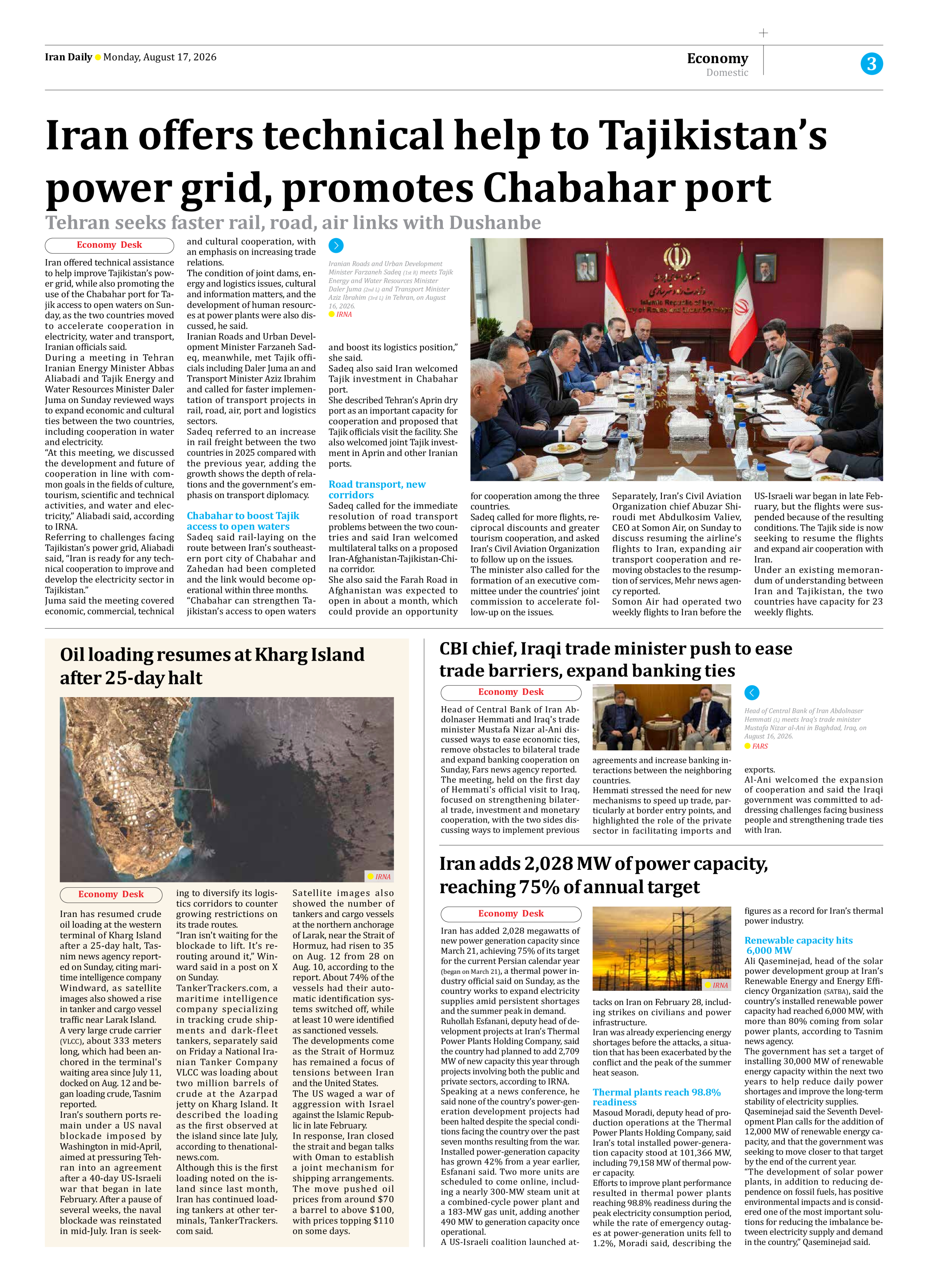


Oil loading resumes at Kharg Island after 25-day halt
Iran has resumed crude oil loading at the western terminal of Kharg Island after a 25-day halt, Tasnim news agency reported on Sunday, citing maritime intelligence company Windward, as satellite images also showed a rise in tanker and cargo vessel traffic near Larak Island.
A very large crude carrier (VLCC), about 333 meters long, which had been anchored in the terminal's waiting area since July 11, docked on Aug. 12 and began loading crude, Tasnim reported.
Iran’s southern ports remain under a US naval blockade imposed by Washington in mid-April, aimed at pressuring Tehran into an agreement after a 40-day US-Israeli war that began in late February. After a pause of several weeks, the naval blockade was reinstated in mid-July. Iran is seeking to diversify its logistics corridors to counter growing restrictions on its trade routes.
“Iran isn't waiting for the blockade to lift. It’s rerouting around it,” Winward said in a post on X on Sunday.
TankerTrackers.com, a maritime intelligence company specializing in tracking crude shipments and dark-fleet tankers, separately said on Friday a National Iranian Tanker Company VLCC was loading about two million barrels of crude at the Azarpad jetty on Kharg Island. It described the loading as the first observed at the island since late July, according to thenationalnews.com.
Although this is the first loading noted on the island since last month, Iran has continued loading tankers at other terminals, TankerTrackers.com said.
Satellite images also showed the number of tankers and cargo vessels at the northern anchorage of Larak, near the Strait of Hormuz, had risen to 35 on Aug. 12 from 28 on Aug. 10, according to the report. About 74% of the vessels had their automatic identification systems switched off, while at least 10 were identified as sanctioned vessels.
The developments come as the Strait of Hormuz has remained a focus of tensions between Iran and the United States.
The US waged a war of aggression with Israel against the Islamic Republic in late February.
In response, Iran closed the strait and began talks with Oman to establish a joint mechanism for shipping arrangements. The move pushed oil prices from around $70 a barrel to above $100, with prices topping $110 on some days.