





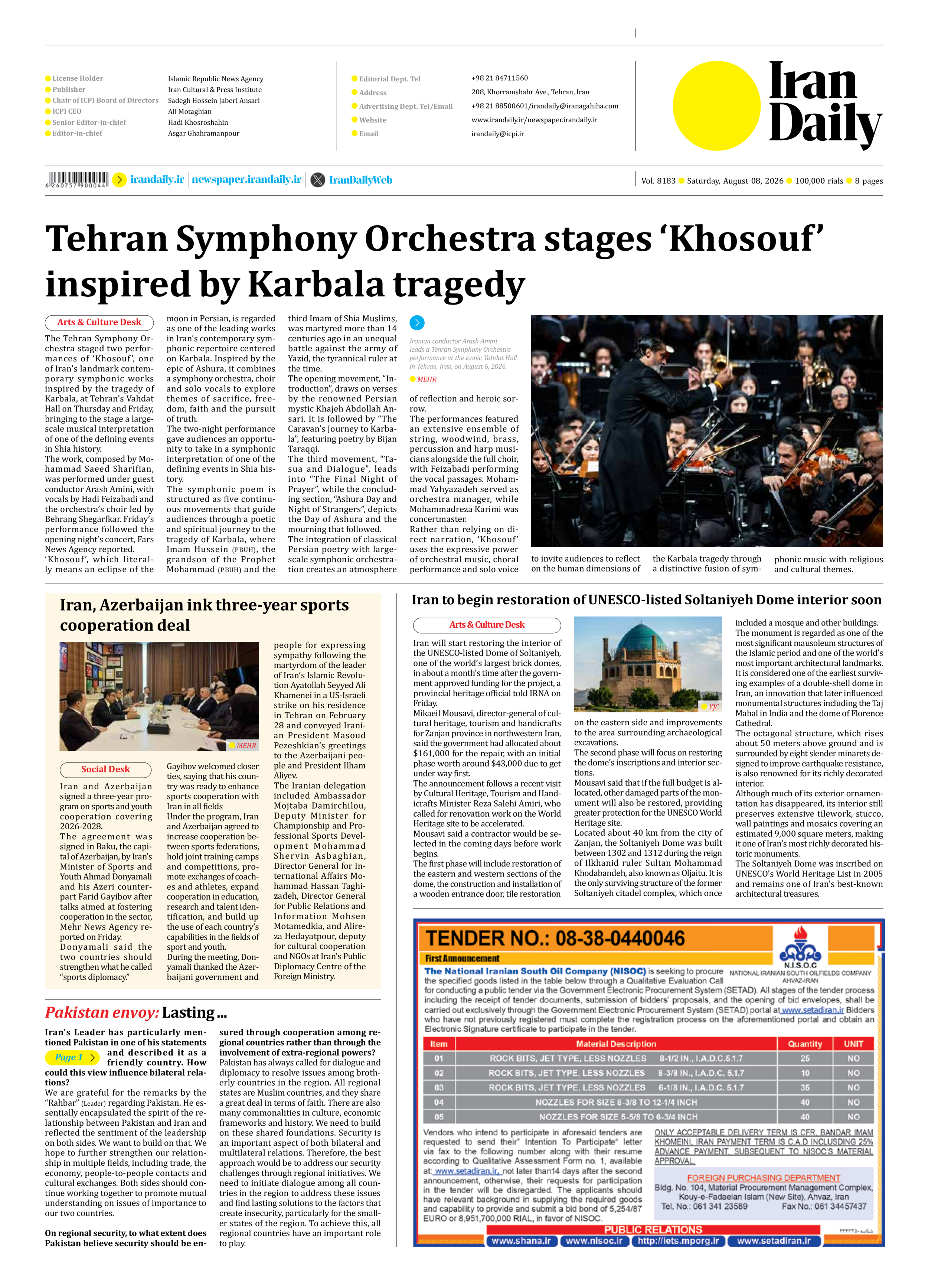


Iran to begin restoration of UNESCO-listed Soltaniyeh Dome interior soon
Iran will start restoring the interior of the UNESCO-listed Dome of Soltaniyeh, one of the world’s largest brick domes, in about a month’s time after the government approved funding for the project, a provincial heritage official told IRNA on Friday.
Mikaeil Mousavi, director-general of cultural heritage, tourism and handicrafts for Zanjan province in northwestern Iran, said the government had allocated about $161,000 for the repair, with an initial phase worth around $43,000 due to get under way first.
The announcement follows a recent visit by Cultural Heritage, Tourism and Handicrafts Minister Reza Salehi Amiri, who called for renovation work on the World Heritage site to be accelerated.
Mousavi said a contractor would be selected in the coming days before work begins.
The first phase will include restoration of the eastern and western sections of the dome, the construction and installation of a wooden entrance door, tile restoration on the eastern side and improvements to the area surrounding archaeological excavations.
The second phase will focus on restoring the dome’s inscriptions and interior sections.
Mousavi said that if the full budget is allocated, other damaged parts of the monument will also be restored, providing greater protection for the UNESCO World Heritage site.
Located about 40 km from the city of Zanjan, the Soltaniyeh Dome was built between 1302 and 1312 during the reign of Ilkhanid ruler Sultan Mohammad Khodabandeh, also known as Oljaitu. It is the only surviving structure of the former Soltaniyeh citadel complex, which once included a mosque and other buildings.
The monument is regarded as one of the most significant mausoleum structures of the Islamic period and one of the world’s most important architectural landmarks. It is considered one of the earliest surviving examples of a double-shell dome in Iran, an innovation that later influenced monumental structures including the Taj Mahal in India and the dome of Florence Cathedral.
The octagonal structure, which rises about 50 meters above ground and is surrounded by eight slender minarets designed to improve earthquake resistance, is also renowned for its richly decorated interior.
Although much of its exterior ornamentation has disappeared, its interior still preserves extensive tilework, stucco, wall paintings and mosaics covering an estimated 9,000 square meters, making it one of Iran’s most richly decorated historic monuments.
The Soltaniyeh Dome was inscribed on UNESCO’s World Heritage List in 2005 and remains one of Iran’s best-known architectural treasures.