







Iran opens new stretch of North-South corridor in southeast
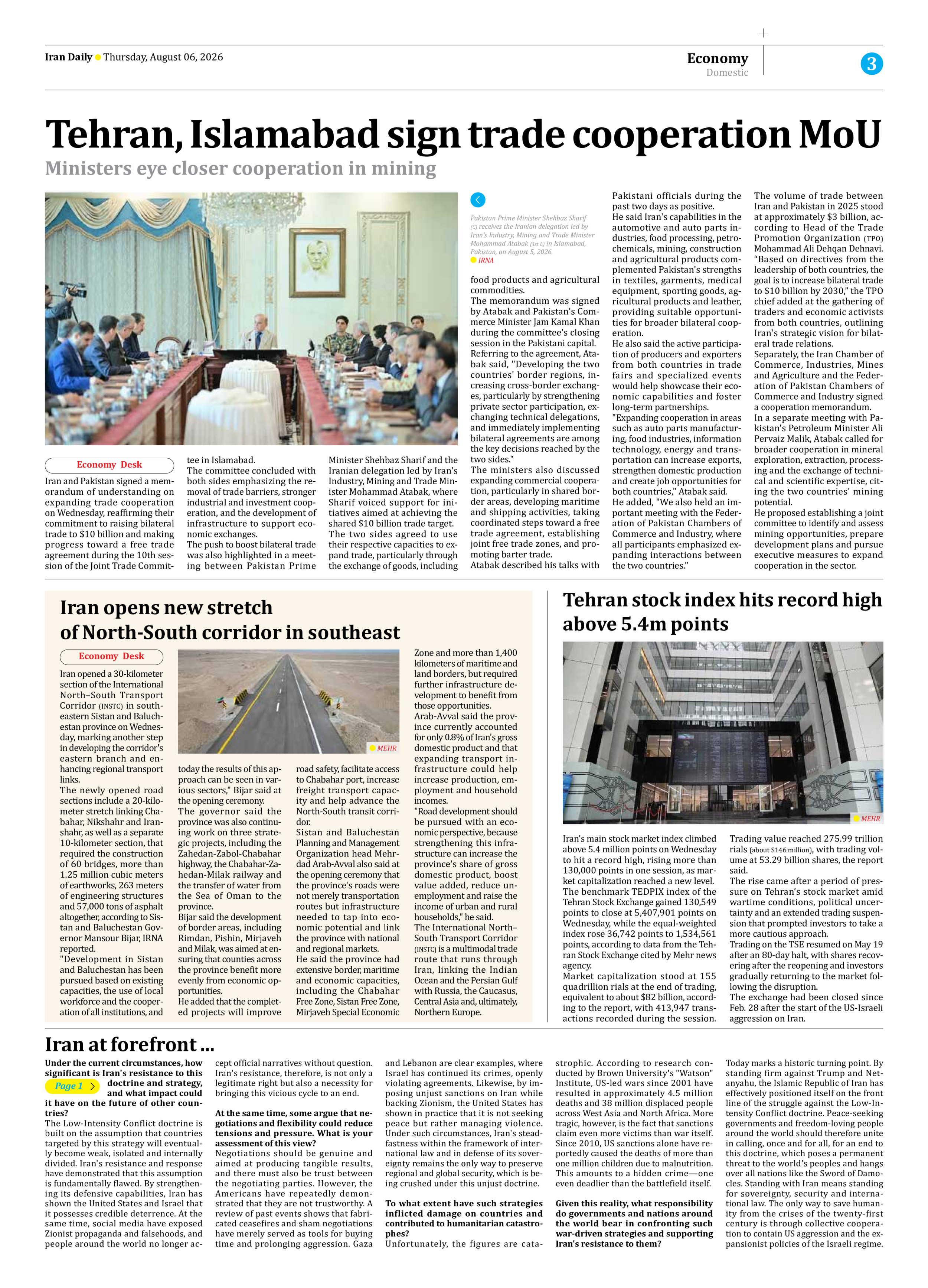
Iran opened a 30-kilometer section of the International North–South Transport Corridor (INSTC) in southeastern Sistan and Baluchestan province on Wednesday, marking another step in developing the corridor's eastern branch and enhancing regional transport links.
The newly opened road sections include a 20-kilometer stretch linking Chabahar, Nikshahr and Iranshahr, as well as a separate 10-kilometer section, that required the construction of 60 bridges, more than 1.25 million cubic meters of earthworks, 263 meters of engineering structures and 57,000 tons of asphalt altogether, according to Sistan and Baluchestan Governor Mansour Bijar, IRNA reported.
"Development in Sistan and Baluchestan has been pursued based on existing capacities, the use of local workforce and the cooperation of all institutions, and today the results of this approach can be seen in various sectors," Bijar said at the opening ceremony.
The governor said the province was also continuing work on three strategic projects, including the Zahedan-Zabol-Chabahar highway, the Chabahar-Zahedan-Milak railway and the transfer of water from the Sea of Oman to the province.
Bijar said the development of border areas, including Rimdan, Pishin, Mirjaveh and Milak, was aimed at ensuring that counties across the province benefit more evenly from economic opportunities.
He added that the completed projects will improve road safety, facilitate access to Chabahar port, increase freight transport capacity and help advance the North-South transit corridor.
Sistan and Baluchestan Planning and Management Organization head Mehrdad Arab-Avval also said at the opening ceremony that the province's roads were not merely transportation routes but infrastructure needed to tap into economic potential and link the province with national and regional markets.
He said the province had extensive border, maritime and economic capacities, including the Chabahar Free Zone, Sistan Free Zone, Mirjaveh Special Economic Zone and more than 1,400 kilometers of maritime and land borders, but required further infrastructure development to benefit from those opportunities.
Arab-Avval said the province currently accounted for only 0.8% of Iran's gross domestic product and that expanding transport infrastructure could help increase production, employment and household incomes.
"Road development should be pursued with an economic perspective, because strengthening this infrastructure can increase the province's share of gross domestic product, boost value added, reduce unemployment and raise the income of urban and rural households," he said.
The International North–South Transport Corridor (INSTC) is a multimodal trade route that runs through Iran, linking the Indian Ocean and the Persian Gulf with Russia, the Caucasus, Central Asia and, ultimately, Northern Europe.