







Taftan geothermal tourism hub waiting to be unlocked
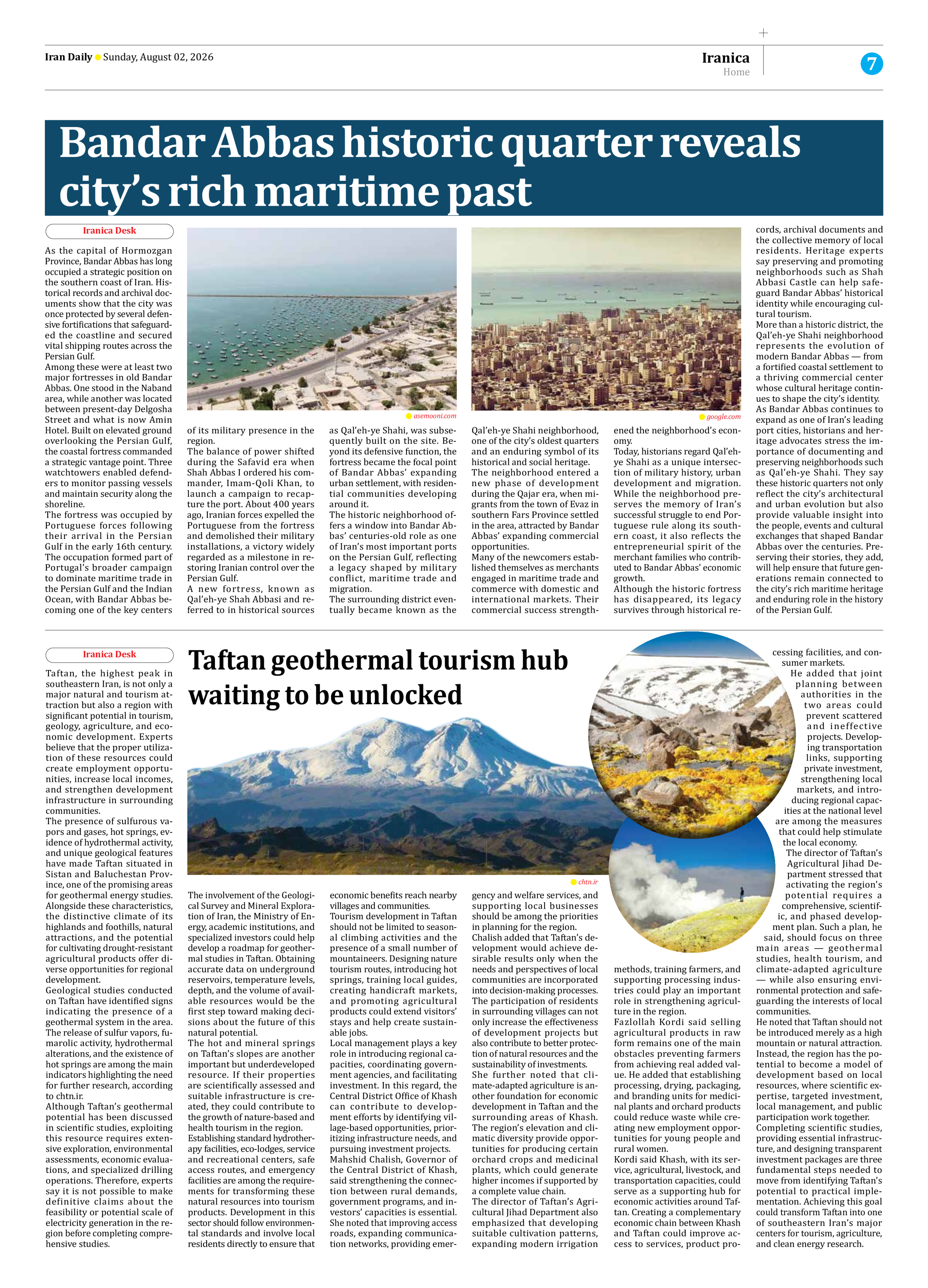
Taftan, the highest peak in southeastern Iran, is not only a major natural and tourism attraction but also a region with significant potential in tourism, geology, agriculture, and economic development. Experts believe that the proper utilization of these resources could create employment opportunities, increase local incomes, and strengthen development infrastructure in surrounding communities.
The presence of sulfurous vapors and gases, hot springs, evidence of hydrothermal activity, and unique geological features have made Taftan situated in Sistan and Baluchestan Province, one of the promising areas for geothermal energy studies. Alongside these characteristics, the distinctive climate of its highlands and foothills, natural attractions, and the potential for cultivating drought-resistant agricultural products offer diverse opportunities for regional development.
Geological studies conducted on Taftan have identified signs indicating the presence of a geothermal system in the area. The release of sulfur vapors, fumarolic activity, hydrothermal alterations, and the existence of hot springs are among the main indicators highlighting the need for further research, according to chtn.ir.
Although Taftan’s geothermal potential has been discussed in scientific studies, exploiting this resource requires extensive exploration, environmental assessments, economic evaluations, and specialized drilling operations. Therefore, experts say it is not possible to make definitive claims about the feasibility or potential scale of electricity generation in the region before completing comprehensive studies.
The involvement of the Geological Survey and Mineral Exploration of Iran, the Ministry of Energy, academic institutions, and specialized investors could help develop a roadmap for geothermal studies in Taftan. Obtaining accurate data on underground reservoirs, temperature levels, depth, and the volume of available resources would be the first step toward making decisions about the future of this natural potential.
The hot and mineral springs on Taftan’s slopes are another important but underdeveloped resource. If their properties are scientifically assessed and suitable infrastructure is created, they could contribute to the growth of nature-based and health tourism in the region.
Establishing standard hydrotherapy facilities, eco-lodges, service and recreational centers, safe access routes, and emergency facilities are among the requirements for transforming these natural resources into tourism products. Development in this sector should follow environmental standards and involve local residents directly to ensure that economic benefits reach nearby villages and communities.
Tourism development in Taftan should not be limited to seasonal climbing activities and the presence of a small number of mountaineers. Designing nature tourism routes, introducing hot springs, training local guides, creating handicraft markets, and promoting agricultural products could extend visitors’ stays and help create sustainable jobs.
Local management plays a key role in introducing regional capacities, coordinating government agencies, and facilitating investment. In this regard, the Central District Office of Khash can contribute to development efforts by identifying village-based opportunities, prioritizing infrastructure needs, and pursuing investment projects.
Mahshid Chalish, Governor of the Central District of Khash, said strengthening the connection between rural demands, government programs, and investors’ capacities is essential. She noted that improving access roads, expanding communication networks, providing emergency and welfare services, and supporting local businesses should be among the priorities in planning for the region.
Chalish added that Taftan’s development would achieve desirable results only when the needs and perspectives of local communities are incorporated into decision-making processes. The participation of residents in surrounding villages can not only increase the effectiveness of development projects but also contribute to better protection of natural resources and the sustainability of investments.
She further noted that climate-adapted agriculture is another foundation for economic development in Taftan and the surrounding areas of Khash. The region’s elevation and climatic diversity provide opportunities for producing certain orchard crops and medicinal plants, which could generate higher incomes if supported by a complete value chain.
The director of Taftan’s Agricultural Jihad Department also emphasized that developing suitable cultivation patterns, expanding modern irrigation methods, training farmers, and supporting processing industries could play an important role in strengthening agriculture in the region.
Fazlollah Kordi said selling agricultural products in raw form remains one of the main obstacles preventing farmers from achieving real added value. He added that establishing processing, drying, packaging, and branding units for medicinal plants and orchard products could reduce waste while creating new employment opportunities for young people and rural women.
Kordi said Khash, with its service, agricultural, livestock, and transportation capacities, could serve as a supporting hub for economic activities around Taftan. Creating a complementary economic chain between Khash and Taftan could improve access to services, product processing facilities, and consumer markets.
He added that joint planning between authorities in the two areas could prevent scattered and ineffective projects. Developing transportation links, supporting private investment, strengthening local markets, and introducing regional capacities at the national level are among the measures that could help stimulate the local economy.
The director of Taftan’s Agricultural Jihad Department stressed that activating the region’s potential requires a comprehensive, scientific, and phased development plan. Such a plan, he said, should focus on three main areas — geothermal studies, health tourism, and climate-adapted agriculture — while also ensuring environmental protection and safeguarding the interests of local communities.
He noted that Taftan should not be introduced merely as a high mountain or natural attraction. Instead, the region has the potential to become a model of development based on local resources, where scientific expertise, targeted investment, local management, and public participation work together.
Completing scientific studies, providing essential infrastructure, and designing transparent investment packages are three fundamental steps needed to move from identifying Taftan’s potential to practical implementation. Achieving this goal could transform Taftan into one of southeastern Iran’s major centers for tourism, agriculture, and clean energy research.