







Copy in clipboard...
Choram Castle seeks rescue from neglect
According to chtn.ir, Choram village, in Kohgiluyeh and Boyer-Ahmad Province, is more than a destination of pristine natural beauty; it is also heir to an ancient civilization. The historic Choram Castle, regarded as an architectural and cultural landmark of the area, embodies part of this heritage. The valuable structure, which was inscribed on Iran’s National Heritage List, stands atop a hill known as Telgerd, meaning “round hill,” and tells part of the turbulent history of southern Iran.
Historians and archaeologists believe that human settlement in the area dates back to around 4,000 BCE and the Elamite civilization. Although the existing structure was built on the orders of Abdullah Khan during the Qajar period, the continuity of human settlement across the area highlights the strategic importance of Choram as a fertile plain surrounded by the rugged mountains of the Zagros. Local rulers from the Abdullah Khan family, including Parviz Khan and Hadi Khan, built the castle atop a 12-meter-high hill not only to assert their control over the surrounding plains but also to oversee the security of the area.
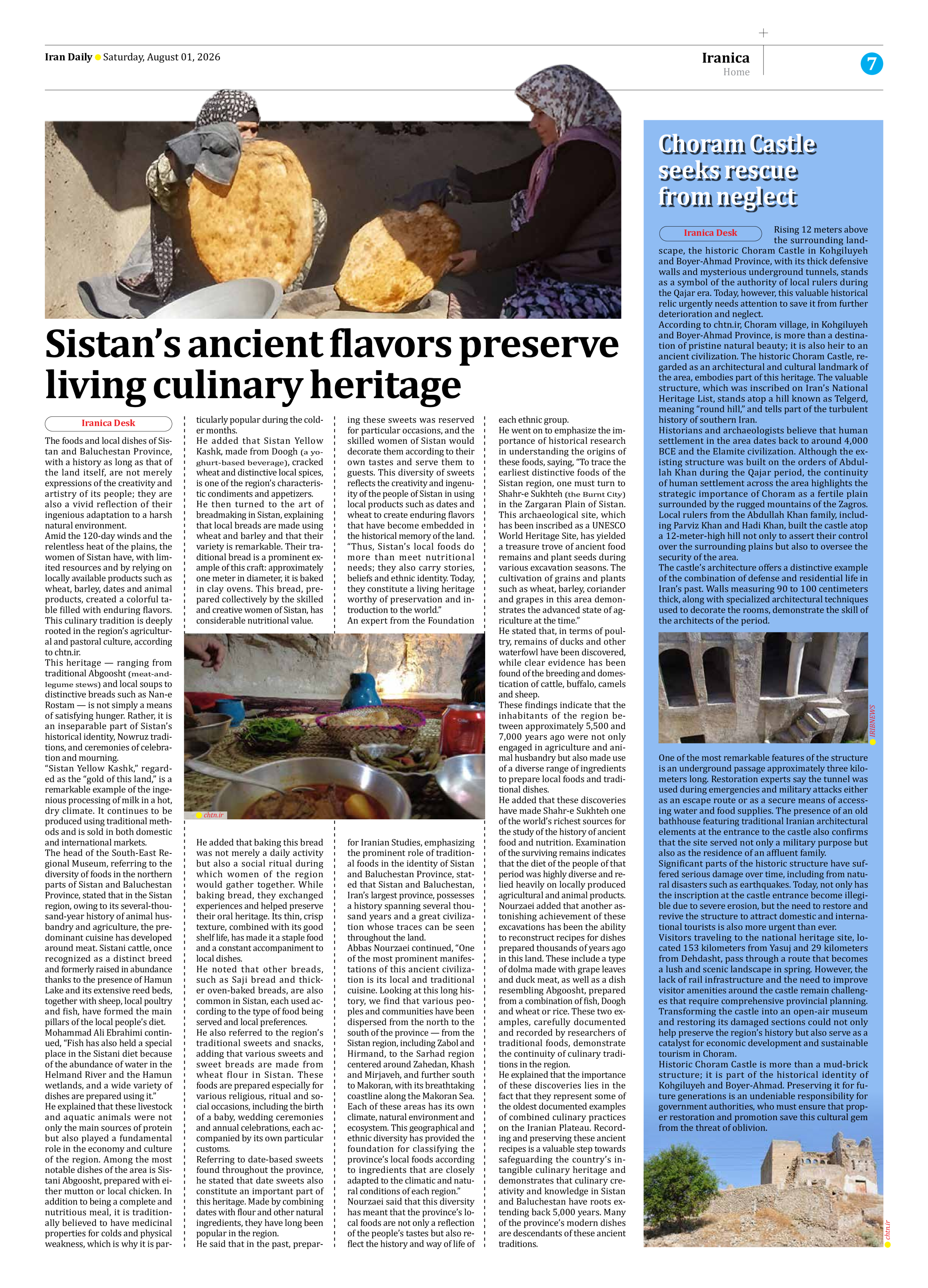
The castle’s architecture offers a distinctive example of the combination of defense and residential life in Iran’s past. Walls measuring 90 to 100 centimeters thick, along with specialized architectural techniques used to decorate the rooms, demonstrate the skill of the architects of the period.
One of the most remarkable features of the structure is an underground passage approximately three kilometers long. Restoration experts say the tunnel was used during emergencies and military attacks either as an escape route or as a secure means of accessing water and food supplies. The presence of an old bathhouse featuring traditional Iranian architectural elements at the entrance to the castle also confirms that the site served not only a military purpose but also as the residence of an affluent family.
Significant parts of the historic structure have suffered serious damage over time, including from natural disasters such as earthquakes. Today, not only has the inscription at the castle entrance become illegible due to severe erosion, but the need to restore and revive the structure to attract domestic and international tourists is also more urgent than ever.
Visitors traveling to the national heritage site, located 153 kilometers from Yasuj and 29 kilometers from Dehdasht, pass through a route that becomes a lush and scenic landscape in spring. However, the lack of rail infrastructure and the need to improve visitor amenities around the castle remain challenges that require comprehensive provincial planning. Transforming the castle into an open-air museum and restoring its damaged sections could not only help preserve the region’s history but also serve as a catalyst for economic development and sustainable tourism in Choram.
Historic Choram Castle is more than a mud-brick structure; it is part of the historical identity of Kohgiluyeh and Boyer-Ahmad. Preserving it for future generations is an undeniable responsibility for government authorities, who must ensure that proper restoration and promotion save this cultural gem from the threat of oblivion.