







Nowruz-e Darya preserves centuries-old maritime legacy of southern Iran
The Persian Gulf, a historic expanse that has long served as a cradle for cultures, rituals, and beliefs, has witnessed the formation of traditions passed down from generation to generation among the inhabitants of Iran’s southern shores. For centuries, the coastal communities of Hormuzgan Province have shaped their lives around the rhythm of the sea, the patterns of the winds, climatic changes, and the patterns of the stars. This deep connection with the marine environment has given rise to a collection of maritime rituals, each reflecting a part of the region’s cultural identity.
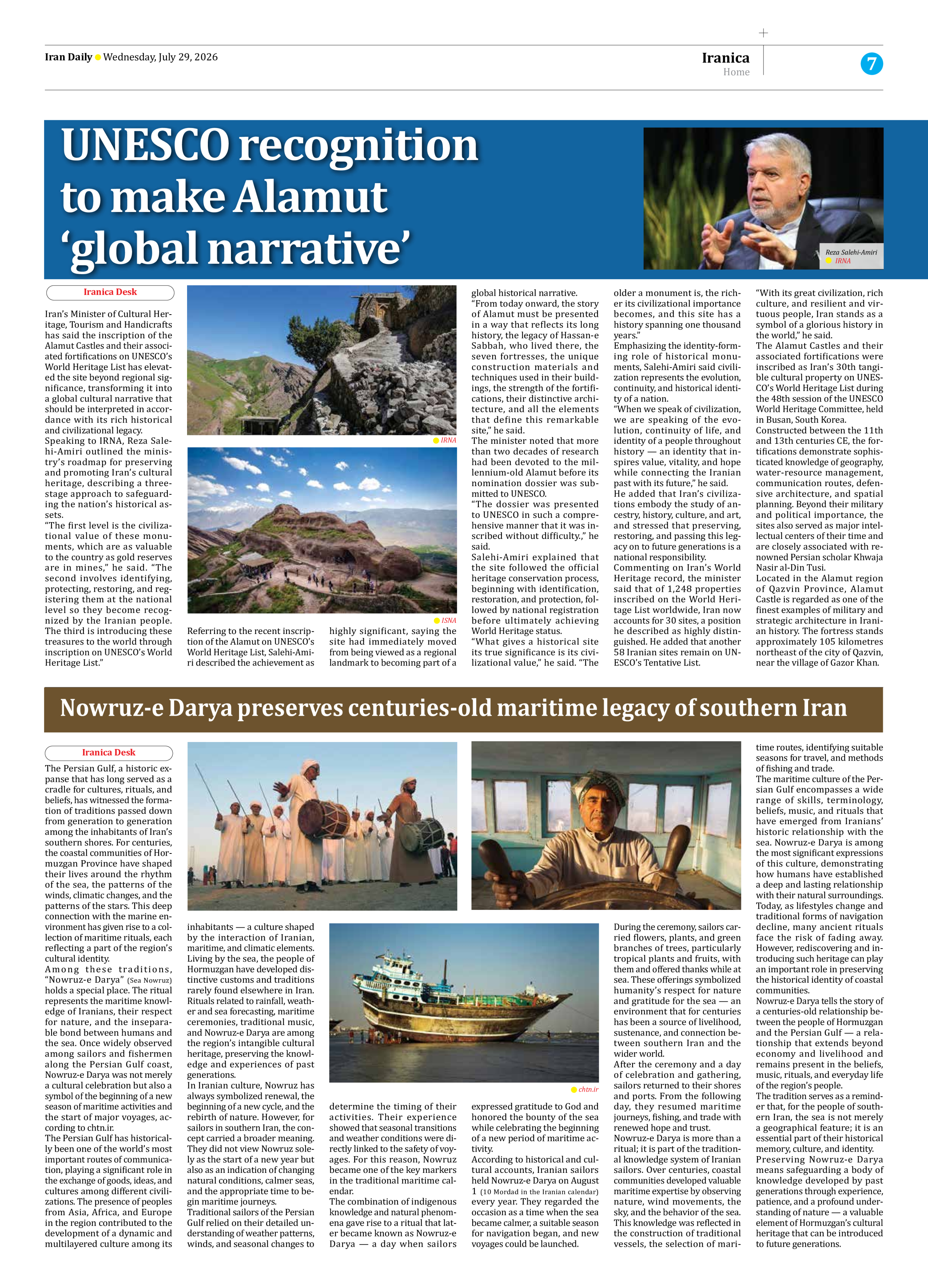
Among these traditions, “Nowruz-e Darya” (Sea Nowruz) holds a special place. The ritual represents the maritime knowledge of Iranians, their respect for nature, and the inseparable bond between humans and the sea. Once widely observed among sailors and fishermen along the Persian Gulf coast, Nowruz-e Darya was not merely a cultural celebration but also a symbol of the beginning of a new season of maritime activities and the start of major voyages, according to chtn.ir.
The Persian Gulf has historically been one of the world’s most important routes of communication, playing a significant role in the exchange of goods, ideas, and cultures among different civilizations. The presence of peoples from Asia, Africa, and Europe in the region contributed to the development of a dynamic and multilayered culture among its inhabitants — a culture shaped by the interaction of Iranian, maritime, and climatic elements.
Living by the sea, the people of Hormuzgan have developed distinctive customs and traditions rarely found elsewhere in Iran. Rituals related to rainfall, weather and sea forecasting, maritime ceremonies, traditional music, and Nowruz-e Darya are among the region’s intangible cultural heritage, preserving the knowledge and experiences of past generations.
In Iranian culture, Nowruz has always symbolized renewal, the beginning of a new cycle, and the rebirth of nature. However, for sailors in southern Iran, the concept carried a broader meaning. They did not view Nowruz solely as the start of a new year but also as an indication of changing natural conditions, calmer seas, and the appropriate time to begin maritime journeys.
Traditional sailors of the Persian Gulf relied on their detailed understanding of weather patterns, winds, and seasonal changes to determine the timing of their activities. Their experience showed that seasonal transitions and weather conditions were directly linked to the safety of voyages. For this reason, Nowruz became one of the key markers in the traditional maritime calendar.
The combination of indigenous knowledge and natural phenomena gave rise to a ritual that later became known as Nowruz-e Darya — a day when sailors expressed gratitude to God and honored the bounty of the sea while celebrating the beginning of a new period of maritime activity.
According to historical and cultural accounts, Iranian sailors held Nowruz-e Darya on August 1 (10 Mordad in the Iranian calendar) every year. They regarded the occasion as a time when the sea became calmer, a suitable season for navigation began, and new voyages could be launched.
During the ceremony, sailors carried flowers, plants, and green branches of trees, particularly tropical plants and fruits, with them and offered thanks while at sea. These offerings symbolized humanity’s respect for nature and gratitude for the sea — an environment that for centuries has been a source of livelihood, sustenance, and connection between southern Iran and the wider world.
After the ceremony and a day of celebration and gathering, sailors returned to their shores and ports. From the following day, they resumed maritime journeys, fishing, and trade with renewed hope and trust.
Nowruz-e Darya is more than a ritual; it is part of the traditional knowledge system of Iranian sailors. Over centuries, coastal communities developed valuable maritime expertise by observing nature, wind movements, the sky, and the behavior of the sea. This knowledge was reflected in the construction of traditional vessels, the selection of maritime routes, identifying suitable seasons for travel, and methods of fishing and trade.
The maritime culture of the Persian Gulf encompasses a wide range of skills, terminology, beliefs, music, and rituals that have emerged from Iranians’ historic relationship with the sea. Nowruz-e Darya is among the most significant expressions of this culture, demonstrating how humans have established a deep and lasting relationship with their natural surroundings.
Today, as lifestyles change and traditional forms of navigation decline, many ancient rituals face the risk of fading away. However, rediscovering and introducing such heritage can play an important role in preserving the historical identity of coastal communities.
Nowruz-e Darya tells the story of a centuries-old relationship between the people of Hormuzgan and the Persian Gulf — a relationship that extends beyond economy and livelihood and remains present in the beliefs, music, rituals, and everyday life of the region’s people.
The tradition serves as a reminder that, for the people of southern Iran, the sea is not merely a geographical feature; it is an essential part of their historical memory, culture, and identity.
Preserving Nowruz-e Darya means safeguarding a body of knowledge developed by past generations through experience, patience, and a profound understanding of nature — a valuable element of Hormuzgan’s cultural heritage that can be introduced to future generations.