







Iran plans Turkish power imports for petrochemical sector
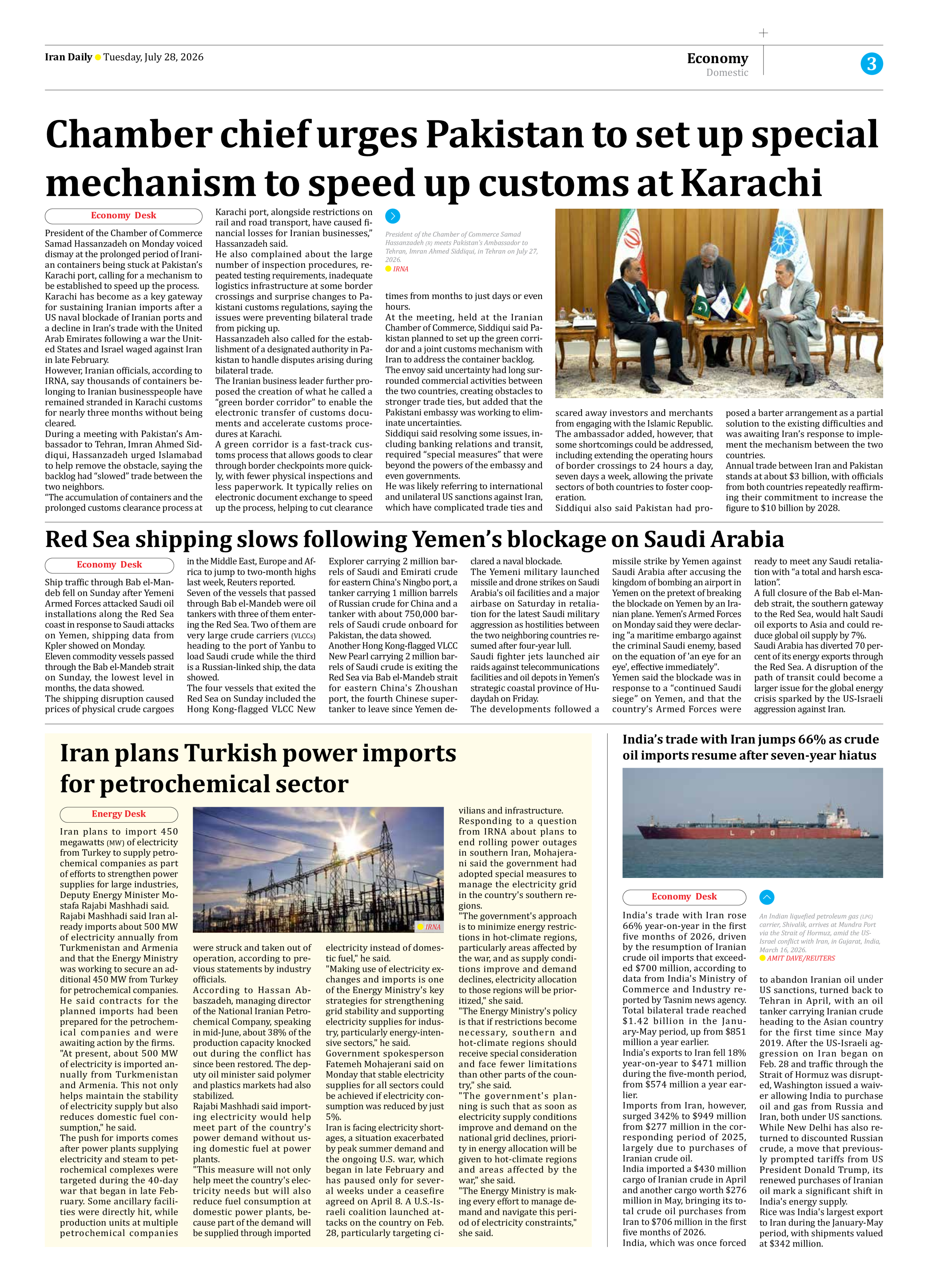
Iran plans to import 450 megawatts (MW) of electricity from Turkey to supply petrochemical companies as part of efforts to strengthen power supplies for large industries, Deputy Energy Minister Mostafa Rajabi Mashhadi said.
Rajabi Mashhadi said Iran already imports about 500 MW of electricity annually from Turkmenistan and Armenia and that the Energy Ministry was working to secure an additional 450 MW from Turkey for petrochemical companies.
He said contracts for the planned imports had been prepared for the petrochemical companies and were awaiting action by the firms.
"At present, about 500 MW of electricity is imported annually from Turkmenistan and Armenia. This not only helps maintain the stability of electricity supply but also reduces domestic fuel consumption," he said.
The push for imports comes after power plants supplying electricity and steam to petrochemical complexes were targeted during the 40-day war that began in late February. Some ancillary facilities were directly hit, while production units at multiple petrochemical companies were struck and taken out of operation, according to previous statements by industry officials.
According to Hassan Abbaszadeh, managing director of the National Iranian Petrochemical Company, speaking in mid-June, about 38% of the production capacity knocked out during the conflict has since been restored. The deputy oil minister said polymer and plastics markets had also stabilized.
Rajabi Mashhadi said importing electricity would help meet part of the country's power demand without using domestic fuel at power plants.
"This measure will not only help meet the country's electricity needs but will also reduce fuel consumption at domestic power plants, because part of the demand will be supplied through imported electricity instead of domestic fuel," he said.
"Making use of electricity exchanges and imports is one of the Energy Ministry's key strategies for strengthening grid stability and supporting electricity supplies for industry, particularly energy-intensive sectors," he said.
Government spokesperson Fatemeh Mohajerani said on Monday that stable electricity supplies for all sectors could be achieved if electricity consumption was reduced by just 5%.
Iran is facing electricity shortages, a situation exacerbated by peak summer demand and the ongoing U.S. war, which began in late February and has paused only for several weeks under a ceasefire agreed on April 8. A U.S.-Israeli coalition launched attacks on the country on Feb. 28, particularly targeting civilians and infrastructure.
Responding to a question from IRNA about plans to end rolling power outages in southern Iran, Mohajerani said the government had adopted special measures to manage the electricity grid in the country's southern regions.
"The government's approach is to minimize energy restrictions in hot-climate regions, particularly areas affected by the war, and as supply conditions improve and demand declines, electricity allocation to those regions will be prioritized," she said.
"The Energy Ministry's policy is that if restrictions become necessary, southern and hot-climate regions should receive special consideration and face fewer limitations than other parts of the country," she said.
"The government's planning is such that as soon as electricity supply conditions improve and demand on the national grid declines, priority in energy allocation will be given to hot-climate regions and areas affected by the war," she said.
"The Energy Ministry is making every effort to manage demand and navigate this period of electricity constraints," she said.