







Bakhtiari Chogha carries heritage, identity in Aligudarz
The traditional Chogha of Aligudarz, Lorestan Province, is more than a garment; it is a symbol of strength, identity and the cultural heritage of the region, according to a provincial cultural heritage official.
Speaking to ISNA, Sajjad Alikhani, deputy director for handicrafts and traditional arts at Lorestan’s Cultural Heritage, Tourism and Handicrafts Organization, said the Chogha represents a “cultural genetic code” for the people of Aligudarz.
“The black and white stripes of this authentic handicraft symbolize the purity and resilience of the people of this land,” he said, adding that every knot woven into a Chogha helps preserve the nation’s cultural identity in the foothills of the Oshtorankuh Mountains.
Alikhani said the department has secured funding under Note 15 of the national budget to provide financial assistance to handicraft artisans in Aligudarz following the difficult conditions of recent months.
He described the allocation as an important step toward creating sustainable employment and supporting the development of the traditional Chogha-weaving industry in the district.
The official also stressed the need to promote the craft as an international brand, saying expanded training programs and financial support would help introduce the centuries-old tradition to wider global audiences.
Alikhani noted that Lorestan’s handicrafts, from delicate artistic creations to the enduring tradition of Bakhtiari Chogha weaving, reflect the inseparable link between art, livelihoods and the dignity of local families. He said the craft has survived even the most challenging circumstances and continues to thrive through the determination and dedication of the province’s artisans.
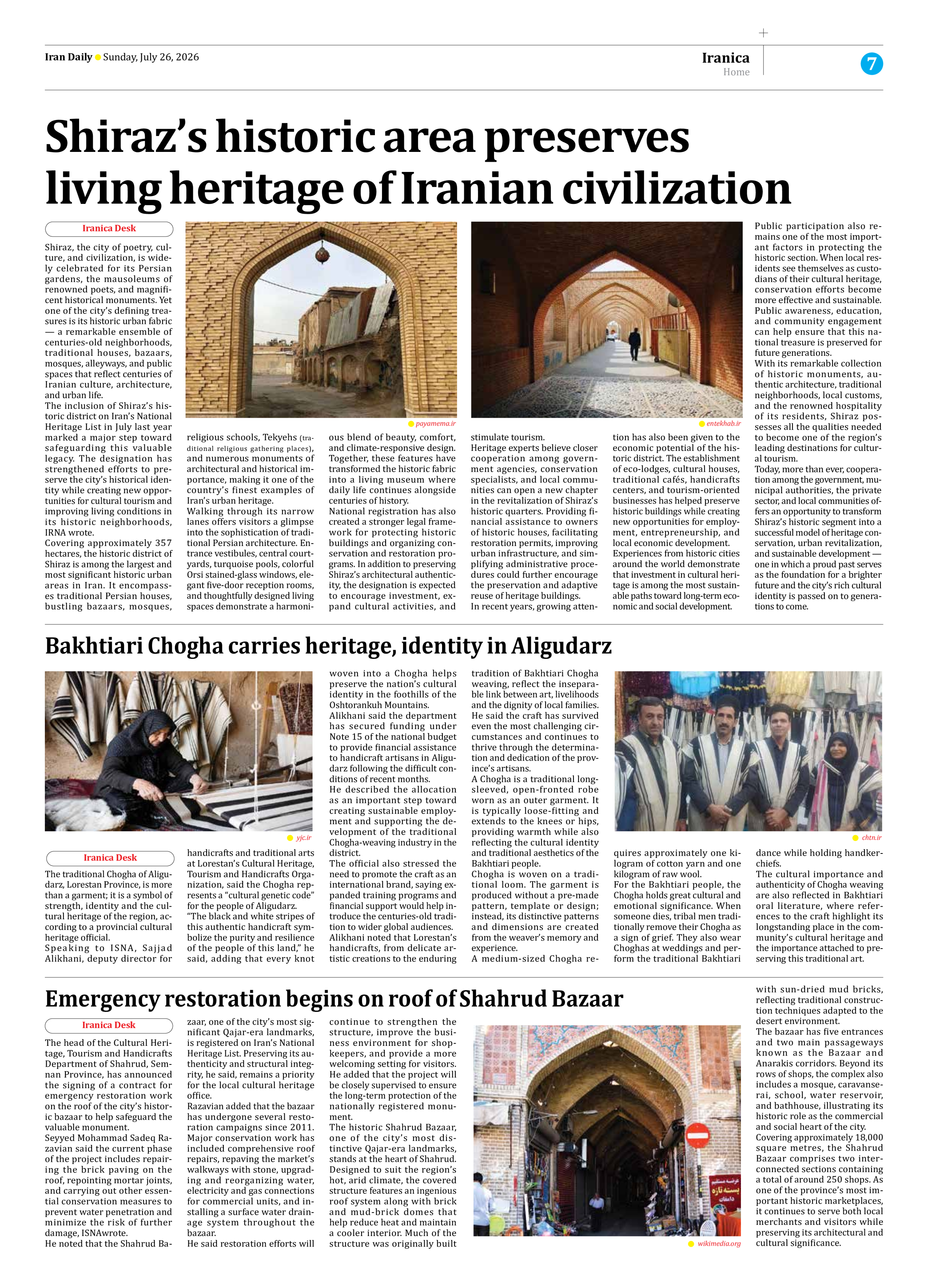
A Chogha is a traditional long-sleeved, open-fronted robe worn as an outer garment. It is typically loose-fitting and extends to the knees or hips, providing warmth while also reflecting the cultural identity and traditional aesthetics of the Bakhtiari people.
Chogha is woven on a traditional loom. The garment is produced without a pre-made pattern, template or design; instead, its distinctive patterns and dimensions are created from the weaver’s memory and experience.
A medium-sized Chogha requires approximately one kilogram of cotton yarn and one kilogram of raw wool.
For the Bakhtiari people, the Chogha holds great cultural and emotional significance. When someone dies, tribal men traditionally remove their Chogha as a sign of grief. They also wear Choghas at weddings and perform the traditional Bakhtiari dance while holding handkerchiefs.
The cultural importance and authenticity of Chogha weaving are also reflected in Bakhtiari oral literature, where references to the craft highlight its longstanding place in the community’s cultural heritage and the importance attached to preserving this traditional art.