







Shiraz’s historic area preserves living heritage of Iranian civilization
Shiraz, the city of poetry, culture, and civilization, is widely celebrated for its Persian gardens, the mausoleums of renowned poets, and magnificent historical monuments. Yet one of the city’s defining treasures is its historic urban fabric — a remarkable ensemble of centuries-old neighborhoods, traditional houses, bazaars, mosques, alleyways, and public spaces that reflect centuries of Iranian culture, architecture, and urban life.
The inclusion of Shiraz’s historic district on Iran’s National Heritage List in July last year marked a major step toward safeguarding this valuable legacy. The designation has strengthened efforts to preserve the city’s historical identity while creating new opportunities for cultural tourism and improving living conditions in its historic neighborhoods, IRNA wrote.
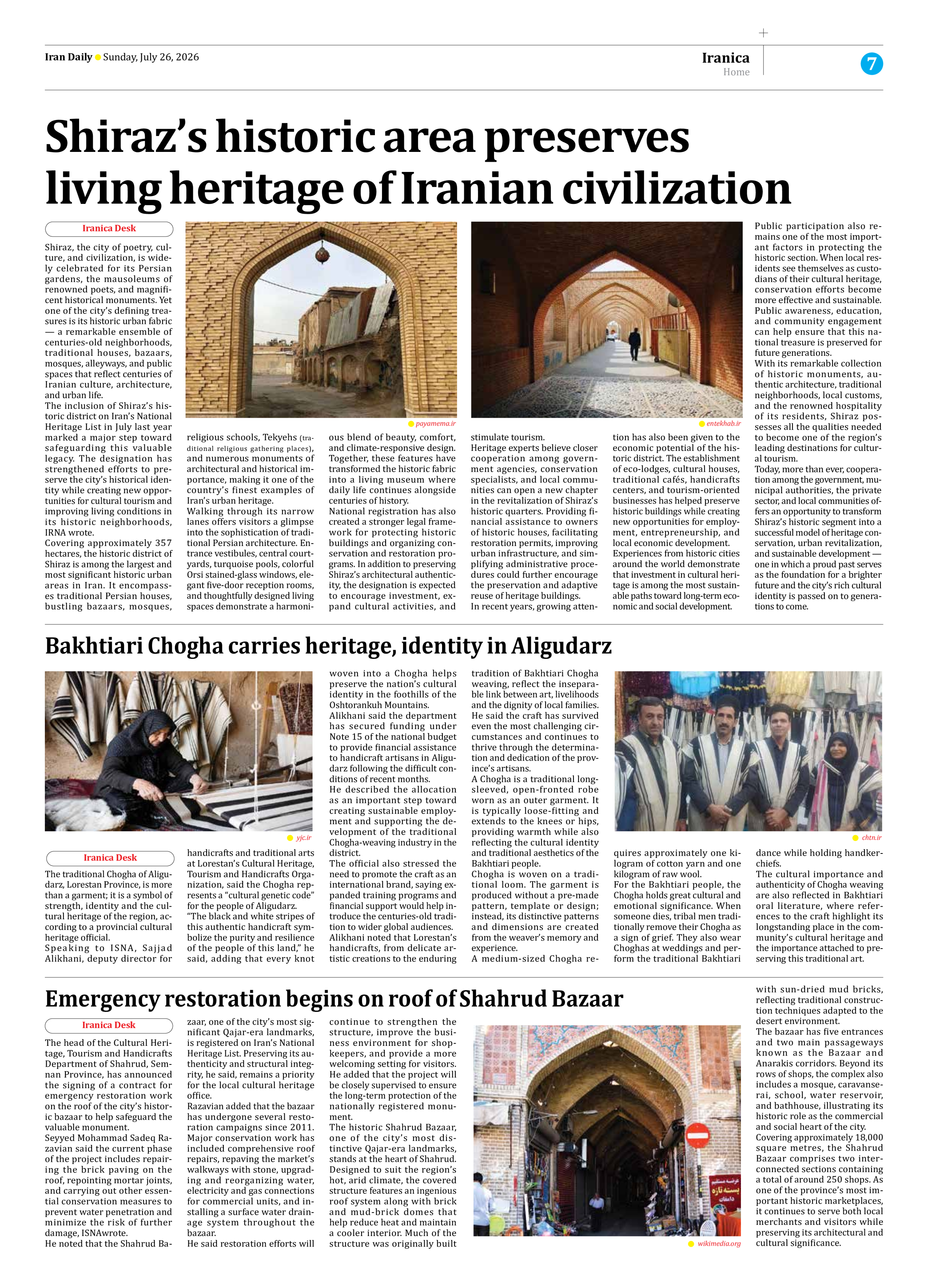
Covering approximately 357 hectares, the historic district of Shiraz is among the largest and most significant historic urban areas in Iran. It encompasses traditional Persian houses, bustling bazaars, mosques, religious schools, Tekyehs (traditional religious gathering places), and numerous monuments of architectural and historical importance, making it one of the country’s finest examples of Iran’s urban heritage.
Walking through its narrow lanes offers visitors a glimpse into the sophistication of traditional Persian architecture. Entrance vestibules, central courtyards, turquoise pools, colorful Orsi stained-glass windows, elegant five-door reception rooms, and thoughtfully designed living spaces demonstrate a harmonious blend of beauty, comfort, and climate-responsive design. Together, these features have transformed the historic fabric into a living museum where daily life continues alongside centuries of history.
National registration has also created a stronger legal framework for protecting historic buildings and organizing conservation and restoration programs. In addition to preserving Shiraz’s architectural authenticity, the designation is expected to encourage investment, expand cultural activities, and stimulate tourism.
Heritage experts believe closer cooperation among government agencies, conservation specialists, and local communities can open a new chapter in the revitalization of Shiraz’s historic quarters. Providing financial assistance to owners of historic houses, facilitating restoration permits, improving urban infrastructure, and simplifying administrative procedures could further encourage the preservation and adaptive reuse of heritage buildings.
In recent years, growing attention has also been given to the economic potential of the historic district. The establishment of eco-lodges, cultural houses, traditional cafés, handicrafts centers, and tourism-oriented businesses has helped preserve historic buildings while creating new opportunities for employment, entrepreneurship, and local economic development.
Experiences from historic cities around the world demonstrate that investment in cultural heritage is among the most sustainable paths toward long-term economic and social development.
Public participation also remains one of the most important factors in protecting the historic section. When local residents see themselves as custodians of their cultural heritage, conservation efforts become more effective and sustainable. Public awareness, education, and community engagement can help ensure that this national treasure is preserved for future generations.
With its remarkable collection of historic monuments, authentic architecture, traditional neighborhoods, local customs, and the renowned hospitality of its residents, Shiraz possesses all the qualities needed to become one of the region’s leading destinations for cultural tourism.
Today, more than ever, cooperation among the government, municipal authorities, the private sector, and local communities offers an opportunity to transform Shiraz’s historic segment into a successful model of heritage conservation, urban revitalization, and sustainable development — one in which a proud past serves as the foundation for a brighter future and the city’s rich cultural identity is passed on to generations to come.