





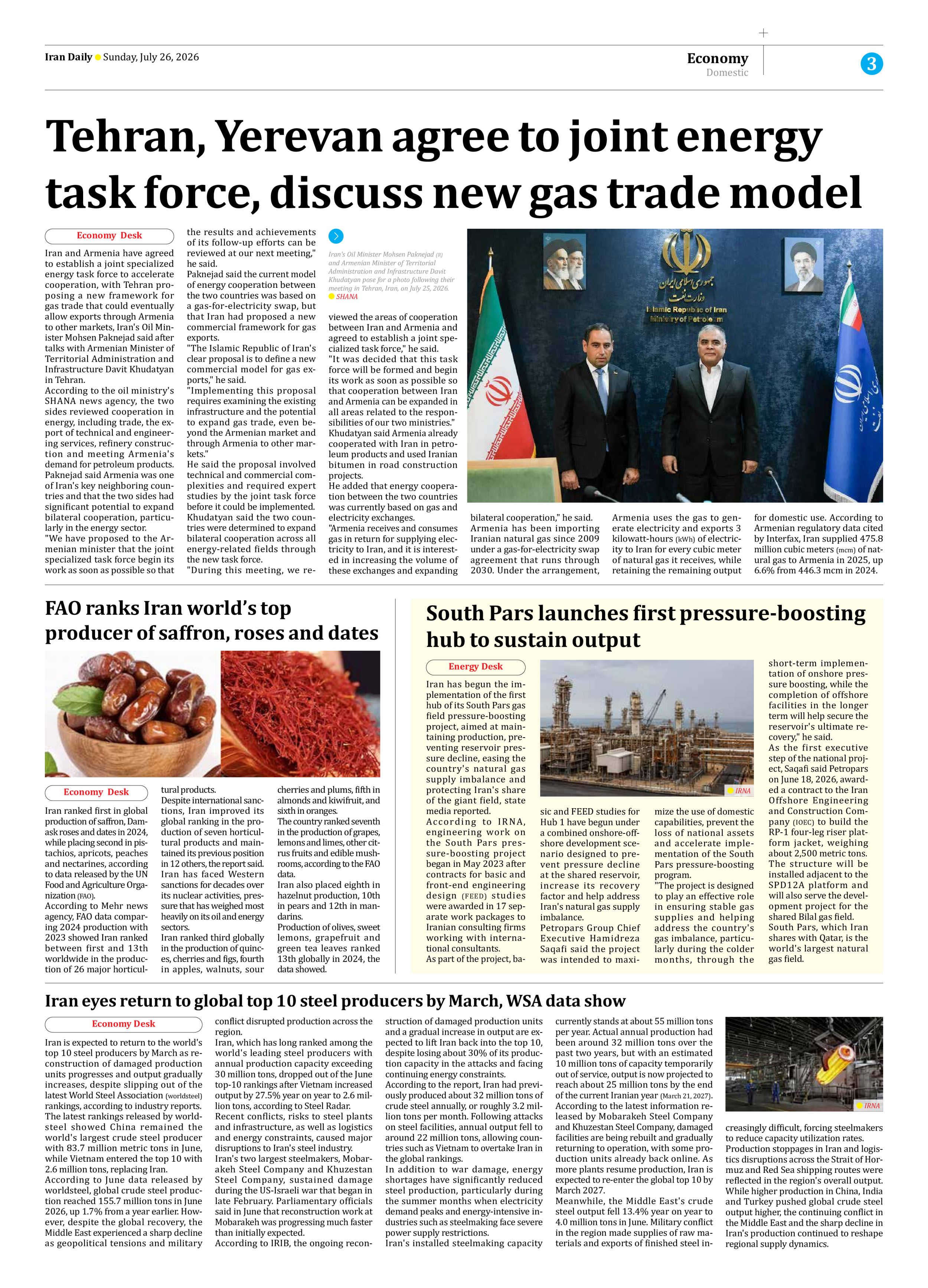


Iran eyes return to global top 10 steel producers by March, WSA data show
Iran is expected to return to the world's top 10 steel producers by March as reconstruction of damaged production units progresses and output gradually increases, despite slipping out of the latest World Steel Association (worldsteel) rankings, according to industry reports.
The latest rankings released by worldsteel showed China remained the world's largest crude steel producer with 83.7 million metric tons in June, while Vietnam entered the top 10 with 2.6 million tons, replacing Iran.
According to June data released by worldsteel, global crude steel production reached 155.7 million tons in June 2026, up 1.7% from a year earlier. However, despite the global recovery, the Middle East experienced a sharp decline as geopolitical tensions and military conflict disrupted production across the region.
Iran, which has long ranked among the world's leading steel producers with annual production capacity exceeding 30 million tons, dropped out of the June top-10 rankings after Vietnam increased output by 27.5% year on year to 2.6 million tons, according to Steel Radar.
Recent conflicts, risks to steel plants and infrastructure, as well as logistics and energy constraints, caused major disruptions to Iran's steel industry.
Iran's two largest steelmakers, Mobarakeh Steel Company and Khuzestan Steel Company, sustained damage during the US-Israeli war that began in late February. Parliamentary officials said in June that reconstruction work at Mobarakeh was progressing much faster than initially expected.
According to IRIB, the ongoing reconstruction of damaged production units and a gradual increase in output are expected to lift Iran back into the top 10, despite losing about 30% of its production capacity in the attacks and facing continuing energy constraints.
According to the report, Iran had previously produced about 32 million tons of crude steel annually, or roughly 3.2 million tons per month. Following attacks on steel facilities, annual output fell to around 22 million tons, allowing countries such as Vietnam to overtake Iran in the global rankings.
In addition to war damage, energy shortages have significantly reduced steel production, particularly during the summer months when electricity demand peaks and energy-intensive industries such as steelmaking face severe power supply restrictions.
Iran's installed steelmaking capacity currently stands at about 55 million tons per year. Actual annual production had been around 32 million tons over the past two years, but with an estimated 10 million tons of capacity temporarily out of service, output is now projected to reach about 25 million tons by the end of the current Iranian year (March 21, 2027).
According to the latest information released by Mobarakeh Steel Company and Khuzestan Steel Company, damaged facilities are being rebuilt and gradually returning to operation, with some production units already back online. As more plants resume production, Iran is expected to re-enter the global top 10 by March 2027.
Meanwhile, the Middle East's crude steel output fell 13.4% year on year to 4.0 million tons in June. Military conflict in the region made supplies of raw materials and exports of finished steel increasingly difficult, forcing steelmakers to reduce capacity utilization rates.
Production stoppages in Iran and logistics disruptions across the Strait of Hormuz and Red Sea shipping routes were reflected in the region's overall output. While higher production in China, India and Turkey pushed global crude steel output higher, the continuing conflict in the Middle East and the sharp decline in Iran's production continued to reshape regional supply dynamics.