







Copy in clipboard...
Iran proposes action plan to expand BRICS health cooperation
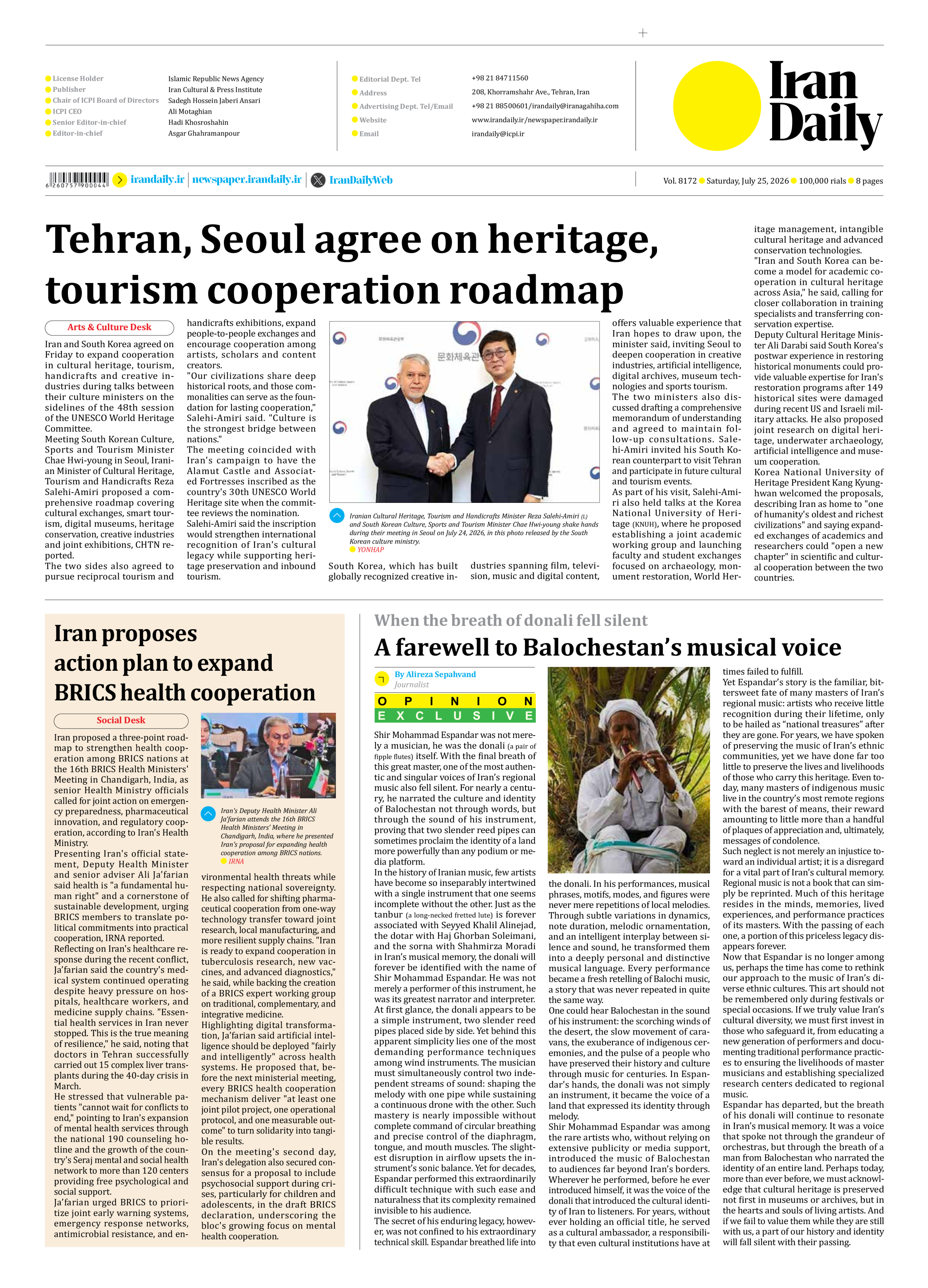
Iran proposed a three-point roadmap to strengthen health cooperation among BRICS nations at the 16th BRICS Health Ministers' Meeting in Chandigarh, India, as senior Health Ministry officials called for joint action on emergency preparedness, pharmaceutical innovation, and regulatory cooperation, according to Iran's Health Ministry.
Presenting Iran's official statement, Deputy Health Minister and senior adviser Ali Ja’farian said health is "a fundamental human right" and a cornerstone of sustainable development, urging BRICS members to translate political commitments into practical cooperation, IRNA reported.
Reflecting on Iran's healthcare response during the recent conflict, Ja’farian said the country's medical system continued operating despite heavy pressure on hospitals, healthcare workers, and medicine supply chains. "Essential health services in Iran never stopped. This is the true meaning of resilience," he said, noting that doctors in Tehran successfully carried out 15 complex liver transplants during the 40-day crisis in March.
He stressed that vulnerable patients "cannot wait for conflicts to end," pointing to Iran's expansion of mental health services through the national 190 counseling hotline and the growth of the country's Seraj mental and social health network to more than 120 centers providing free psychological and social support.
Ja’farian urged BRICS to prioritize joint early warning systems, emergency response networks, antimicrobial resistance, and environmental health threats while respecting national sovereignty. He also called for shifting pharmaceutical cooperation from one-way technology transfer toward joint research, local manufacturing, and more resilient supply chains. "Iran is ready to expand cooperation in tuberculosis research, new vaccines, and advanced diagnostics," he said, while backing the creation of a BRICS expert working group on traditional, complementary, and integrative medicine.
Highlighting digital transformation, Ja’farian said artificial intelligence should be deployed "fairly and intelligently" across health systems. He proposed that, before the next ministerial meeting, every BRICS health cooperation mechanism deliver "at least one joint pilot project, one operational protocol, and one measurable outcome" to turn solidarity into tangible results.
On the meeting's second day, Iran's delegation also secured consensus for a proposal to include psychosocial support during crises, particularly for children and adolescents, in the draft BRICS declaration, underscoring the bloc's growing focus on mental health cooperation.