







Abr Forest where clouds meet wilderness
The Abr (Cloud) Forest of Shahrud, in Semnan Province, is one of Iran’s most mysterious natural landscapes. Situated on the boundary between the country’s arid desert climate and the humid climate of the north, it is a place where two contrasting ecosystems meet. This unique climatic transition has created scenery unlike anywhere else in Iran, where desert and forest stand face to face.
The forest forms part of the ancient Hyrcanian Forests, a natural ecosystem dating back more than 40 million years and inscribed on UNESCO’s World Heritage List. Valuable tree species such as hornbeam, oak, willow, and maple thrive here, reflecting the remarkable resilience of Iran’s natural heritage through the ages.
With the arrival of spring, light rainfall, cool temperatures, and rapid plant growth transform the landscape. The forest’s ever-present mist becomes thinner and more transparent, while the songs of migratory birds returning for the season fill the woodlands. At this time of year, every step through the forest seems to carry the scent of new life.
Most visitors reach the area via Shahrud and Bastam. The road is paved until the outskirts of the forest, but the final few kilometers are unpaved and winding. Spring rains can make the route slippery, so a four-wheel-drive vehicle or the assistance of a local guide is strongly recommended.
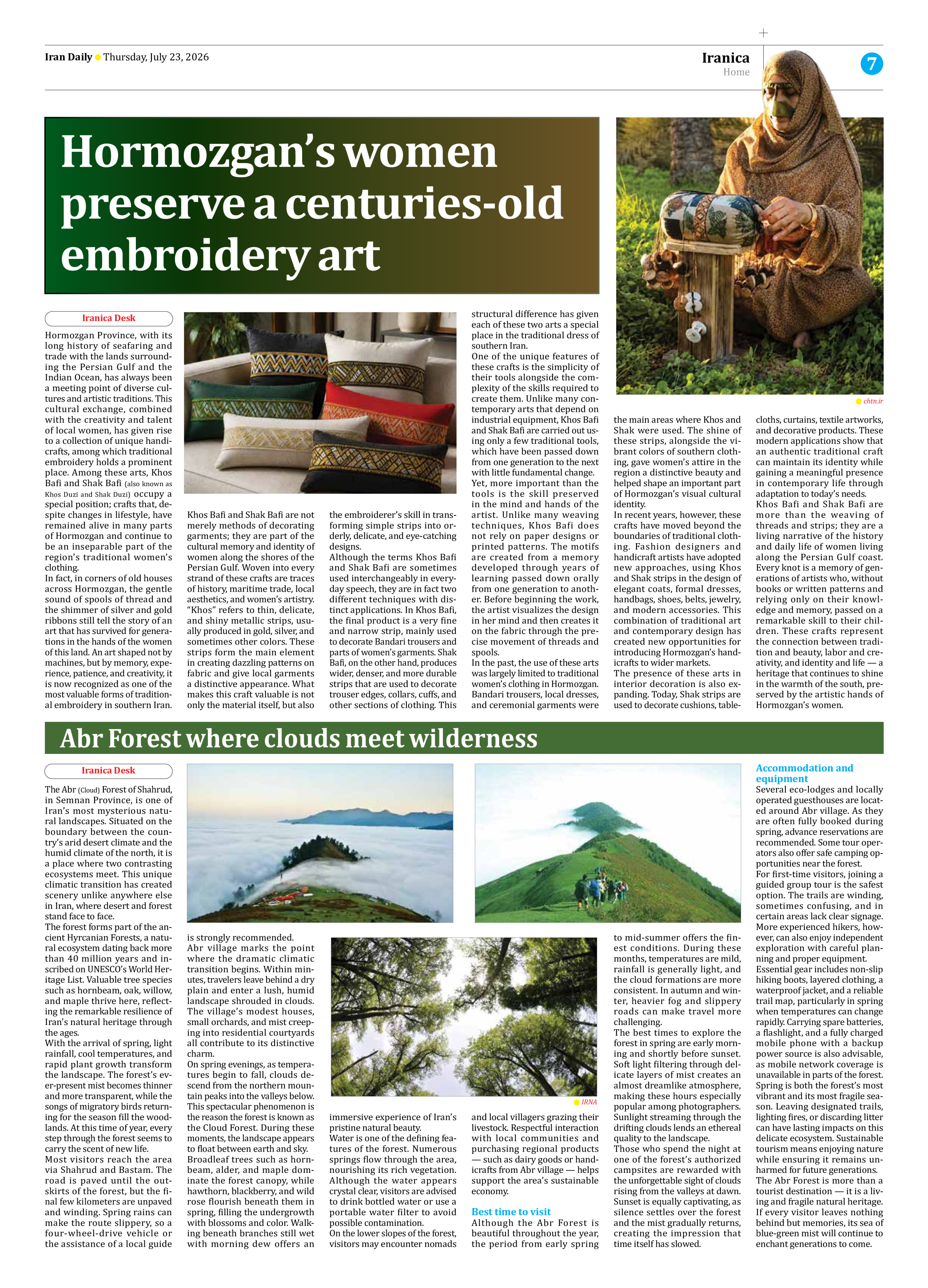
Abr village marks the point where the dramatic climatic transition begins. Within minutes, travelers leave behind a dry plain and enter a lush, humid landscape shrouded in clouds. The village’s modest houses, small orchards, and mist creeping into residential courtyards all contribute to its distinctive charm.
On spring evenings, as temperatures begin to fall, clouds descend from the northern mountain peaks into the valleys below. This spectacular phenomenon is the reason the forest is known as the Cloud Forest. During these moments, the landscape appears to float between earth and sky.
Broadleaf trees such as hornbeam, alder, and maple dominate the forest canopy, while hawthorn, blackberry, and wild rose flourish beneath them in spring, filling the undergrowth with blossoms and color. Walking beneath branches still wet with morning dew offers an immersive experience of Iran’s pristine natural beauty.
Water is one of the defining features of the forest. Numerous springs flow through the area, nourishing its rich vegetation. Although the water appears crystal clear, visitors are advised to drink bottled water or use a portable water filter to avoid possible contamination.
On the lower slopes of the forest, visitors may encounter nomads and local villagers grazing their livestock. Respectful interaction with local communities and purchasing regional products — such as dairy goods or handicrafts from Abr village — helps support the area’s sustainable economy.
Best time to visit
Although the Abr Forest is beautiful throughout the year, the period from early spring to mid-summer offers the finest conditions. During these months, temperatures are mild, rainfall is generally light, and the cloud formations are more consistent. In autumn and winter, heavier fog and slippery roads can make travel more challenging.
The best times to explore the forest in spring are early morning and shortly before sunset. Soft light filtering through delicate layers of mist creates an almost dreamlike atmosphere, making these hours especially popular among photographers. Sunlight streaming through the drifting clouds lends an ethereal quality to the landscape.
Those who spend the night at one of the forest’s authorized campsites are rewarded with the unforgettable sight of clouds rising from the valleys at dawn. Sunset is equally captivating, as silence settles over the forest and the mist gradually returns, creating the impression that time itself has slowed.
Accommodation and equipment
Several eco-lodges and locally operated guesthouses are located around Abr village. As they are often fully booked during spring, advance reservations are recommended. Some tour operators also offer safe camping opportunities near the forest.
For first-time visitors, joining a guided group tour is the safest option. The trails are winding, sometimes confusing, and in certain areas lack clear signage. More experienced hikers, however, can also enjoy independent exploration with careful planning and proper equipment.
Essential gear includes non-slip hiking boots, layered clothing, a waterproof jacket, and a reliable trail map, particularly in spring when temperatures can change rapidly. Carrying spare batteries, a flashlight, and a fully charged mobile phone with a backup power source is also advisable, as mobile network coverage is unavailable in parts of the forest.
Spring is both the forest’s most vibrant and its most fragile season. Leaving designated trails, lighting fires, or discarding litter can have lasting impacts on this delicate ecosystem. Sustainable tourism means enjoying nature while ensuring it remains unharmed for future generations.
The Abr Forest is more than a tourist destination — it is a living and fragile natural heritage. If every visitor leaves nothing behind but memories, its sea of blue-green mist will continue to enchant generations to come.