







Zanjan recognized as global hub of filigree
The history of filigree metalwork (Malileh-Kari) dates back to 550-330 BCE, during the Achaemenid Empire, when goldsmiths and silversmiths devoted considerable attention to crafting finely decorated vessels and ornaments.
Zanjan’s filigree tradition is internationally recognized for its exceptional delicacy, craftsmanship, and historical authenticity. The city’s designation as a “World City of Filigree” reflects its role as the primary center for the production and development of this art form, where quality standards in the craft are defined.
Metalworking in Zanjan flourished during the Achaemenid, Parthian, and Sassanid periods. However, the documented history of filigree in the region becomes clearer from the 10th century CE onward, according to chtn.ir.
Because Zanjan’s filigree products are made from precious metals such as gold and silver, many historical works were melted down over time for reuse of the raw material. As a result, relatively few examples from earlier periods — particularly before the Qajar era — have survived.
From the Qajar period, several filigree items remain, including hookah heads, trays, glass holders in various sizes, and jewelry such as necklaces, pendants, and earrings. Some of these works are preserved in domestic and international museums, while others remain in private collections.
Historically, artisans created intricate and valuable works under difficult conditions, and modern filigree in Zanjan is indebted to these craftsmen, some of whom reportedly lost their eyesight due to the precision required in the work.
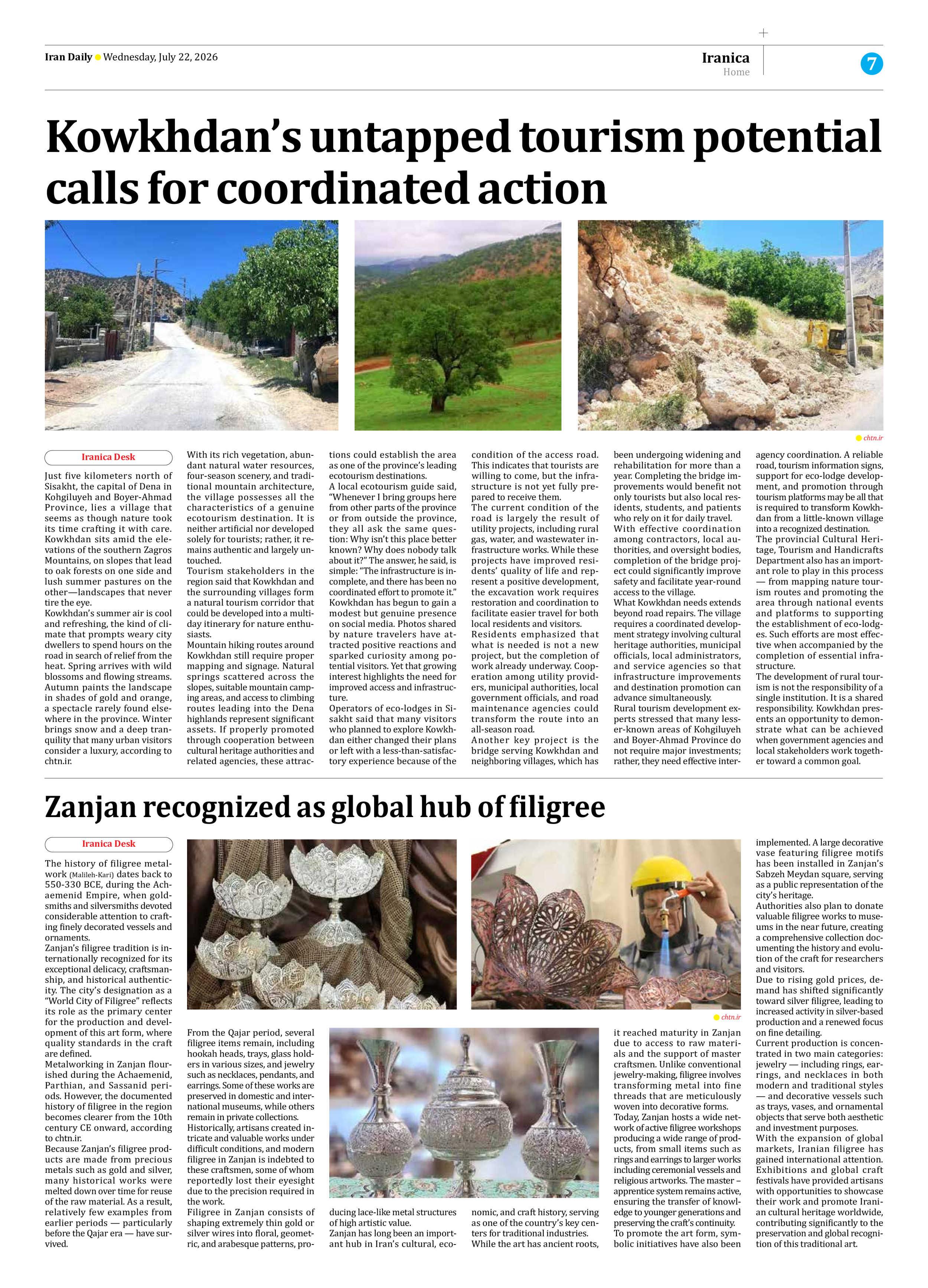
Filigree in Zanjan consists of shaping extremely thin gold or silver wires into floral, geometric, and arabesque patterns, producing lace-like metal structures of high artistic value.
Zanjan has long been an important hub in Iran’s cultural, economic, and craft history, serving as one of the country’s key centers for traditional industries.
While the art has ancient roots, it reached maturity in Zanjan due to access to raw materials and the support of master craftsmen. Unlike conventional jewelry-making, filigree involves transforming metal into fine threads that are meticulously woven into decorative forms.
Today, Zanjan hosts a wide network of active filigree workshops producing a wide range of products, from small items such as rings and earrings to larger works including ceremonial vessels and religious artworks. The master – apprentice system remains active, ensuring the transfer of knowledge to younger generations and preserving the craft’s continuity.
To promote the art form, symbolic initiatives have also been implemented. A large decorative vase featuring filigree motifs has been installed in Zanjan’s Sabzeh Meydan square, serving as a public representation of the city’s heritage.
Authorities also plan to donate valuable filigree works to museums in the near future, creating a comprehensive collection documenting the history and evolution of the craft for researchers and visitors.
Due to rising gold prices, demand has shifted significantly toward silver filigree, leading to increased activity in silver-based production and a renewed focus on fine detailing.
Current production is concentrated in two main categories: jewelry — including rings, earrings, and necklaces in both modern and traditional styles — and decorative vessels such as trays, vases, and ornamental objects that serve both aesthetic and investment purposes.
With the expansion of global markets, Iranian filigree has gained international attention. Exhibitions and global craft festivals have provided artisans with opportunities to showcase their work and promote Iranian cultural heritage worldwide, contributing significantly to the preservation and global recognition of this traditional art.